US Inflation Surges to 3.3% as Gas Prices Jump 21% in One Month, Shaking Household Budgets
The American economy just felt another jolt, and this time it came straight from the gas pump.
Inflation in the United States climbed to 3.3% year-over-year in March, up sharply from 2.4% in February, marking the fastest monthly acceleration in nearly 24 months. The spike represents one of the most aggressive price shifts since the inflation shock of 2022, when energy markets were still reeling from disruptions caused by global conflict.
At the center of the surge is a brutal 21.2% monthly jump in gasoline prices, the steepest increase recorded in more than 58 years of federal tracking data.
Gasoline Prices Trigger a 3.3% Inflation Spike Across the US Economy.
The March inflation jump was not broad-based; it was laser-focused on energy.
Gasoline prices alone accounted for nearly 75% of the entire monthly inflation increase, according to federal price data. According to the U.S. Bureau of Labor Statistics, the Consumer Price Index for All Urban Consumers increased by 0.4 percent in March, matching February’s rise, with energy costs such as fuel oil contributing notably to overall inflation.
For millions of Americans, that translated into immediate pain at the pump, where average refueling costs climbed by $20–$60 per fill-up, depending on vehicle size and region.
Strait of Hormuz Disruption Pushes Global Oil Prices Higher by 30%

The catalyst behind the shock is the escalating geopolitical tensions affecting the Strait of Hormuz, a critical maritime corridor responsible for roughly 20–25% of global oil shipments.
Following disruptions linked to the US–Israel–Iran conflict, global oil benchmarks surged by nearly 30% above pre-crisis levels, tightening supply expectations across international markets.
Even short-term fears of shipment delays were enough to trigger rapid price inflation, proving once again that global energy markets react in minutes, while household budgets adjust in weeks.
California Drivers Hit Hardest: $5.93 per Gallon Peaks in High-Cost States
The inflation shock has not landed evenly across the United States.
In California, average gasoline prices reached $5.93 per gallon, compared to the national average of about $4.16, creating a gap of nearly $1.80 per gallon between high-cost and average regions.
For a typical 15-gallon fill-up, that difference translates into nearly $27 more per tank for California drivers alone.
States already dealing with structural fuel premiums taxes, refinery limits, and distribution constraints are absorbing the shock faster and more intensely than the rest of the country.
Core Inflation Stays at 2.6%, Masking Energy-Driven Volatility.
While headline inflation surged, underlying price pressures tell a more moderate story.
Core inflation, which strips out food and energy, rose only 2.6% year-over-year, signaling that most non-energy categories remain relatively stable.
Some sectors even cooled, with used car prices and prescription medicines showing declines of up to 1–3% over the year in select markets.
However, economists warn that sustained energy inflation lasting beyond 60–90 days can spill over into broader categories, including food transport, airline pricing, and retail logistics.
Airline Tickets and Clothing Prices Rise as Energy Costs Spread
The ripple effect of higher fuel prices is already visible beyond gas stations.
According to a report from the U.S. Bureau of Labor Statistics, the Consumer Price Index for All Urban Consumers rose by 0.4 percent in March, mirroring the increase from February.
Consumer Sentiment Falls to Multi-Year Lows as Inflation Anxiety Grows
As prices rise, confidence is falling.
According to a report from the University of Michigan Institute for Social Research, consumer sentiment in February 2024 remained mostly steady, dipping only slightly after substantial gains in December and January.
Historically, sustained sentiment declines of this magnitude have preceded 3–5% reductions in discretionary spending across retail sectors.
Federal Reserve Faces Pressure as Rate Cut Expectations Collapse
Before the energy spike, markets were pricing in potential interest rate cuts later in the year.
That expectation has now shifted dramatically.
With inflation jumping to 3.3%, analysts say the probability of near-term rate cuts has dropped by more than 40–50%, as policymakers prioritize stability over stimulus.
The Federal Reserve’s benchmark rate remains in the 3.5%–3.75% range, reflecting continued caution after past inflation misjudgments during the post-pandemic recovery period.
Political Tension Builds as Fuel Prices Become a Campaign Issue
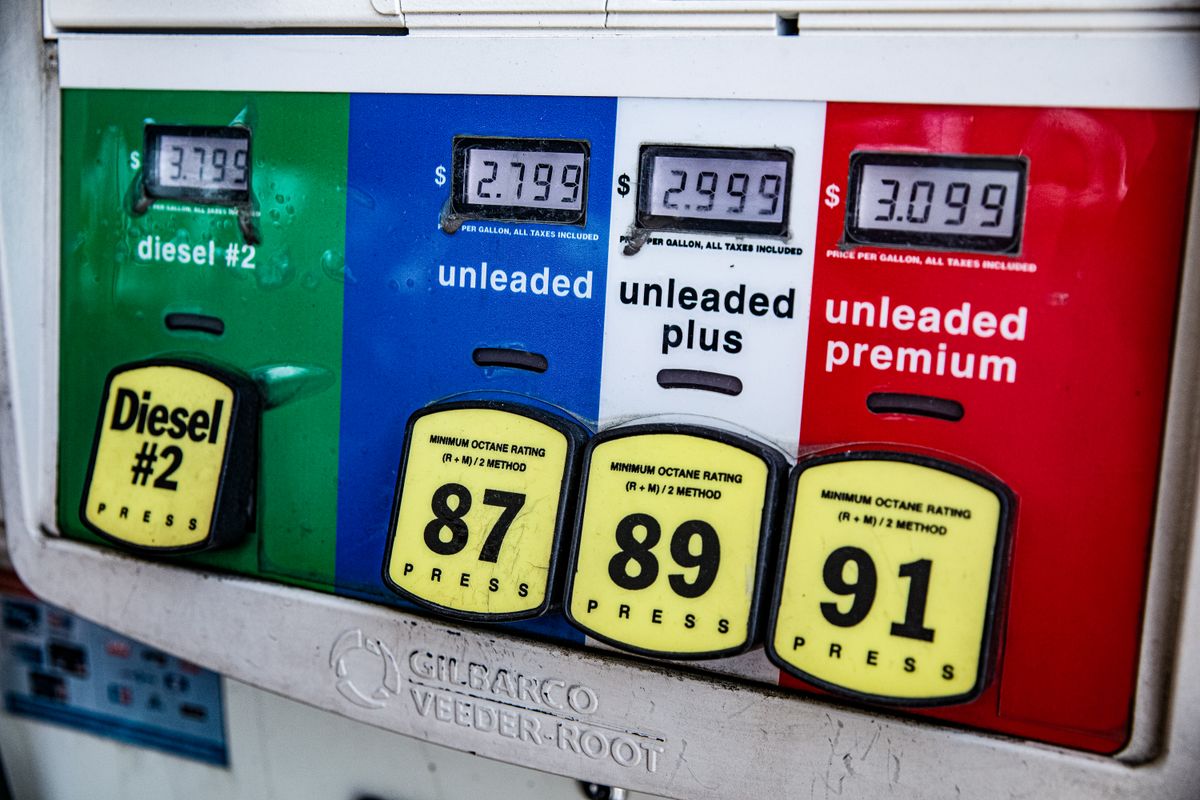
Energy inflation is also becoming politically charged.
Gasoline prices helped drive a 3.5% annual increase in consumer prices in March, according to a CBS News report, putting affordability in the spotlight as economic issues gain renewed attention during this election-sensitive period.
That pressure is now re-emerging, especially in commuter-heavy states where driving is not optional but essential.
Bottom Line: A 21% Gas Spike Is Driving a National Economic Mood Shift
The inflation surge is not being driven by groceries, housing, or wages; it is being driven by fuel.
With gasoline prices jumping more than 21% in a single month, energy has once again become the dominant force shaping inflation headlines, consumer behavior, and policy expectations.
If oil markets stabilize, the impact may fade quickly.
But if energy volatility continues above current levels for another 60–90 days, economists warn that inflation could expand beyond the pump and into nearly every corner of the American economy.