San Jose Driver Gets 60 Days In Jail After Dashcam Exposes Road-Rage Insurance Fraud
A San Jose man who repeatedly slammed on his brakes in front of a semi-truck and later blamed the truck driver for the collision has been sentenced after a jury convicted him of insurance fraud, vandalism and reckless driving.
Kenneth Pham Tran, identified by the California Department of Insurance as a 54-year-old San Jose resident, received 60 days in county jail, two years of probation and an order to pay more than $4,000 in restitution. The sentence was handed down on July 10, 2026, more than 17 months after the freeway confrontation that started the case.
The prosecution centered on a sharp conflict between Tran’s account and the evidence captured by a semi-truck’s dashcam. What Tran reportedly presented as an unavoidable rear-end collision was, on video, the final act in a series of aggressive driving maneuvers.
Road-rage confrontation unfolded on Highway 101
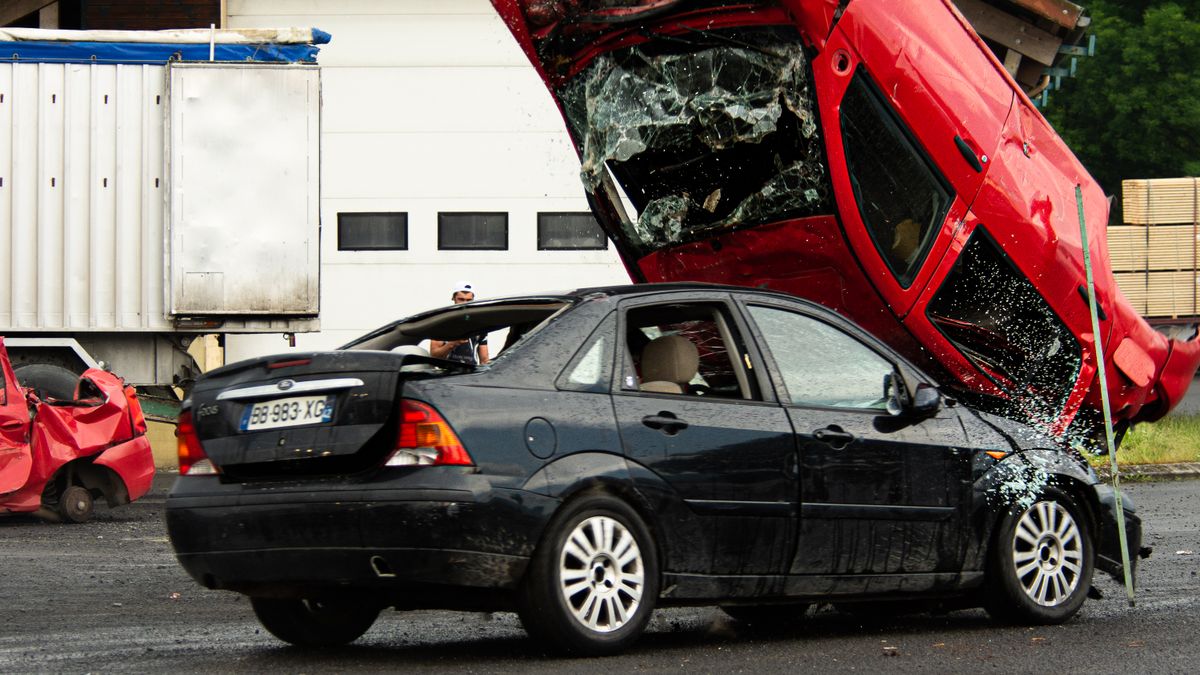
The incident began on January 28, 2025, while Tran was driving a white Jeep Wrangler Rubicon on Highway 101 in San Jose.
According to prosecutors, Tran believed a semi-truck had cut him off near the Alum Rock Avenue onramp. Instead of allowing the truck to continue, he caught up to it near the Story Road underpass and began driving aggressively in front of it.
Authorities said Tran abruptly braked in front of the truck twice. When the truck driver attempted to move into another lane to avoid the Jeep, Tran reportedly repositioned his vehicle in front of the semi and applied his brakes a third time.
The truck could not stop quickly enough and struck the back of the Jeep.
A fully loaded commercial truck requires far more time and distance to stop than a passenger vehicle. Deliberately braking in front of one can leave the truck driver with almost no safe escape route, especially when surrounding traffic prevents an immediate lane change.
Investigators said an independent witness saw the confrontation and called 911 after swerving to avoid the Jeep. The witness reported that the Jeep was moving recklessly between lanes and repeatedly braking in front of the semi-truck.
That call would later become an important piece of evidence because it was made independently of both drivers’ accounts.
The driver reported the collision as a hit-and-run.
Tran also contacted 911, but prosecutors said his description of the crash was dramatically different.
He reportedly accused the semi-truck driver of committing a hit-and-run. In a statement to police, Tran claimed he had been stopped for traffic when the truck struck the back of his vehicle. He also alleged that the truck driver refused to stop and exchange insurance information.
Tran later filed a claim with Progressive Insurance describing the damage to his Jeep. However, authorities said the claim omitted his own aggressive driving and the repeated brake-checking that preceded the impact.
Had investigators relied only on the final position of the vehicles or the damage to the back of the Jeep, the case could have appeared to be a conventional rear-end collision. In many crashes, the driver who strikes another vehicle from behind is initially suspected of failing to stop safely.
The dashcam footage changed that narrative.
Dashcam video showed who initiated the crash.
Investigators obtained the semi-truck’s dashcam recording and compared it with the independent witness’s 911 report.
The video reportedly showed Tran swerving to keep the semi behind his Jeep, braking repeatedly and initiating the sequence that led to the collision. Investigators said the footage supported the witness’s description and contradicted Tran’s account to police and his insurance company.
The recording transformed the case from a dispute between two drivers into a documented sequence of events. It showed what happened before the physical impact, not merely the damage left behind afterward.
That distinction proved critical.
Modern dashcams can record lane positions, traffic conditions, braking patterns, and the actions of surrounding drivers. In this case, the camera preserved evidence that would have been difficult to reconstruct months later through statements alone.
The jury convicted Tran on three charges.
A Santa Clara County jury convicted Tran in June 2026 following a trial.
The jury found him guilty of one felony count of insurance fraud, one felony count of vandalism, and one misdemeanor count of reckless driving. The Santa Clara County District Attorney’s Office prosecuted the case.
The vandalism charge was connected to damage caused to the commercial truck during the collision, while the insurance fraud count focused on the information Tran allegedly concealed when seeking payment for the crash.
His sentence included 60 days in county jail and two years of probation. He was also ordered to reimburse Progressive Insurance and the trucking company, bringing the total restitution to more than $4,000. Reports placed the payments at $1,200 for Progressive and approximately $3,000 for the trucking business.
Santa Clara County District Attorney Jeff Rosen summarized the case as a chain of poor choices involving road rage, reckless driving, and insurance fraud.
California Insurance Commissioner Ricardo Lara delivered an equally direct warning: “Road rage doesn’t pay.”
Why the case matters to California drivers
The case extends beyond a single collision and a single insurance claim.
False claims can force insurers to spend money on investigations, legal proceedings, and disputed payouts. California insurance officials warned that such crimes can contribute to higher costs for consumers and businesses while placing innocent motorists at risk.
Commercial drivers face an additional danger. A semi-truck cannot maneuver or stop like a Jeep, sedan, or compact SUV. When a motorist deliberately cuts in front of a truck and brakes, the consequences can spread across several lanes and involve drivers who had no part in the original confrontation.
The crash in San Jose did not become a major multi-vehicle disaster, but the reported sequence created that possibility. An independent motorist had already been forced to swerve before the truck struck the Jeep.
The case also shows how quickly a traffic dispute can escalate. What began with a perceived cutoff led to three brake checks, a collision, competing 911 calls, an insurance investigation, a criminal trial, and a jail sentence.
What drivers should document after a suspicious collision?
The California Department of Insurance advises people involved in suspicious crashes or possible road-rage incidents to request a police report and preserve as much evidence as possible.
Drivers should photograph the vehicles, visible damage, license plates, traffic lanes, and surrounding road conditions when it is safe to do so. Any dashcam recording should be saved immediately before the device overwrites the file.
Officials also recommend making sure law enforcement identifies everyone involved in the collision. Witness names, contact details and independent video can become crucial when drivers provide conflicting accounts.
Suspected insurance fraud can be reported to local law enforcement or the California Department of Insurance.
One freeway collision produced consequences lasting 17 months.
The timeline demonstrates how a few seconds of aggressive driving can have consequences that last well beyond the initial crash.
The collision occurred on January 28, 2025. A jury returned guilty verdicts in June 2026. Tran was sentenced on July 10, 2026.
By the end of the case, the driver who initially sought an insurance payout was facing jail time, felony convictions, probation, and restitution.
For San Jose and other Bay Area motorists, the message is difficult to miss. A driver may believe anger lasts only until the next freeway exit, but cameras, witnesses, and digital records can preserve every decision long after traffic begins moving again.
A sharper set of SEO headlines or a condensed 600-word version can be prepared next.