Wendy’s Food Tampering Case in South Carolina Raises Deep Questions About Fast Food Trust and Safety Systems
When a Drive-Thru Complaint Becomes a Wendy’s Food Tampering Case

A routine drive-thru complaint in Union, South Carolina, escalated into a Wendy’s food-tampering case that now sits at the center of legal scrutiny, public concern, and renewed debate about restaurant safety culture. The incident allegedly began on May 31, 2026, when a customer raised concerns about her order and requested a refund at a Wendy’s on North Duncan Bypass. What followed, according to police reports, was not a standard service recovery but a sequence of actions that investigators later classified as criminal food tampering.
The significance of this Wendy’s food-tampering case lies in how ordinary service friction allegedly escalated into a breakdown of trust between the customer and the staff. Three employees were later charged with tampering with a human drug product or food item after investigators examined the complaint and supporting evidence. Authorities identified Aaliyah Shuntai Sanders, Trinity Lashell Rice, and Shadela Crystal Holley as the individuals involved in the investigation.
This case draws attention because it did not begin with violence or theft but with dissatisfaction at a counter. The shift from complaint to criminal allegation forces a closer examination of how fast food environments handle conflict under pressure. It also raises a broader question about how quickly routine service recovery can collapse when systems fail to contain emotional escalation.
The Anatomy of Escalation Inside a Wendy’s Food Tampering Case
At the core of the Wendy’s food tampering case is a sequence of events that investigators say began with a customer complaint and ended with allegations of intentional misconduct. The customer reportedly received her order through the drive-thru and later experienced issues that led her to request a refund. Staff then offered a replacement order, which she accepted before leaving the location.
What makes this Wendy’s food tampering case unusual is the reported shift that occurred after the customer left the premises. According to police accounts, she later received a phone call from someone at the restaurant who warned her that the food had been retrieved from a trash receptacle and altered before being served again. That warning transformed a routine transaction into a potential criminal investigation.
The customer reportedly inspected the meal and concluded that the replacement matched her original order. She then contacted law enforcement and the restaurant manager, who confirmed that internal discussions had taken place regarding the incident. The timeline illustrates how quickly trust can erode when communication inside a restaurant becomes fragmented or inconsistent.
Emotional Pressure and the Conditions Behind a Wendy’s Food Tampering Case
The Wendy’s food-tampering case cannot be separated from the broader context of fast-food labor. Industry research has consistently shown that fast food workers operate under high pressure, with fast turnaround expectations, frequent customer interactions, and limited time for conflict resolution. These conditions create a workplace where emotional strain can accumulate rapidly.
In this Wendy’s food tampering case, the alleged escalation following a customer complaint reflects a breakdown in emotional regulation under pressure. Customer dissatisfaction is a routine part of food service, yet it becomes more volatile when staffing is limited or when workers feel personally challenged. In such environments, even minor disputes can take on disproportionate emotional weight.
Historically, service industries have relied on structured escalation procedures to prevent conflict from reaching critical levels. However, modern drive-thru systems prioritize speed, often leaving little room for de-escalation. The result is a system in which workers must resolve tension within seconds, sometimes without managerial intervention. This structural reality helps explain why incidents like the Wendy’s food tampering case attract attention far beyond a single restaurant.
The Chain of Custody Breakdown in the Wendy’s Food Tampering Case
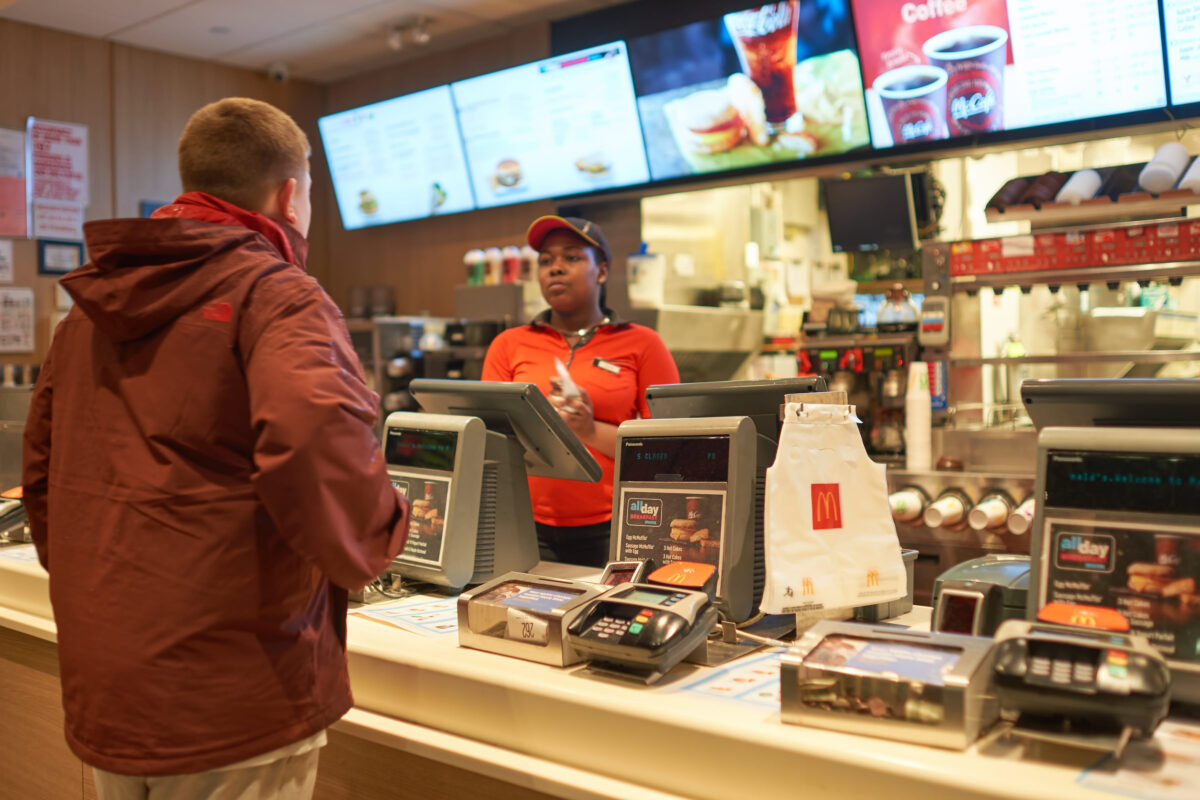
One of the most concerning elements of the Wendy’s food tampering case is what investigators describe as a disruption in food-handling protocols. In standard restaurant operations, once food is discarded, it is considered permanently removed from service circulation. Disposal is meant to be final, ensuring that no item returns to the customer supply chain.
Allegations in this Wendy’s food tampering case suggest that this boundary may have been breached. Reports indicate that food returned by the customer was later retrieved from a trash receptacle and reintroduced into service after being altered. If accurate, this represents a serious violation of food safety expectations and internal restaurant procedures.
Food safety systems are built on linear processes, where preparation, delivery, consumption, and disposal follow a one-directional path. Any reversal of that process introduces a risk of contamination and undermines consumer trust. The Wendy’s food-tampering case highlights how fragile that system becomes when disposal protocols are not strictly enforced or in real time.
Workplace Oversight Gaps Exposed by a Wendy’s Food Tampering Case
The Wendy’s food tampering case also raises questions about managerial oversight and internal accountability mechanisms. In fast food environments, managers often supervise multiple stations while handling administrative responsibilities. This division of attention can create gaps in real-time monitoring of employee behavior.
In this Wendy’s food-tampering case, the alleged actions were not immediately identified by management at the time they occurred. Instead, awareness emerged later through communication and customer reporting. This delay highlights a structural challenge in restaurant oversight, where surveillance systems often function retrospectively rather than preventively.
Industry data on service operations suggest that most misconduct in fast-food environments is detected through customer complaints or internal reporting rather than through immediate intervention. That pattern becomes particularly significant in cases like the Wendy’s food tampering case, where timing determines whether a situation is corrected early or escalates into a legal matter.
Drive-Thru Dynamics and the Psychological Trigger in a Wendy’s Food Tampering Case
The drive-thru environment plays a critical role in understanding the Wendy’s food tampering case. Unlike dine-in service, drive-thru interactions are compressed into brief exchanges, often under strict time expectations. Workers must process orders quickly while managing communication through speakers, windows, and payment systems.
This structure creates a setting where misunderstandings can escalate quickly. In the Wendy’s food-tampering case, a customer complaint reportedly triggered a chain reaction that escalated from service recovery to alleged misconduct. The absence of physical space for de-escalation may intensify emotional responses, particularly when interactions feel rushed or impersonal.
Behavioral studies in service psychology show that high-speed environments increase workers’ cognitive load. When combined with customer dissatisfaction, this load can contribute to reactive decision-making. The Wendy’s food-tampering case illustrates how pressure, timing, and communication breakdowns can intersect to disrupt standard procedures.
Trust, Brand Distance, and the Wider Impact of a Wendy’s Food Tampering Case

The Wendy’s food tampering case also highlights the structural distance between corporate brands and local franchise operations. Fast food chains often operate under franchise models, where individual locations manage daily operations while adhering to corporate standards. This separation can complicate accountability when incidents occur.
From a consumer perspective, the Wendy’s food tampering case affects brand perception as a whole, even if the incident is localized. Customers typically associate their experience with the national brand rather than the specific franchise operator. This creates a reputational ripple effect that extends beyond the immediate location.
Public reaction to food safety incidents tends to be shaped by trust expectations rather than statistical frequency. Even isolated events can influence consumer confidence because food consumption involves physical vulnerability. The Wendy’s food-tampering case demonstrates how quickly trust can be tested when allegations involve intentional contamination or mishandling.
Legal Framework and the Seriousness of a Wendy’s Food Tampering Case
South Carolina law treats food tampering as a serious felony offense when the intent to harm is alleged. The charges in the Wendy’s food tampering case reflect that legal framework, which prioritizes consumer safety and penalizes deliberate interference with food products. Such statutes exist to protect public health and maintain confidence in commercial food systems.
Legal proceedings in the Wendy’s food tampering case remain ongoing, and charges do not constitute a determination of guilt. However, the existence of felony charges signals the seriousness with which authorities approach alleged violations involving food safety and consumer harm. These laws are designed to address both physical risk and psychological impact.
Food tampering cases historically receive heightened attention because they sit at the intersection of criminal law and public health regulation. The Wendy’s food tampering case aligns with that pattern, drawing scrutiny not only for the alleged actions but also for the systemic vulnerabilities it exposes.
Systemic Lessons Emerging From the Wendy’s Food Tampering Case
The Wendy’s food-tampering case offers broader insights into how fast-food systems manage pressure, oversight, and customer interactions. One key lesson is the importance of clear disposal protocols that leave no ambiguity about the boundaries of the food lifecycle. Once food exits service, it must remain outside the system without exception.
Another lesson concerns emotional management in high-pressure service environments. The Wendy’s food tampering case illustrates how unresolved frustration can distort routine procedures if not properly managed through training and supervision. This highlights the importance of communication protocols that reduce tension during customer disputes.
Finally, the case reinforces the need for real-time oversight systems rather than purely reactive monitoring. When incidents are only identified after escalation, opportunities for prevention are lost. The Wendy’s food-tampering case demonstrates how structural gaps can turn isolated incidents into broader organizational crises.
Closing Reflection on Trust and the Fragility of Fast Food Systems
The Wendy’s food tampering case ultimately reflects a deeper truth about modern food service systems. They operate on trust that is rarely visible but constantly essential. Customers expect consistency, safety, and professionalism in environments where they have no direct control over preparation.
When that trust is disrupted, even in isolated incidents, it exposes how dependent the entire system is on human judgment under pressure. The Wendy’s food-tampering case serves as a reminder that fast-food operations are not only logistical systems but also behavioral ecosystems shaped by emotion, structure, and accountability.
The question that remains is not only what happened in one South Carolina restaurant, but how many unseen pressures exist in similar environments across the industry. And more importantly, how much strain a system built on speed and trust can absorb before those foundations begin to crack.