Charlie Kirk Case Takes a Sharp Turn as Judge Rebukes Prosecutor but Keeps Death Penalty in Play
The Charlie Kirk murder case just took 2 major turns in 1 ruling: a Utah judge found a prosecutor in civil contempt for public comments about the case, but refused to remove the death penalty from the table for Tyler Robinson, the 23-year-old man accused in Kirk’s killing.
Robinson has not entered a plea, and the case is still in its early court stage, but the June 26 ruling instantly raised the stakes around 3 explosive issues: pretrial publicity, ballistics evidence, and whether a future jury can fairly hear one of the most politically charged murder cases in America.
Kirk, the conservative activist and Turning Point USA founder, was killed on Sept. 10, 2025, while speaking before a crowd of thousands at Utah Valley University in Orem, Utah. Robinson is charged with aggravated murder, and prosecutors have said they intend to seek the death penalty if he is convicted.
The latest fight did not center on whether Robinson is guilty. It centered on whether prosecutors crossed a legal line by making public comments before trial. That matters because in a capital case, even 1 sentence outside the court can become a defense argument about jury bias.
Judge Finds Prosecutor in Contempt Over Public Comments
Judge Tony Graf Jr. ruled that Deputy Utah County Attorney Christopher Ballard violated court restrictions by speaking publicly about the strength of the case against Robinson. The defense argued that Ballard’s comments could influence potential jurors before the trial process even begins.
The judge’s contempt finding gives Robinson’s defense a clear courtroom win, but not the win they wanted most. Defense attorneys asked the court to block prosecutors from pursuing the death penalty as a sanction, arguing that the alleged misconduct was serious enough to affect the fairness of the case.
Graf declined to go that far. Instead, he ruled that removing capital punishment would be too extreme and that the court could use other tools, including expanded jury screening and additional questionnaires, to protect the case from pretrial bias.
That results in a split decision, with 1 win for each side: the defense received a formal rebuke of the prosecution, while prosecutors retained the most serious punishment available under Utah law.
Why the Bullet Fragment Became a Bigger Story Than Expected
The contempt fight grew out of a public debate over 1 bullet fragment recovered from Kirk’s body. Defense filings pointed to an ATF ballistics report that did not conclusively match the fragment to the rifle investigators believe was used in the shooting.
That word, “inconclusive,” became the spark. In some corners of the internet, it was treated as proof that prosecutors had a weak case. Prosecutors pushed back, arguing that inconclusive does not mean excluded, and that the bullet was too damaged to make a definitive match.
The legal problem came when Ballard allegedly went beyond a general explanation and publicly suggested prosecutors had enough evidence to prove Robinson’s guilt. In a normal news cycle, that might sound like a tough prosecutor defending a case. In a death penalty case, it becomes a constitutional fight.
The courtroom lesson is simple: 1 forensic report can create 2 completely different narratives. The defense sees doubt. The prosecution sees context. The judge sees a risk that the public may hear too much before a jury hears anything.
Death Penalty Still Looms Over the Case
The biggest headline from the ruling is that the death penalty remains alive. That means Robinson, if convicted of aggravated murder, could still face execution rather than a life sentence.
That makes jury selection even more important. In death penalty cases, jurors are not only asked whether they can be fair about guilt. They may also be questioned about whether they can consider both life and death as possible punishments under the law.
Graf’s decision suggests the court will not allow either side to use the media to shape public opinion before trial, but it also indicates the judge is not ready to interfere with prosecutors’ charging decisions unless the legal standard is much higher.
In plain terms, the judge punished the conduct but not the case. That is why the ruling is covered in 2 different headlines: “prosecutor rebuked” and “death penalty preserved.”
Former Roommate Issue Adds Another Layer Before July Hearing
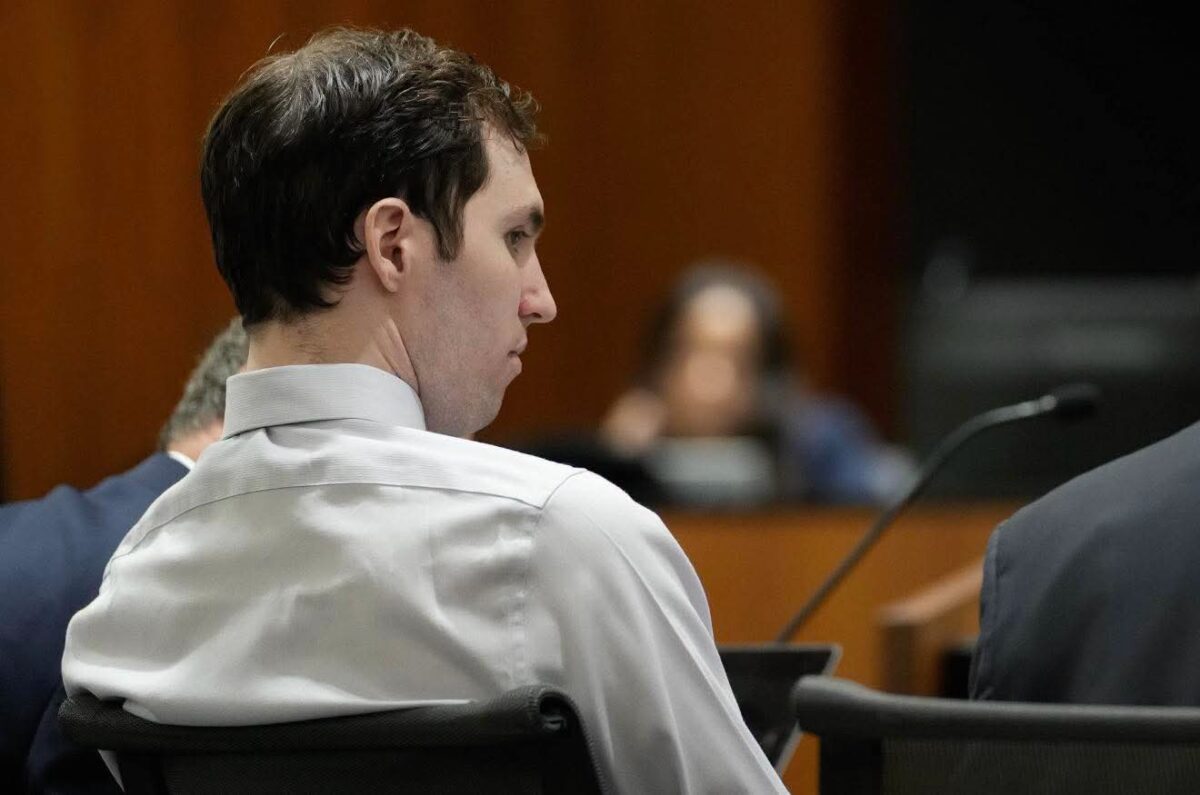
The case also has another major pretrial dispute involving Robinson’s former roommate, who is not expected to testify in person at the preliminary hearing. The defense wanted live testimony, but the judge ruled that the witness’s credibility could be tested later if the case moved to trial.
That matters because a preliminary hearing has a narrower purpose. It is not a full trial, and it does not decide guilt. Its job is to answer 1 basic question: Is there enough evidence to continue the case?
The July 6 hearing could become the most important public step so far. Prosecutors are expected to present sufficient evidence to establish probable cause, while defense attorneys are expected to challenge what evidence can be used and how far the state may go.
For readers following the case, this is the next date to watch. The contempt ruling was about courtroom conduct. The July 6 hearing is expected to move closer to the evidence.
The Bigger Legal Fight Is About Jury Bias
This case has already drawn months of national attention, and that attention is exactly what worries the court. Kirk was a major conservative figure; the shooting happened in a public setting, and the case quickly became a political, cultural, and legal flashpoint.
When a case is this visible, finding 12 jurors who can set aside everything they have read, watched, or shared online becomes a serious challenge. That is why the judge mentioned tools like more detailed juror questionnaires and a larger jury pool.
Those tools may sound boring, but they could decide whether the case survives future appeals. If a conviction happens later, the defense may argue that the jury pool was poisoned by media coverage and the prosecutor’s comments.
That is why the contempt ruling is not just a slap on the wrist. It is a warning shot with a paper trail.
Why This Ruling Matters Beyond Utah
The Charlie Kirk case is now about more than 1 defendant and 1 courtroom. It is also a test of how the justice system handles high-profile political violence in the age of viral clips, instant commentary, and online conspiracy theories.
The ballistics dispute shows how quickly a technical forensic phrase can become a national argument. “Inconclusive” is a legal and scientific term, but online, it can turn into a slogan within 24 hours.
The contempt ruling also shows how careful prosecutors must be when a case is still moving toward trial. The public may want answers fast, but the court system moves by rules, filings, evidence, and hearings.
That tension is now sitting at the center of the case. The public wants clarity. The defense wants fairness. Prosecutors want to preserve the strongest version of their case. The judge has to keep all 3 from colliding.
What Happens Next
The next major step is the July 6 preliminary hearing, where the court will decide whether prosecutors have sufficient evidence to move the case toward trial. Robinson has not yet entered a plea, and the defense is expected to continue challenging the handling of evidence and media access.
The prosecution still has the death penalty available, but it also has a warning from the judge: public comments about guilt can create real legal consequences. That warning may shape how the state discusses the case from now on.
The defense did not get the death penalty removed, but it did get something valuable: a formal ruling that a prosecutor violated court limits. That could become important if future arguments focus on jury bias or pretrial publicity.
For now, the case moves forward with 1 defendant, 1 capital murder charge, 1 rebuked prosecutor, and 1 upcoming hearing that could decide whether the most-watched Utah criminal case in years heads toward trial.