Dwayne Johnson Faces Hollywood Heat After Choosing Silence on Politics
Dwayne “The Rock” Johnson has spent decades building a reputation as one of Hollywood’s most universally loved stars. From wrestling arenas to blockbuster movie sets, his brand has always been built on energy, charisma, and wide appeal. But now, that same carefully maintained balance is being tested after comments he made about staying out of politics sparked backlash across Hollywood.
The debate began after Johnson made it clear in a recent Esquire profile that he prefers to keep his political views private and focus on storytelling rather than public political debates. That position quickly triggered strong reactions from other public figures who believe that silence from influential celebrities carries its own weight.
Johnson’s decision to step back from political talk
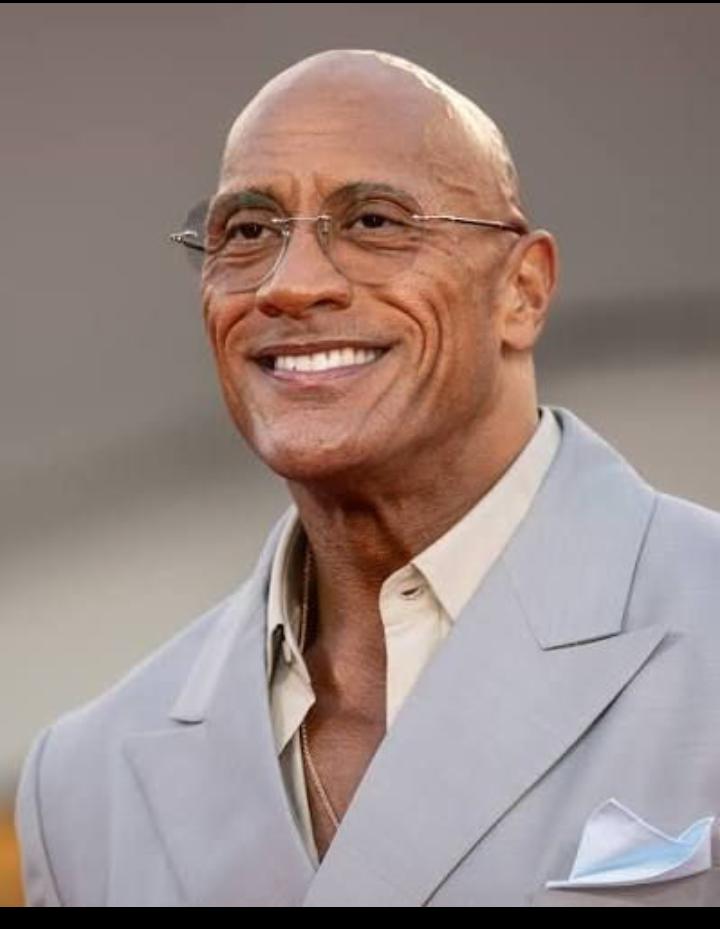
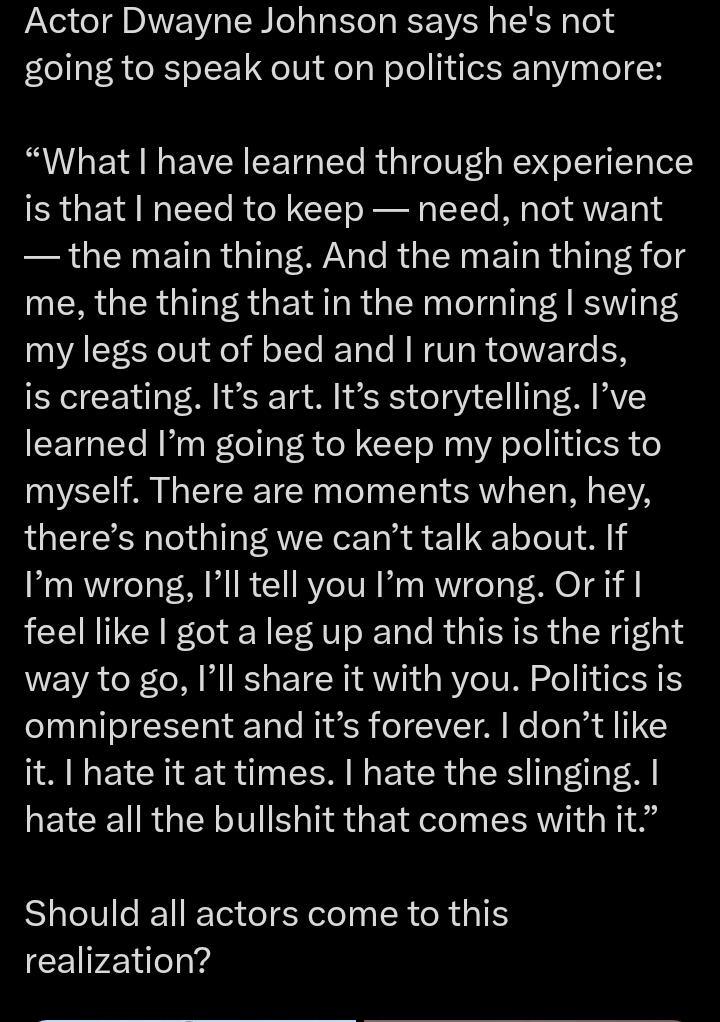
In the Esquire interview, Johnson explained that he has learned over time to focus on what he calls the “main thing”: creating films, telling stories, and entertaining audiences. He emphasized that while political discussions are everywhere, he personally prefers to stay away from the public conflict that often comes with them.
Johnson’s comments were not framed as indifference. Instead, they reflected a deliberate boundary between his professional work and political commentary. He suggested that constant engagement in political debates can become draining and distract from his creative priorities.
He also reflected on past experiences in the political space, including his endorsement of Joe Biden during the 2020 U.S. presidential election. That decision drew significant attention at the time, and later, Johnson described it as something he came to reconsider, saying he felt it contributed to unnecessary division.
His current stance appears to be a shift toward neutrality in public discourse, not necessarily silence in personal belief, but silence in public declaration.
Hollywood backlash: “Silence is complicity”
The reaction from some Hollywood figures was swift and sharply critical.
Actor and activist George Takei responded by invoking a widely debated phrase in political discourse: “silence is complicity.” His point reflects a belief shared by many in the entertainment industry that individuals with large platforms have a responsibility to speak out on major social and political issues.
Actor Wil Wheaton also weighed in more directly, calling Johnson a “coward” in response to his decision to avoid public political statements. The comment quickly circulated online and added fuel to the growing debate over celebrity responsibility.
These responses highlight a deeper divide within entertainment culture. On one side are those who believe visibility comes with obligation. On the other hand are those who argue that constant political commentary from celebrities can be unhelpful, polarizing, or performative.
Johnson has not engaged publicly in a back-and-forth with his critics, and his original comments were not framed as an attack on activism or political engagement itself. Instead, they centered on personal boundaries and professional focus.
The bigger debate: should celebrities stay neutral?
Beyond Johnson himself, the situation has reignited a long-running question in Hollywood: should public figures be expected to speak on politics at all?
Supporters of celebrity activism argue that influence comes with responsibility. With millions of followers across social media and global audiences watching their work, stars like Johnson can draw attention to causes that might otherwise be ignored. From voting rights to humanitarian crises, celebrity voices can amplify public awareness in powerful ways.
Critics of that expectation, however, argue that entertainers are not elected representatives and are under no obligation to take public positions on complex political issues. They also warn that constant political messaging from celebrities can deepen divisions among audiences who primarily seek entertainment for escapism.
Johnson’s position sits directly in the middle of that tension. He is not rejecting politics entirely, nor is he actively campaigning from the sidelines. Instead, he is drawing a line between personal belief and public expression, a distinction that is increasingly difficult to maintain in today’s media environment.
What makes the backlash more intense is Johnson’s unique status in Hollywood. Unlike many actors whose audiences lean in one direction or another, Johnson has long maintained a broad, cross-cultural appeal. That wide reach is part of why his decision to avoid political commentary is drawing so much attention.
For some observers, that neutrality is strategic. For others, it is disappointing. But what is clear is that Johnson’s attempt to remain above the political fray has placed him right in the center of it anyway.
A familiar Hollywood pattern repeats itself
This is not the first time a major celebrity has been criticized for staying out of political debates. In recent years, several high-profile figures have faced similar scrutiny when choosing silence or neutrality over public advocacy.
What sets Johnson apart is the scale of his platform and the expectations attached to it. As one of the highest-grossing actors in Hollywood and a global brand in his own right, even his silence becomes newsworthy.
Still, Johnson’s stance is consistent with a growing number of entertainers who are rethinking how much of their personal worldview should be tied to their public identity. For them, separating art from activism is not avoidance; it is sustainability.
The reactions from Takei and Wheaton show how emotionally charged the issue remains. Their criticism reflects a broader frustration among activists and public commentators who believe influential voices should not stay on the sidelines during politically tense moments.
But Johnson’s approach reflects another reality of modern fame: every public statement carries consequences, and sometimes, so does choosing not to speak.
Final takeaway
Dwayne Johnson’s decision to stay out of political discourse has not gone unnoticed, and it has certainly not gone unchallenged. The backlash from Hollywood voices like George Takei and Wil Wheaton underscores how deeply divided the entertainment world remains over the role of celebrity influence in politics.
At its core, the controversy is less about Johnson alone and more about what audiences expect from public figures in 2026: engagement, neutrality, or something in between.
For now, Johnson appears committed to his path: focus on storytelling, limit political commentary, and let the work speak for itself. Whether Hollywood accepts that boundary is another question entirely.