
US Denies Targeting Civilians After 6 Nights of Iran Strikes
A destroyed bridge in southern Iran has opened a dangerous new chapter in a war already rattling oil markets, threatening commercial ships and placing more than 50,000 U.S. service members on heightened alert across the Middle East. Washington says its latest strikes hit military targets, but Iranian authorities say bridges, a railway station and an airport were among the sites damaged during the 6th consecutive night of American attacks.
At least 7 people were reported killed in Hormozgan province, while images verified by international news organizations showed a section of the Gariveh Bridge reduced to broken pavement and rubble. The United States has not released a complete list of every target struck, leaving a major question unanswered: Was the bridge an ordinary civilian route, a military supply line, or both?
The answer matters far beyond Iran because approximately 25% of the world’s seaborne oil trade normally moves through the nearby Strait of Hormuz. With oil prices jumping about 3% after the latest escalation, American drivers, airlines, and businesses could eventually feel the effects of a conflict taking place more than 7,000 miles from Washington.
US Military Says Dozens of Iranian Targets Were Hit
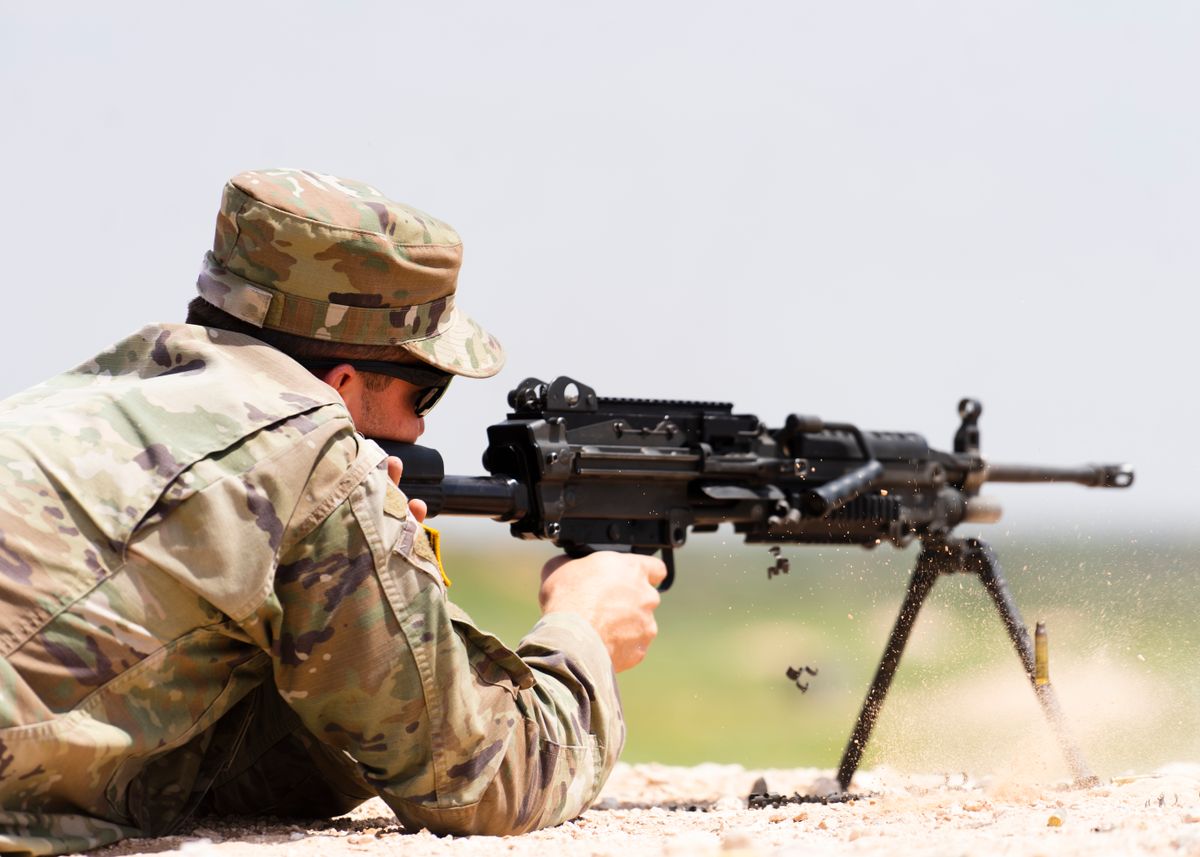
U.S. Central Command said fighter jets, aerial drones and warships launched precision weapons against dozens of targets before the operation ended at approximately 9:40 p.m. Eastern Time on July 16, 2026. CENTCOM identified coastal surveillance systems, air defenses, maritime capabilities, and military logistics infrastructure as the main categories struck.
The July 16 operation marked 6 nights in a row of U.S. strikes following the collapse of a temporary ceasefire between Washington and Tehran. CENTCOM said the goal was to further weaken Iran’s military capabilities and punish attacks on commercial vessels operating near one of the world’s busiest energy corridors.
Just 1 day earlier, American forces struck Iranian command centers, drone sites, missile capabilities, and coastal surveillance installations in multiple locations, including Bandar Abbas. CENTCOM also confirmed a separate 90-minute operation against coastal defenses and cruise missile positions on Greater Tunb Island.
That military timeline gives Washington a specific explanation for the campaign, but it does not settle the dispute over the damaged bridges. Iranian authorities reported that 6 bridges, Iranshahr Airport, and a railway facility were hit, while the White House maintained that U.S. forces targeted military assets and infrastructure supporting military logistics.
Bridge Attack Raises Difficult Questions About Civilian Protection
A bridge can carry thousands of civilian vehicles on an ordinary day while also transporting military personnel, missiles, or supplies during wartime. Under international humanitarian law, a civilian structure can lose its protected status when its use makes an effective contribution to military action and destroying it offers a definite military advantage.
That legal test contains at least 2 separate requirements: the target must support military operations, and attacking it must provide a concrete military benefit. Even then, the attacking force must take precautions to reduce civilian casualties and ensure that any expected civilian harm is not excessive relative to the anticipated military advantage.
The publicly available footage confirms physical damage to at least 1 major bridge, but it does not show what was crossing the structure before the explosion. Washington has not released surveillance images, intercepted communications or other evidence explaining why that particular crossing may have been considered part of Iran’s military logistics network.
Iranian reports have also offered changing casualty totals, ranging from smaller initial counts to at least 7 deaths and 16 injuries in Hormozgan province. Because access to active strike zones remains limited, each casualty figure should be treated as provisional until hospitals, local authorities and independent monitors complete their assessments.
The United Nations has repeatedly warned that civilians, ports, energy facilities, commercial ships, and maritime workers must be protected. Its concern now extends across several countries because attacks on infrastructure have been reported on both sides of the Gulf during a conflict that began on February 28, 2026.
Iran’s Retaliation Puts Kuwait’s Water Supply at Risk
Iran responded to the American campaign with missile and drone attacks across the region, including a strike on a power and desalination facility in Kuwait on July 17, 2026. Kuwaiti officials reported damage to electricity-generating units and a fire at the complex, while military personnel were also wounded in separate drone incidents.
The attack on Kuwait introduced a frightening new angle because desalination supplies more than 90% of the country’s drinking water. In a desert nation with limited freshwater resources, disabling even 1 major plant could affect far more than electricity production by disrupting household water, hospitals, sanitation systems, and emergency services.
Power and water facilities are frequently built together because desalination requires enormous amounts of energy. That creates a dangerous 2-for-1 vulnerability, where a single missile or drone strike can reduce both electricity generation and drinking-water production at the same location.
Iran also claimed attacks on U.S. or allied targets in Oman, Bahrain, Kuwait, and Syria, although several of those claims remained unverified. CENTCOM said no American troops had recently been killed or captured, underscoring the widening gap between official statements issued by the 2 opposing sides.
Tanker Hit Just 19 Nautical Miles From Oman
The conflict also reached commercial shipping when a tanker reported being hit by an unknown projectile approximately 19 nautical miles east of Khasab, Oman. The impact caused minor structural damage to the vessel’s port side, but all crew members were safe, and no environmental damage was reported.
The ship continued toward its next port after the July 16 incident, but the choice of port was significant, as Khasab lies near the entrance to the Strait of Hormuz. An attack in that narrow area can raise insurance costs, delay cargoes, and cause shipping companies to reroute vessels even when only 1 tanker is physically damaged.
The United States has also restarted its naval blockade of Iranian ports, effective from 4 p.m. Eastern Time on July 14. During an earlier blockade lasting from April 13 to June 18, CENTCOM said American forces redirected more than 140 vessels, disabled 9 noncompliant ships and allowed over 50 humanitarian vessels to pass.
Those figures show how quickly a military campaign can interfere with ordinary trade. Each redirected tanker may carry hundreds of thousands or even millions of barrels, meaning a small number of delayed ships can tighten supplies before physical shortages appear at American refineries.
Why the Strait of Hormuz Matters to American Consumers
Around 20 million barrels of oil per day, equal to roughly 25% of global seaborne oil trade, normally pass through the Strait of Hormuz. About 80% of those oil and petroleum product shipments were destined for Asia in 2025, but disruptions can still raise prices worldwide because crude is traded in a connected global market.
Only Saudi Arabia and the United Arab Emirates have operating pipelines capable of bypassing the strait at meaningful scale. Their combined available rerouting capacity is estimated at between 3.5 million and 5.5 million barrels per day, leaving a massive gap if the normal 20-million-barrel flow is severely restricted.
Natural gas markets are equally exposed because more than 110 billion cubic meters of liquefied natural gas crossed the strait in 2025. That included about 93% of Qatar’s LNG exports and 96% of the United Arab Emirates’ exports, representing nearly 20% of worldwide LNG trade.
The conflict has already reduced LNG supplies from Qatar and the UAE by more than 300 million cubic meters per day, equivalent to over 2 billion cubic meters every week. European benchmark natural-gas prices were approximately 35% above prewar levels by mid-June, according to the International Energy Agency.
Oil inventories have also been falling at an average rate of 3.8 million barrels per day since the war began, including a preliminary decline of 143 million barrels in May alone. The IEA responded by coordinating a record release of 400 million barrels from emergency reserves held by its 32 member countries.
The Crisis Could Reach Grocery Stores and Airports
The economic threat extends beyond gasoline, as more than 30% of global urea trade and about 20% of ammonia and phosphate trade pass through the Strait of Hormuz. Those products are essential ingredients in fertilizer, meaning a long disruption could raise farming costs and eventually push up food prices in the United States.
The Gulf also exported approximately 3.3 million barrels per day of refined petroleum products and 1.5 million barrels per day of liquefied petroleum gas in 2025. Nearly 3 million barrels per day of regional refining capacity has since been shut down due to attacks or limited access to export routes.
Jet fuel is another pressure point because prices nearly tripled after Middle Eastern exports were disrupted earlier in the conflict. Even if U.S. airlines source fuel from other suppliers, higher global fuel prices can affect ticket costs, cargo rates, and operating expenses across thousands of daily flights.
The Gulf region also produces about 8% of the world’s aluminum, with roughly 5 million metric tons shipped through the Strait of Hormuz each year. Aluminum shortages or higher freight costs can reach American construction companies, automakers, beverage producers, and manufacturers that depend on the lightweight metal.
A Damaged Bridge Now Symbolizes a Much Larger War
The immediate dispute centers on 1 damaged Iranian bridge, but the deeper story involves 6 consecutive nights of bombing, more than 50,000 deployed U.S. personnel, retaliatory strikes across several Gulf countries and a shipping corridor carrying one-quarter of the world’s seaborne oil.
Washington says it is dismantling military networks and protecting commercial navigation. Tehran says the United States is attacking civilian infrastructure, while Iran’s own strikes have damaged a Kuwaiti facility connected to more than 90% of that country’s drinking-water supply.
Until the United States releases evidence showing how the bridges supported Iranian military operations, the legality of the attacks will remain contested. What cannot be disputed is the scale of the danger: 7 reported deaths, a tanker struck 19 nautical miles from Oman, oil prices rising about 3%, and vital energy routes again caught between escalating military powers.
For American households, this is no longer a distant fight measured only in missiles and military statements. A prolonged crisis could appear through 4 familiar expenses: gasoline, airline tickets, electricity, and groceries, turning the Strait of Hormuz into a direct test of how quickly a regional war can reach the U.S. economy.


