Traoré Draws a Firm Line on Religious Extremism and Demands Skills That Can Build Burkina Faso
Burkina Faso’s military leader, Captain Ibrahim Traoré, has sparked intense debate after delivering a forceful speech that placed religious tolerance, national unity and practical education at the center of his government’s vision.
Traoré addressed community leaders and other representatives of the Yaadga region in Ouahigouya on Thursday, July 16, 2026. Several viral posts incorrectly described the audience as representatives of Yagha meeting in Ouagadougou. Burkina Faso’s state broadcaster and national news agency confirmed that the speech occurred in Ouahigouya during Traoré’s visit to Yaadga.
His message was direct, faith has a place in national life, but religious extremism must not be allowed to divide citizens or dictate the laws of the state.
Faith Must Unite, Not Become a Weapon
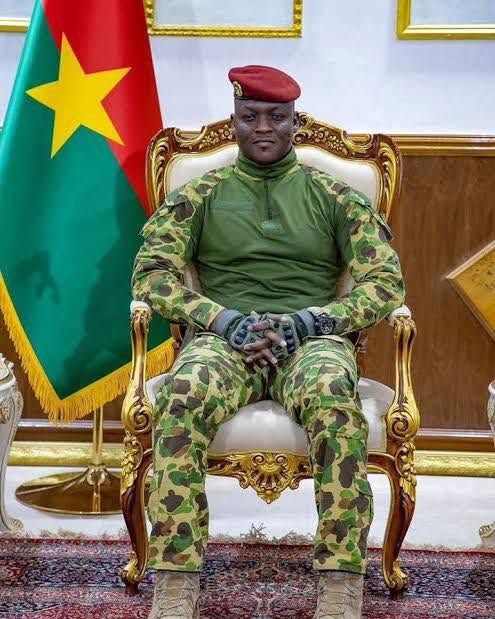
Traoré, who identifies as Muslim, defended the right of every Burkinabè citizen to follow a religion of their choice. His broader argument was that no religious community should attempt to impose its beliefs on the entire population.
Reports translating his remarks quoted him as rejecting the introduction of Sharia law and insisting that religion should win followers through good conduct rather than intimidation.
“If you want to bring someone into your religion, it should be through your behavior first,” Traoré told the gathering, according to regional reporting on the speech. He also warned religious leaders against sermons that encourage hatred, violence or the labeling of other citizens as unbelievers.
That message carries particular weight in Burkina Faso. According to the country’s 2019 census figures cited by the U.S. State Department, about 63.8% of the population is Muslim, while Roman Catholics, Protestants and followers of Indigenous beliefs make up significant parts of the country’s religious landscape.
Muslims, Christians and practitioners of traditional faiths have long lived in the same communities, attended one another’s ceremonies and built families across religious lines. Traoré’s warning suggested that his administration views that tradition of coexistence as something worth defending.
Religious leaders who met him during the visit said they would continue praying for peace and national recovery. The delegation, led by Ouahigouya Bishop Justin Kientega, also expressed support for efforts aimed at improving the country’s social and economic conditions.
Hundreds Studying Religious Law Abroad Draw Scrutiny
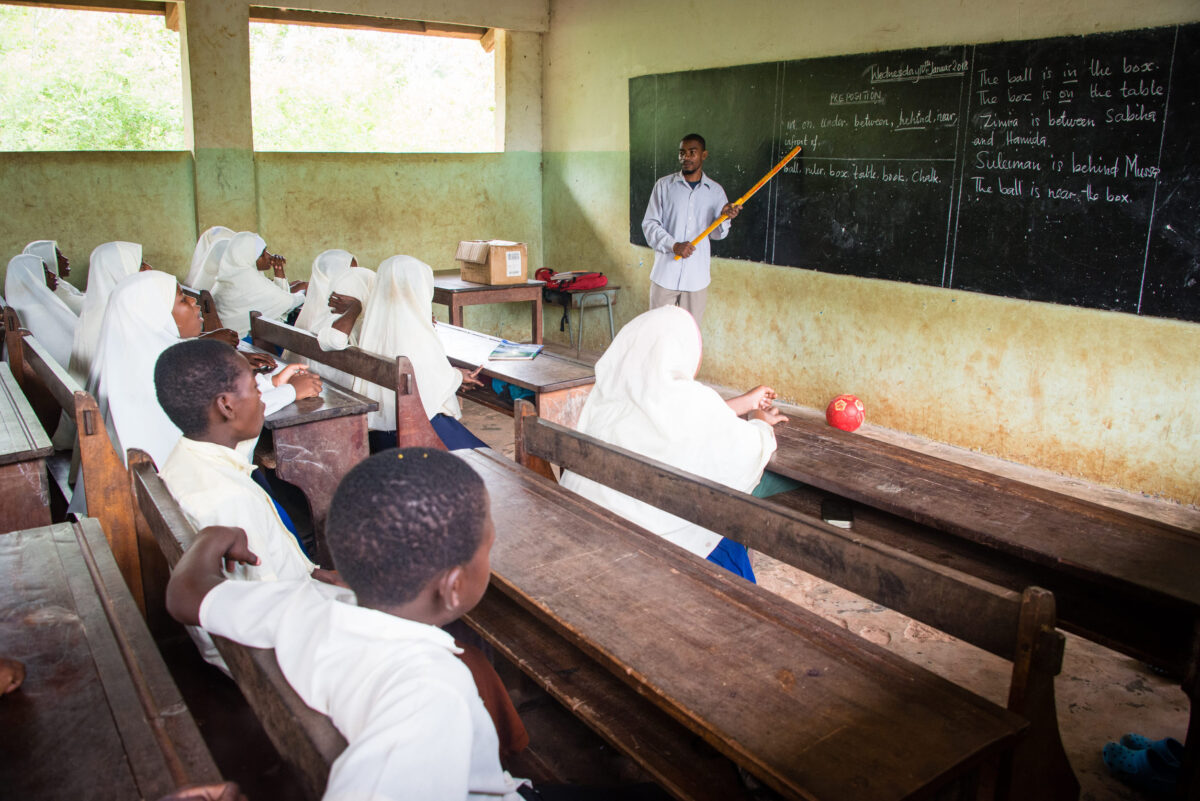
One of the speech’s most discussed sections concerned Burkinabè students studying in Arab countries without the government’s knowledge.
Traoré said authorities were reviewing the situation of more than 1,000 students abroad. He claimed that over 800 were studying Sharia, Islamic law or religious jurisprudence rather than technical professions needed inside Burkina Faso. Local reporting said the government intended to bring those students home and place greater control over overseas study programs.
The president’s concern was not presented as an attack on religious education itself. His criticism focused on the number of students receiving similar religious training while the country struggles to find engineers, technicians, builders, doctors, agricultural specialists and other skilled professionals.
For Traoré, the question was practical: Where would hundreds of graduates trained mainly in foreign religious law use those qualifications inside a secular, religiously diverse state?
He argued that Burkina Faso cannot afford an education system disconnected from its most urgent problems. Roads must be built. Farms need modern equipment. Electricity and water systems require trained workers. Hospitals need qualified staff. Industries cannot grow without technicians, scientists and engineers.
A Push Toward Science and Technical Skills
The viral version of the story claimed that Burkina Faso’s education system would shift “entirely” toward STEM. The available official reports do not confirm a complete elimination of other fields. What the speech clearly reflected, however, was Traoré’s determination to prioritize practical and technological training.
Science, technology, engineering and mathematics are increasingly viewed across Africa as essential tools for creating jobs, improving agriculture and reducing dependence on imported expertise. In May 2026, the African Union launched a program to strengthen STEM and technical education teaching, linking those skills to employment, entrepreneurship and industrial development.
Burkina Faso faces a difficult educational landscape. UNESCO data show that primary-school completion remains uneven, with a reported completion rate of 62% for boys and 72% for girls in 2021. Conflict has also disrupted schooling in several parts of the country.
Traoré’s remarks therefore went beyond choosing university majors. They raised a larger question about whether education is producing the workforce Burkina Faso needs to rebuild itself.
A country may produce thousands of graduates, but degrees alone do not repair bridges, operate factories or design irrigation systems. Traoré’s argument was that education must connect knowledge to visible national needs.
A Powerful Speech From a Controversial Leader
Traoré came to power in September 2022 after overthrowing Lieutenant Colonel Paul-Henri Damiba in Burkina Faso’s second military takeover that year. His transitional government later extended military rule for five years from July 2024, while saying elections could take place earlier if security conditions improve.
His government continues to face a violent insurgency involving armed groups linked to al-Qaeda and Islamic State. The conflict has killed thousands and displaced more than two million people.
That security crisis explains the sharper edge in Traoré’s language about extremist preaching. He believes religious radicalization is not merely a theological disagreement but a threat capable of feeding violence and weakening the state.
His July 16 address combined three messages that are difficult to separate: citizens may worship freely, extremism will face resistance, and education must help build a functioning nation.
The speech spread quickly because it touched a debate unfolding far beyond Burkina Faso. African governments are under growing pressure to respect faith while confronting radicalization, expand education while reducing unemployment, and protect tradition while preparing young people for a technology-driven economy.
Traoré’s words were blunt, and some of his proposed measures will likely face criticism. Yet the challenge he described is real: Burkina Faso needs a generation capable of protecting religious harmony while mastering the practical skills required to rebuild the country.