Tokyo urges men to wear shorts to work as summer heat rises, but critics call it ‘leg-hair harassment’.
TOKYO: In a city where the dark business suit has survived even the most punishing summer commute, officials are asking workers to consider a radical alternative: show some leg.
The Tokyo Metropolitan Government is encouraging employees to trade jackets, ties and full-length trousers for lighter clothing, including polo shirts, T-shirts, sneakers and knee-length shorts. The recommendation is part of “Tokyo Cool Biz,” an expanded campaign intended to protect workers from dangerous heat while reducing offices’ dependence on air conditioning.
The idea has quickly become a debate over professionalism, gender expectations and body hair. Some workers welcome the freedom to dress for the weather. Others believe shorts belong on a day off, not behind a government desk. A smaller group of critics has adopted the online term “sunehara,” translated as “shin harassment” or “leg-hair harassment,” to describe discomfort at seeing male colleagues’ exposed legs.
What began as a heat-safety measure has become a test of how far Japan’s famously formal office culture will bend as extreme temperatures make old rules harder to defend—and as the debate widens beyond comfort.
A dress-code change driven by dangerous heat
Tokyo’s push is not a fashion stunt. Japan is confronting another severe summer after recording its hottest summer on record in 2025. Nationwide temperatures last summer averaged 2.36 degrees Celsius above normal, while more than 100,000 people were taken to hospitals with heat-related illness.
Conditions remain punishing in 2026. Tokyo reached about 35 degrees Celsius, or 95 degrees Fahrenheit, with average humidity of 72% on a July day when Reuters interviewed government employees taking part in the campaign. Japan recorded its first official “cruelly hot day” on July 21 after temperatures reached or exceeded 40 degrees Celsius in several central cities.
The phrase, kokushobi, was introduced by the Japan Meteorological Agency for days above 40 degrees Celsius. On July 21, 278 of Japan’s 914 weather stations registered temperatures above 35 degrees Celsius, showing how widespread the heat had become.
The consequences are serious. Heatstroke deaths exceeded 2,000 in Japan for the first time in 2024. More than 100,000 people were hospitalized with heat-related illness between early May and late September last year. In one recent week this July, seven people reportedly died, and 4,580 were taken to hospitals because of heatstroke.
Against that backdrop, loosening a tie is no longer enough. Tokyo’s campaign combines cooler clothing with earlier shifts, remote work, and closer monitoring of heat risks, as the city first formally permitted metropolitan employees to come to work in shorts this spring.
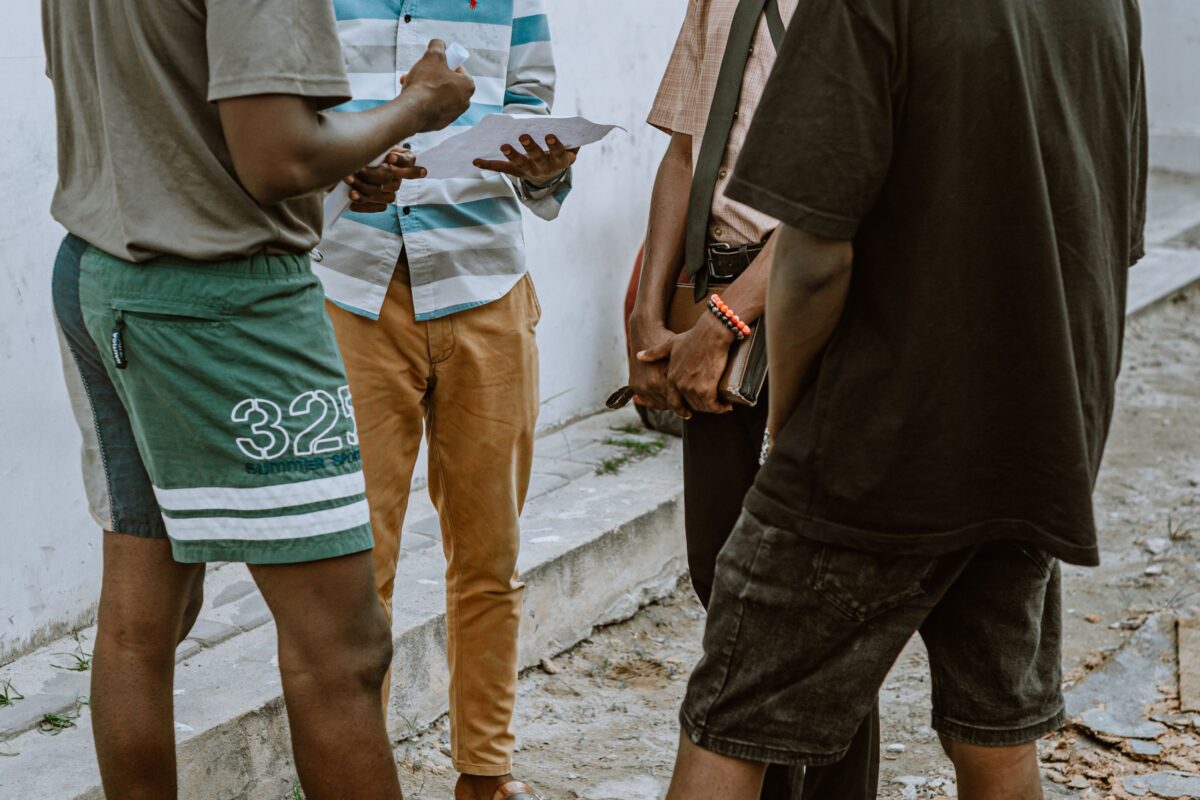
Reuters spoke with public servant Toru Suda, who arrived in a polo shirt, navy shorts and sneakers. The outfit felt strange at first, he said, but the awkwardness faded as more colleagues began dressing casually.
Officials insist the goal is choice, not compulsion. Noboru Watanabe, who leads Tokyo’s climate-change countermeasures team, has said employees should adjust their clothing to the task and occasion. Formal meetings may still require formal clothes. Ordinary desk work during dangerous heat may not.
That distinction matters. Tokyo is not banning suits, ordering workers to wear shorts or declaring that formal clothing has no place in public offices. Instead, it is creating room for employees to make practical decisions based on the temperature, their responsibilities and the people they expect to meet.
Shorts expose a deeper gender divide.
The campaign might have remained a straightforward workplace experiment if it had not collided with Japan’s expectations about how professional men and women should look. That collision quickly exposed a deeper gender divide.
Men have traditionally faced a narrow office uniform: dark suit, white shirt, polished shoes and conservative tie. Women’s rules can be less explicit but more complicated. In many traditional offices, women whose skirts expose their legs are still expected to wear tights or pantyhose as a matter of etiquette, even in extreme heat.
That perceived imbalance has fueled criticism. Some women have questioned why male employees are encouraged to bare their legs for comfort while female employees may still be judged for doing the same without tights. The dispute is less about one pair of shorts than about who is granted freedom and who remains responsible for maintaining a polished appearance.
Then came “sunehara.”
The expression combines the Japanese word for shin with the borrowed term “harassment.” Some online commentators use it to describe unwanted exposure to male leg hair in an office. The phrase is attention-grabbing, but it is not an official workplace finding or a view held by all Japanese women. It is better understood as part joke, part grooming criticism and part backlash to a changing norm.
A June online survey commissioned by Gorilla Clinic, a men’s cosmetic medical provider, found public opinion almost evenly divided. Among 800 adults ages 20 to 59, 53.5% opposed wearing shorts at work during summer, while 46.5% supported it. Among opponents, 45.5% cited concerns about body shape or body hair.
The survey also showed how grooming affected people’s perceptions. A jacket-and-shorts outfit was approved by 58% of respondents when the model’s legs appeared hair-free. Approval fell to 24.1% when visible leg hair was added to the same outfit.
Because the research came from a commercial cosmetic clinic rather than an independent national poll, the findings should be treated cautiously. The poll does not prove that most Japanese women object to men wearing shorts, nor does it show that “sunehara” has become an established workplace problem.
Even so, it captures the contradiction at the center of Tokyo’s experiment: a relaxed dress code can remove one social pressure while immediately creating another.
Akifumi Funatsu, a director at Gorilla Clinic, said more men have sought laser hair removal not only for cosmetic reasons but as a matter of “social etiquette when wearing shorts.” Workers freed from long trousers may now feel pressure to shave, trim or permanently remove their body hair before entering the office.
The answer to extreme heat could therefore produce a new grooming burden for men who never expected their shins to become part of their professional image.
The debate also raises a larger question about workplace fairness. A truly flexible policy would allow men and women to dress comfortably without creating separate rules for visible legs, body hair or grooming. Otherwise, Tokyo risks replacing an outdated suit requirement with a different set of appearance expectations.
Cool Biz grows up in a hotter Japan.

Tokyo’s shorts debate is the latest chapter in a campaign that began more than two decades ago.
Yuriko Koike, now Tokyo’s governor, helped launch the national Cool Biz initiative in 2005 when she served as environment minister. The original campaign encouraged workers to remove jackets and ties, wear short-sleeved shirts and reduce air-conditioning use. Then-Prime Minister Junichiro Koizumi promoted the idea by appearing publicly without his usual jacket and tie.
The campaign expanded after the March 2011 earthquake, tsunami and Fukushima nuclear disaster disrupted Japan’s electricity supply. “Super Cool Biz” gave workers more freedom to wear polo shirts, sneakers and other casual clothing while offices conserved power. Shorts, however, largely remained outside acceptable corporate wear.
That boundary is moving because the climate is moving faster. Japan’s average summer temperature has risen about 1.3 degrees Celsius over the past century.
Japan’s average summer temperature has risen about 1.3 degrees Celsius over the past century. The summers of 2023 and 2024 were the hottest recorded since national records began in 1898, and 2025 surpassed them. Last August, Isesaki in Gunma Prefecture recorded 41.8 degrees Celsius, the highest temperature measured in Japan.
The effects reach beyond office wardrobes. Farmers are planting heat-tolerant rice, and Japan’s national high school baseball tournament has split games into morning and evening sessions to reduce heatstroke risks. Researchers have warned that outdoor school sports could become impractical during the hottest months by the 2060s without deep cuts to greenhouse-gas emissions.
In that context, the office-shorts argument may sound comical. Yet it shows how climate adaptation happens. Governments announce policies, but people must negotiate the details: what looks respectful, who gets judged, and which traditions remain worth preserving.
Tokyo is not ordering every salaryman to arrive in Bermuda shorts. It is acknowledging that clothing rules created for a cooler era may no longer make sense when temperatures approach 40 degrees Celsius.
Some employees will keep their suits. Others will embrace shorts. A few may book laser appointments before showing their knees.
But the larger question is no longer whether bare legs look professional. It is whether professionalism should require workers to endure avoidable discomfort during dangerous heat.
For Tokyo, the answer is beginning to change one pair of shorts at a time.