Trump Iran War Claims Face a Harder Reckoning as Costs, Casualties and Oil Prices Rise
A victory speech can sound convincing until the defeated enemy fires back. President Donald Trump’s Iran war claims presented Americans with a clear story: Iran’s military had been destroyed, the conflict would end quickly, the Strait of Hormuz was under American control, and oil prices were falling. Nearly five months after the United States launched the war on February 28, 2026, each part of that story faces mounting contradictions.
Iran has suffered extensive military losses, but it continues launching missiles and drones against American forces and regional targets. The conflict has killed at least 18 US service members, wounded hundreds more, disrupted global energy routes, and cost the Pentagon an estimated $37.5 billion. Washington is now seeking nearly $90 billion in additional funding as military operations continue.
The problem extends beyond four disputed statements. The Trump Iran war claims reveal a widening gap between battlefield success and strategic victory. America has destroyed ships, bases, launchers, and command centers, yet it has not secured a durable peace, safe commercial passage, or a clear endpoint for the war.
The Enemy With “Nothing Left” Kept Launching Missiles

American forces have inflicted devastating damage on Iran’s conventional military. US strikes have hit naval assets, missile facilities, drone storage locations, surveillance systems, and air defenses. The White House said in April that Iran’s navy was gone, its air force was in ruins, and its ability to threaten America and its allies had been systematically dismantled.
Those achievements gave Trump a factual basis for saying Iran had been weakened. However, he repeatedly went further by describing Iran’s military as essentially eliminated and suggesting it could no longer fight back. That absolute language created a standard that later attacks would clearly disprove.
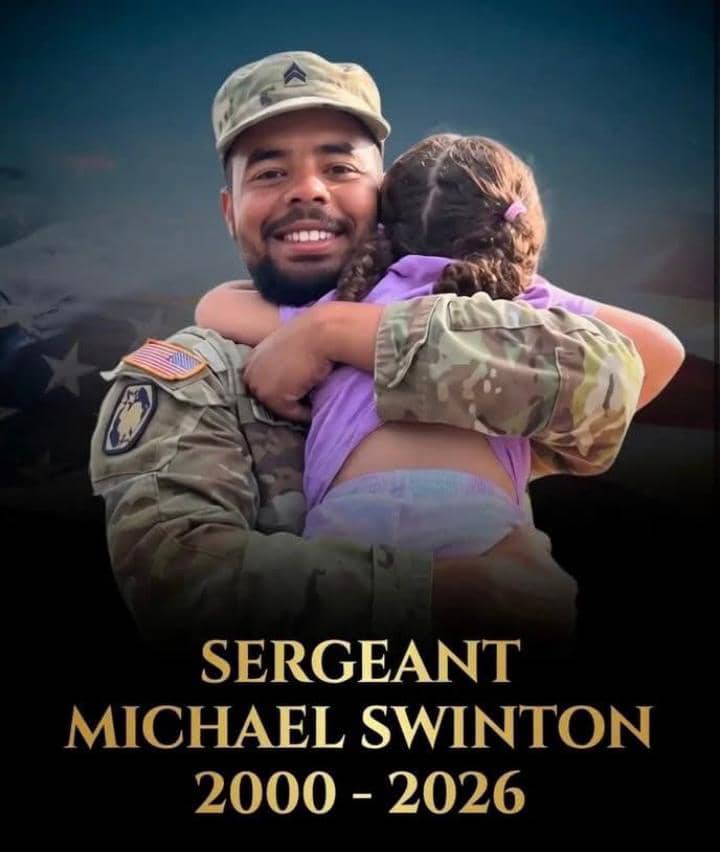
On July 17, Iranian ballistic missiles and drones struck American forces in Jordan. Two US service members were killed, another was initially listed as missing, and four were medically evacuated. A day later, another service member died in northern Iraq during the disposal of unexploded ordnance from an Iranian attack drone.
These were not isolated political gestures from a defeated state. Iran still possessed operational weapons, launch crews, intelligence systems, and command networks capable of reaching American positions. A military that can coordinate lethal attacks across borders may be badly damaged, but it cannot accurately be described as nonexistent.
The contradiction became even clearer when US Central Command announced an eighth consecutive night of strikes on July 18. American forces targeted Iranian coastal surveillance systems, air defenses, maritime assets, and missile and drone storage facilities. CENTCOM said more than 50,000 US personnel remained deployed across the Middle East.
Why would Washington need eight consecutive nights of bombing against a military that supposedly had nothing left? The continued strikes may be operationally justified, but they expose the weakness in the earlier Trump Iran war claims. Iran was degraded, not eliminated, and the difference has become increasingly costly.
The Definition of Victory Keeps Getting Smaller
The administration’s early descriptions of victory were sweeping. Trump said Iran’s military capabilities had been destroyed and suggested the hardest phase of the war was complete. The White House later celebrated a June agreement as an America First breakthrough that reopened the Strait of Hormuz and prevented an endless conflict.
That definition of success did not survive renewed fighting. After the agreement collapsed, US aircraft returned to near-nightly strikes while Iran resumed attacks against American personnel and commercial interests. What began as a declaration of victory became another campaign to weaken capabilities that officials had already described as dismantled.
The language changed with the battlefield. “Iran has no military left” became “Iran has been severely degraded.” That statement then evolved into the argument that the United States must continue striking Iran to degrade it further.
This pattern allows victory to remain permanently within reach but never fully verifiable. Every destroyed target becomes evidence that the campaign is succeeding. Every surviving Iranian weapon becomes justification for another round of attacks.
American history shows the danger of declaring military missions complete before political conditions become stable. On May 1, 2003, President George W. Bush announced that major combat operations in Iraq had ended from the USS Abraham Lincoln. The conflict continued for years, and the “Mission Accomplished” setting became a lasting symbol of premature certainty.
The conflicts are different, but the communication risk remains familiar. Leaders often measure progress through targets destroyed, territory controlled, or commanders killed. Wars, however, usually end through durable political arrangements, not televised declarations.
A War Measured in Weeks Now Has No Clear Clock
Trump initially described the Iran campaign as a four- to six-week operation. Early battlefield gains appeared to support that timetable, especially after the United States destroyed major Iranian assets. The June agreement then gave the administration an opportunity to present the mission as largely completed.
The agreement reopened the Strait of Hormuz and encouraged global oil flows to recover. On July 7, the US Energy Information Administration predicted that production and trade could approach prewar levels by the end of 2026. That forecast depended heavily on the agreement holding and shipping conditions continuing to improve.
The ceasefire did not produce a lasting settlement. Fighting intensified again in early July, and American strikes continued for consecutive nights. Iran also returned to attacking US-linked targets and threatening commercial traffic.
The conflict’s mission has expanded alongside its duration. The original campaign focused on missiles, drones, naval forces, air defenses, and nuclear-related infrastructure. Washington must now defend regional bases, protect commercial vessels, replenish depleted weapons, and respond to repeated Iranian attacks.
This expansion resembles mission creep even without a formal change in policy. Each surviving Iranian capability creates another military objective. Each new attack extends the timeline and generates another reason to continue the campaign.
The central question is no longer whether the United States can destroy more Iranian targets. It clearly can. The unresolved question is what political or military condition would allow Washington to stop.
The War’s Price Tag Is Becoming Part of the Fact Check
The financial cost adds another dimension to the Trump Iran war claims. Defense Secretary Pete Hegseth told lawmakers that the conflict had cost approximately $37.5 billion, including certain projected expenses through September 30. The administration has also requested nearly $90 billion in additional Iran-related funding.
Those figures challenge the original portrayal of a short, decisive operation. A war that has already consumed tens of billions of dollars and requires another massive funding package does not resemble a completed campaign. It resembles a continuing national commitment with an uncertain final cost.
Pentagon officials have warned that maintenance, training, and capability investments may suffer without additional funding. Money used to sustain operations in Iran cannot simultaneously support every other military priority. The conflict therefore carries consequences for readiness in Europe, Asia, and other parts of the Middle East.
Weapons consumption presents an equally serious concern. Iran can launch relatively inexpensive drones while the United States responds with interceptors that may cost millions of dollars each. This imbalance allows a weaker force to impose disproportionate costs on a much stronger opponent.
Iran does not need to defeat America’s military in a conventional battle. It can strain US resources by forcing repeated defensive launches, aircraft deployments, naval patrols, and replacement purchases. Attrition becomes a strategy when direct victory remains impossible.
That creates a difficult contradiction. The administration says Iran’s military has been devastated, yet that same military continues consuming American weapons, money, personnel, and attention. Iran may be weaker than before the war, but it still influences Washington’s daily agenda.
Control of Hormuz Looks Different From a Tanker’s Deck
Trump also claimed that the United States controlled the Strait of Hormuz and that Iran controlled nothing. American naval superiority in the area is substantial, but naval dominance does not automatically guarantee safe commercial passage. Control must also be measured through traffic, insurance, shipping decisions, and energy flows.
The Strait of Hormuz carries roughly one-fifth of the world’s oil and liquefied natural gas under normal conditions. Following the outbreak of war, Iranian attacks and threats sharply disrupted traffic. Reuters documented attacks on at least 22 civilian vessels during the early stages of the conflict.
The Energy Information Administration described the strait as effectively closed after February 28. It estimated that Middle Eastern production shutdowns peaked at 11.2 million barrels per day in May. Those disruptions affected exporters across the Gulf, not only Iran.
Traffic increased following the June agreement, but renewed fighting again slowed flows through the waterway. Tankers also faced threats in the Red Sea, forcing some vessels onto longer and more expensive routes. By July 22, oil prices had returned to near six-week highs.
This is where the Trump Iran war claims encounter the commercial reality test. A secure waterway should inspire confidence among shipowners, crews, insurers, and energy traders. A contested waterway produces delays, detours, higher premiums, and nervous markets.
The United States may dominate a direct naval confrontation with Iran. Yet Tehran still has enough missiles, drones, mines, and coastal systems to influence commercial behavior. That is disruption, and disruption itself is a form of power.
Falling Oil Prices Were a Fragile Peace Dividend

Trump’s statements about oil prices initially contained some truth. Brent crude fell sharply after the June agreement and dropped below $70 per barrel on July 1. The decline reflected expectations that Hormuz would reopen, Gulf production would recover, and the risk of a wider war would fade.
The administration presented that decline as proof that its strategy had succeeded. Trump said oil prices were falling rapidly and suggested they would continue moving toward prewar levels. However, the market was responding to a temporary pause in fighting, not a permanent military settlement.
When the truce collapsed, oil prices changed direction. Reuters reported that crude prices surged as renewed attacks threatened shipping routes and tightened supply expectations. Analysts revised their projected global oil deficit for 2026 from 750,000 barrels per day to 1.5 million barrels per day.
American motorists felt the shift directly. The average US gasoline price climbed above $4 per gallon on July 20 after falling below that level during the ceasefire. Crude oil remains the largest production cost for gasoline, so renewed conflict quickly reached household budgets.
The administration had taken political credit for a peace dividend before securing the peace. That decision made the later price surge more damaging because it exposed how dependent the earlier claims were on temporary calm.
The economic burden also reaches beyond gasoline. Higher energy costs affect transportation, food distribution, airline operations, manufacturing, and household utilities. Americans can therefore pay for the war through taxes, federal borrowing, and everyday prices at the same time.
The Casualty Lists Changed the Political Meaning of the War
Statistics can make conflict appear distant until names replace numbers. On July 22, Trump attended the dignified transfer of four American service members at Dover Air Force Base. Their deaths underscored the continuing human consequences of a war the administration had repeatedly described as approaching victory.
The broader toll has reached at least 18 American military deaths and hundreds of injuries. Most wounded personnel have reportedly returned to duty, but that fact does not diminish the pressure placed on service members and their families. Continued casualties make absolute victory claims increasingly difficult to sustain.
Public opinion has also shifted. A Reuters and Ipsos survey released after the June agreement found that only about one quarter of Americans believed the war had been worth its costs. A majority also doubted that the truce would last.
That skepticism creates political risk for Republicans ahead of the November 3, 2026, midterm elections. Many Republican lawmakers continue supporting the war, but some have demanded clearer objectives, greater transparency, and stronger congressional oversight. Democrats have increasingly linked the conflict to affordability, fuel prices, and federal spending.
Congressional authority has also returned to the debate. Lawmakers have introduced measures directing the president to remove US forces from unauthorized hostilities with Iran unless Congress approves the conflict. These proposals reflect a deeper concern about whether an expanding war can continue without a specific authorization.
The Trump Iran war claims are therefore becoming more than a presidential credibility issue. They now affect congressional elections, defense budgets, constitutional authority, and public trust. Republicans who continue financing the conflict will increasingly share responsibility for its outcome.
A Retaliation Formula Without an Exit Could Extend the War
Trump escalated his warnings on July 22 by proposing a direct retaliation formula. He said the United States would attack an Iranian bridge or power plant whenever Iran targeted a ship in the Strait of Hormuz. The threat was designed to establish deterrence through predictable punishment.
However, the formula contains no clear stopping mechanism. Iran could attack a vessel, prompting the United States to destroy infrastructure. Tehran could then retaliate against an American base, which would trigger another round of US strikes.
Such a cycle can widen without either side making one dramatic decision to expand the war. Each action becomes a response to the last action. Retaliation gradually replaces strategy.
Attacks on power plants and bridges also raise humanitarian and legal questions. Civilian infrastructure may support military operations, but it can also serve hospitals, water systems, transportation networks, and residential communities. International law requires parties to distinguish between legitimate military targets and civilian objects.
The administration’s hardest challenge is no longer demonstrating that America can strike Iran. The US military has already proved that ability repeatedly. The challenge is turning destructive capacity into a stable outcome that reduces future threats.
A credible endpoint would require more than another announcement of victory. It would involve sustained freedom of navigation, an end to Iranian attacks, enforceable restrictions on threatening capabilities, improved safety for US personnel, and a political agreement able to survive renewed tension.
Until those conditions exist, the strongest Trump Iran war claims will remain vulnerable to events. Iran’s conventional military has suffered severe damage, yet Tehran continues firing weapons, affecting oil prices, draining US resources, and shaping Washington’s decisions.
The deeper lesson extends beyond this conflict. Military power can destroy an enemy’s assets faster than diplomacy can resolve the forces that produced the war. Americans must now consider whether victory means winning every battle, or creating a peace that no longer requires another one.