C.Q. Brown Was Fired by Trump administration . Now His Warning Is Shaking the Pentagon
A fired general does not usually speak loudly. At least, not right away. The uniform teaches restraint. The rank teaches discipline. The job teaches a person to choose every word as if it might be recorded in history.
That is what makes retired Gen. Charles “C.Q.” Brown Jr.’s latest warning so striking. Brown, the former chairman of the Joint Chiefs of Staff, has stepped back into the national conversation with a message that feels bigger than one man’s dismissal: the U.S. military, he argues, is being pulled too deeply into America’s political fights. Brown co-authored a Foreign Affairs essay warning that using troops for “politically contentious missions” at home risks turning the armed forces into another symbol in the country’s partisan war.
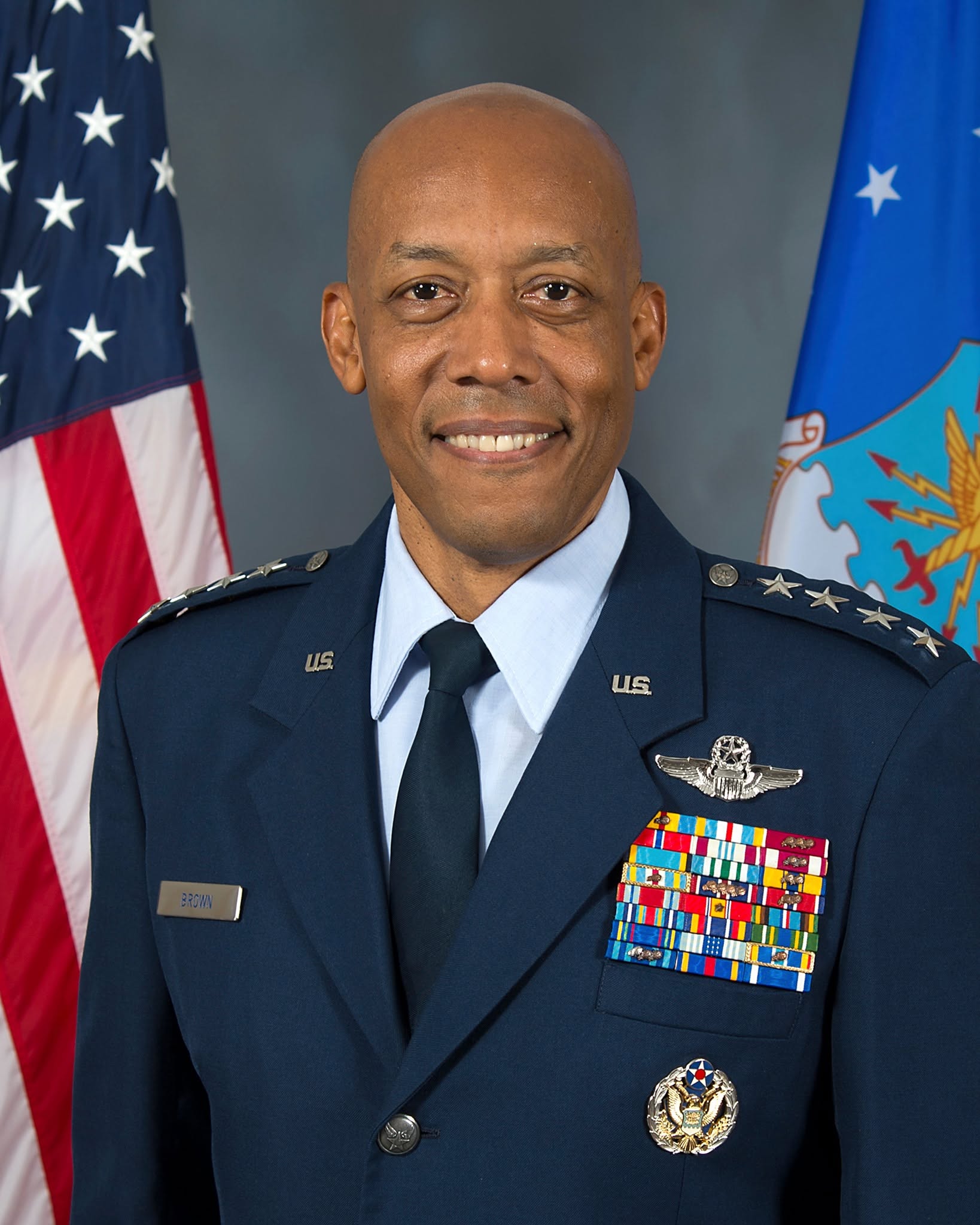
Brown is not a cable-news flamethrower. He is a decorated F-16 pilot who logged more than 3,100 flight hours, including 130 combat hours, according to his official Air Force biography. He rose through the system, commanded at multiple levels, became the first Black chief of staff of the Air Force, and later served as the nation’s top military officer. That is why his words carry a different kind of weight. This is not a politician trying to score points. This is a man who spent decades inside the institution, now warning that the institution is being bent out of shape.
The warning behind the uniform
Brown’s concern centers on a simple but powerful idea: the military is trusted because it is supposed to belong to the country, not to a party. Americans may disagree about presidents, governors, mayors, courts, borders, protests, crime, policing, and nearly everything else. But the armed forces have traditionally stood apart from that daily brawl.
That separation is not cosmetic. It is the quiet foundation of public trust. When soldiers appear after a hurricane, wildfire, flood, or terrorist attack, most Americans do not ask which party benefits. They see help. They see order. They see national service.
Brown’s warning is that this changes when presidents send troops into politically charged domestic situations, especially when the mission is tied to crime, protests, or urban unrest. In that setting, the uniform can quickly stop looking neutral. It can start looking like a message.
According to reporting on the essay, Brown argued that leaning on the military instead of fixing civilian institutions diverts it from its “primary combat mission.” That line matters. The military is built to fight wars, deter enemies, defend the nation, and respond to serious emergencies. It is not built to become a national substitute for local government, police departments, broken politics, or public frustration.
Why Brown’s firing still hangs over the debate

Brown’s warning lands with extra force because of what happened to him. President Donald Trump fired Brown as chairman of the Joint Chiefs of Staff on February 21, 2025, after Brown had served about 16 months in the role. AP reported that the move sidelined a history-making officer and came alongside other major Pentagon leadership changes.
The firing instantly became part of a larger argument about loyalty, merit, diversity, and political control inside the military. Supporters of the administration framed the changes as a necessary reset. Critics saw something more dangerous: a purge of senior leaders viewed as out of step with Trump’s political direction.
Brown has now sharpened that concern. At an Aspen Institute discussion, he said some recent personnel decisions appeared to be “not about merit,” according to reporting cited by The Wall Street Journal. That is a devastating phrase in military culture. Merit is supposed to be the language of promotion. Performance, command ability, judgment under pressure, and trust from peers are supposed to matter more than political fashion.
Defense Secretary Pete Hegseth and Pentagon allies have defended the shake-up. AP reported after Brown’s firing that Hegseth insisted the dismissals were not unusual and suggested more could come. Chief Pentagon spokesman Sean Parnell also pushed back, saying Brown had helped carry out Biden-era policies on diversity and other issues.
That response reveals the heart of the fight. To Brown’s defenders, he represents the old professional ideal: serve the Constitution, advise civilian leaders, stay out of partisan combat. To his critics, he represents a military leadership class shaped by policies they believe weakened the force. The same career is being read in two completely different ways.
The bigger question: Who owns the military?
The uncomfortable answer is that nobody is supposed to “own” it.
Civilian control of the military is a bedrock American principle. Presidents have the authority to nominate, appoint, remove, and direct senior military leaders. That power is real. But norms matter too. The presidency controls the military; it is not supposed to politicize it.
That distinction is where Brown’s warning becomes urgent. A president can lawfully order troops into many situations. But legality is not the only question. There is also the question of trust. There is the question of whether Americans still believe a soldier on a street corner is there for public safety, not political theater.
Brown’s co-author Peter Feaver, a Duke professor and civil-military relations expert, said both parties have dragged the military into culture-war disputes. But he also warned that punishing officers for carrying out lawful orders under a previous administration creates a dangerous precedent. If every new administration treats the officer corps like a political renovation project, the damage may not show up immediately. It may show up years later, in hesitation, fear, silence, and mistrust.
That is the real story here. Brown’s firing was one event. His warning is about a pattern.
The military can survive policy changes. It can survive new strategies, new commanders, new presidents, and fierce public debate. What it cannot afford to lose is the belief that its leaders rise because they are capable, not because they are politically convenient.
Brown’s voice is calm, but the alarm inside it is hard to miss. He is not asking Americans to pity a retired general. He is asking them to notice what happens when the country starts treating its most trusted institution like another battlefield.
And once that line is crossed, it may be much harder to march back.