Trump’s SAVE America Push Could Become a Political Boomerang for Republicans
President Donald Trump is demanding that Senate Republicans pass one of the most sweeping federal election bills in decades. Yet the pressure campaign may be exposing an uncomfortable political reality: some of the restrictions Trump supports could create new barriers for voters inside his own coalition.
During a July 22 rally in Marietta, Georgia, Trump urged supporters to call Senate Majority Leader John Thune and demand action on the SAVE America Act. He criticized the Senate’s 60-vote threshold and called for Republicans to abolish the filibuster.
The White House intensified the pressure the following day. Press Secretary Karoline Leavitt declared that Trump’s “patience is running out” and said he wanted lawmakers to approve as much of the legislation as possible before the August recess.
Thune’s response was blunt. He said the White House should help “get the votes,” explaining that the Senate simply does not have enough support to pass the bill under existing rules. The SAVE America Act actually requires
The House-passed SAVE America Act would require people registering for federal elections to present documentary proof of U.S. citizenship. Acceptable evidence could include a passport, naturalization document, birth certificate accompanied by identification, or certain REAL ID documents indicating citizenship.
It would also require voters to present eligible photo identification when casting federal ballots.
However, one claim circulating on social media needs correction. The legislation does not ban voting by mail. It would instead require absentee voters to provide a copy of their identification both when requesting a ballot and when returning it.
Trump’s rally demand for “no mail-in ballots” represents a broader policy position that goes beyond the current bill. The SAVE America Act also directs states to establish alternative procedures for citizens who cannot produce the standard documents immediately. Distinction matters. The bill would create substantial new documentation requirements, but describing it as an automatic nationwide mail-voting ban exaggerates what the text currently says.
Millions could face additional paperwork
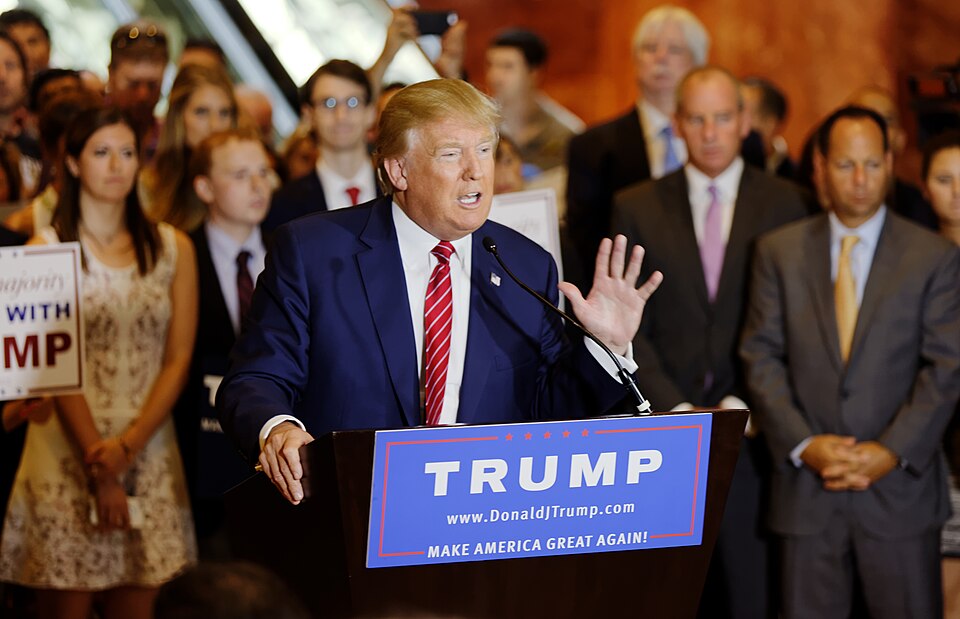
Michael Vadon, CC BY-SA 4.0, via Wikimedia Commons
The strongest concern is not that millions would instantly lose their voting rights. It is that millions of eligible citizens could be forced through new bureaucratic processes before registering or updating their registration.
University of Maryland researchers estimate that approximately 21.3 million American citizens lack easy access to documentary proof of citizenship. Another estimated 2.6 million lack any form of government-issued photo identification.
That does not mean all those citizens would be removed from voter rolls. It does mean election officials could face an enormous task helping people locate documents, verify identities and complete alternative procedures before registration deadlines. About passports also require caution. The State Department reported more than 183 million valid U.S. passports in circulation in 2025, but that figure does not equal 183 million individual passport holders. Some Americans possess both a passport book and a passport card. More importantly, passports are only one of several documents the bill would permit. Married women would face hurdles, not automatic exclusion
The Voting Rules Debate That Could Create New Obstacles for Millions of Americans

Critics frequently cite an estimate that 69 million married American women have birth certificates bearing names different from their current legal names.
The underlying concern is legitimate. A woman who adopted her spouse’s surname may need additional documentation to connect her current identification with her birth certificate. Pew Research found that 79 percent of women in opposite-sex marriages took their spouse’s surname.
But saying all 69 million women would become ineligible is inaccurate. The bill instructs states to create procedures for name discrepancies. Those procedures could include additional records or a signed affidavit confirming that the birth name belongs to the applicant.
Election-law specialists therefore describe the issue as an added procedural burden, not a blanket loss of voting rights. How difficult the process becomes would depend heavily on how individual states implement it. Restrictions could hit both parties
Trump’s broader proposal to eliminate most mail voting could produce a genuine political boomerang.
Mail ballots are not used exclusively by Democrats. In the 2024 general election, 74.7 percent of Arizona voters cast ballots by mail. Florida counted nearly 2.95 million mail ballots, representing 26.8 percent of turnout. Alaska counted almost 49,000.
A nationwide prohibition imposed shortly before an election would disrupt voting habits across party lines. Older voters, military families, rural residents and people with limited transportation could all be affected. In heavily Republican areas, that would inevitably include large numbers of Trump supporters. Senate record contradicts parts of the viral claim
A June 4 Senate test vote on a related citizenship and photo-ID amendment failed 48 to 50. Republicans Susan Collins, Mitch McConnell, Lisa Murkowski and Thom Tillis voted against it.
However, Senators John Cornyn and Bill Cassidy did not oppose the amendment, as the Facebook post claimed. Both voted yes. Thune also voted yes.
Cornyn has since said the votes are unavailable and warned that the dispute is creating a “circular firing squad” among Republicans. His objection appears to concern political reality and Senate arithmetic, not necessarily the legislation’s underlying goals. His urgency comes as Republicans face troubling polling. A July Fox News survey found Democrats leading the generic House ballot 53 percent to 46 percent. Fox reported that 53 percent was the highest share received by either party in its generic House polling since 1996, not merely the past 20 years. VE America Act may energize voters worried about election security. But stricter documentation rules and sweeping attacks on mail voting do not fall neatly along party lines.
Trump is trying to build an electoral wall. The risk for Republicans is discovering, too late, that some of their own voters are standing on the other side.