Fauci Takes the Fifth as Americans Still Carry the Scars of the COVID Era
The former face of America’s pandemic response refused to answer more than 100 Senate questions, leaving families, business owners, and parents with the same thing they have received for years: more conflict and fewer answers.
Millions of Americans remember the pandemic through empty classrooms, locked church doors, shuttered businesses, and final hospital goodbyes made through a phone screen. They remember losing jobs, watching children fall behind, and being told that questioning public-health guidance made them irresponsible.
Now, when Congress has demanded answers from one of the era’s most powerful officials, Dr. Anthony Fauci has chosen silence. Fauci’s repeated use of the Fifth Amendment may prove legally defensible, but it feels painfully familiar to Americans who believe accountability vanished when the emergency ended.
The virus killed more than 1.1 million people in the United States, while the policies adopted in response altered education, employment, health care, and family life. The July 29 Senate hearing offered a chance to confront those decisions in detail, but it instead produced more than 100 refusals to answer.
Fauci’s silence lands like an insult to Americans still paying the price.

For many Americans, this hearing was never an abstract debate about constitutional law. It was about the restaurant that never reopened, the elderly parent who died alone, and the child who lost months of normal education. It was about families forced to choose between a paycheck and a workplace requirement, and small-business owners who watched years of work disappear while better-connected corporations remained open.
The economic damage arrived with brutal speed. Federal Reserve researchers found that more than 700,000 establishments closed during the second quarter of 2020, affecting nearly 3 million jobs, although many of those closures were temporary. The Federal Reserve analysis also recorded approximately 20 million gross job losses during that quarter, showing why so many households still associate the pandemic response with financial fear.
The July 29 hearing quickly becomes a wall of refusals.
Fauci appeared before the Senate Homeland Security and Governmental Affairs Committee under subpoena, but the hearing produced almost no substantive testimony from him. Committee Chairman Rand Paul questioned Fauci about COVID-19’s origin, federal research funding, public-health guidance, and statements recorded in Fauci’s personal journals. Fauci repeatedly invoked the Fifth Amendment on the advice of his attorneys.
Fauci even declined when Senator Josh Hawley asked basic questions about the date, the color of his tie, and the carpet in the hearing room. Those questions appeared designed to show the sweeping nature of his refusal rather than uncover meaningful pandemic evidence. Still, the spectacle created a damaging image: the man who once appeared almost daily on American television now would not answer even the simplest questions before Congress.
Americans were expected to comply while officials avoided personal consequences.
During the pandemic, federal health officials asked Americans to accept extraordinary disruptions with limited information and rapidly changing guidance. Schools closed, businesses reduced operations, hospitals restricted visitors, and workplaces adopted vaccine or testing rules. Americans often received those directives with the warning that noncompliance could endanger their neighbors.
Fauci did not personally order every lockdown, school closure, or employment mandate. Governors, mayors, school boards, employers, and other federal officials made many of those decisions. However, his public statements carried enormous influence, and government leaders repeatedly used federal health guidance to defend restrictions that reached deeply into ordinary life.
School closures left damage that cannot be dismissed as political rhetoric.
Parents who watched their children struggle through remote lessons do not need a Senate investigation to tell them that the consequences were real. Students lost classroom routines, direct instruction, social contact, and access to services that schools normally provide. Children from low-income families and students with disabilities often faced even greater obstacles because they lacked reliable technology, specialized support, or quiet learning spaces.
The Government Accountability Office found that 52 percent of surveyed teachers had more students begin the 2020-2021 school year behind than during a typical year. Nearly two-thirds reported that more students made less academic progress, while 45 percent said at least half of their students finished the year behind grade-level expectations. Those GAO findings explain why questions about school closures still provoke anger long after classrooms reopened.
Fauci’s presidential pardon deepens the public’s mistrust.
President Joe Biden granted Fauci a sweeping federal pardon before leaving office, even though Fauci had not been charged with a crime. The January 19, 2025, warrant covers potential federal offenses committed from January 1, 2014, through the pardon date that relate to Fauci’s work at NIAID, on the White House coronavirus teams, or as chief medical adviser. Biden said he acted to protect public servants from politically motivated prosecution.
The official pardon does not establish that Fauci committed a crime, but its breadth created an obvious political problem. Americans were asked to believe that Fauci had done nothing wrong while watching a president protect him against potential prosecution for more than a decade of official conduct. That contradiction continues to feed suspicion, even if the pardon had a legitimate defensive purpose.
Rand Paul argues the pardon strips away Fauci’s Fifth Amendment defense.
Paul contends that Fauci cannot claim a risk of federal self-incrimination for conduct already covered by an unconditional pardon. The Fifth Amendment protects a witness from being forced to provide testimony that could support a criminal prosecution. If the pardon eliminated the relevant federal exposure, Paul argues, Fauci must answer truthful questions.
The legal issue remains more complicated than that argument suggests. Biden could not pardon state offenses, conduct after January 19, 2025, or a new crime committed during the 2026 hearing. A court would need to determine whether specific questions could expose Fauci to unpardoned liability rather than assume that every possible answer fell safely inside the pardon.
Fauci says the hearing was designed to trap him.
Fauci accused Paul of pursuing an “unhinged” campaign aimed at placing him behind bars. He cited Paul’s previous criminal referrals, public accusations, and release of Fauci’s unredacted personal journals. Fauci said he believed the hearing’s purpose was to obtain a statement that investigators could use to support a prosecution.
That explanation may address Fauci’s legal strategy, but it does little for Americans searching for a complete historical record. A congressional hearing is supposed to test evidence, expose contradictions, and establish what government officials knew when they made critical decisions. When the central witness refuses every meaningful question, the public receives another partisan performance instead of clarity.
Fauci’s lawyer is removed as the hearing descends into confrontation.
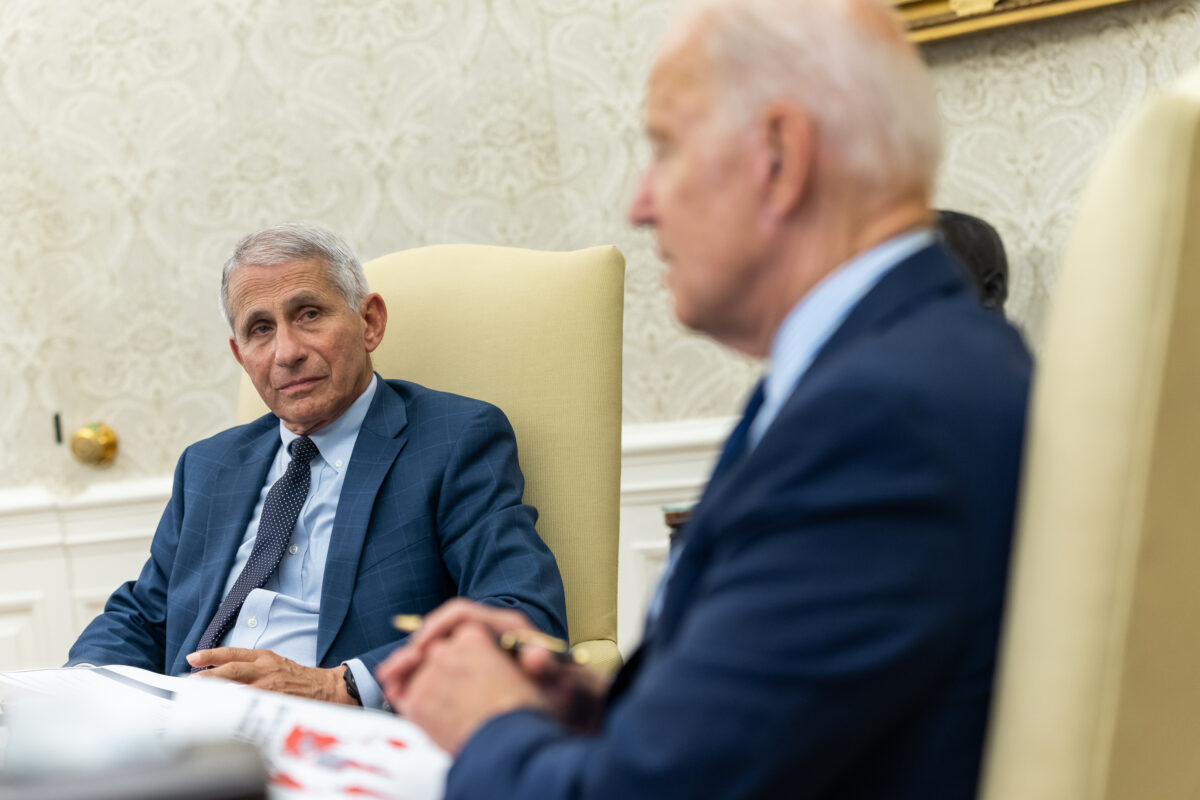
The atmosphere deteriorated when Fauci’s attorney, David Schertler, attempted to intervene during Paul’s questioning. Paul refused to recognize him, saying the committee had invited Fauci to testify, not his lawyer. After Schertler continued trying to speak, Paul called security, and the Capitol Police escorted the attorney from the room.
Schertler later called Paul’s investigation an obsessive vendetta and rejected the allegations against Fauci. Paul maintained that counsel could advise Fauci without taking over the witness table. The confrontation transformed a hearing about pandemic accountability into another bitter Washington spectacle, precisely the type of institutional breakdown that has caused many Americans to stop trusting both parties.
Fauci’s 1,141-page journal raises questions he would not answer.
Paul released 1,141 pages of Fauci’s pandemic-era journal shortly before the hearing. The entries cover December 2019 through December 2022 and document White House meetings, scientific discussions, media appearances, and Fauci’s thoughts as the crisis unfolded. Republicans argue that portions of the journal conflict with Fauci’s previous public statements.
Fauci’s representatives say the entries align with his public positions, including his claim that he remained open to both natural transmission and a laboratory-related origin. That dispute should have produced careful questioning, document comparisons, and precise answers. Instead, Americans were left to choose between two opposing political narratives because the witness at the center of the record would not engage.
COVID-19’s origin remains unresolved after years of official assurances.
The central question remains painfully simple: Did the virus pass naturally from animals to humans, or did a laboratory-related incident trigger the pandemic? The answer carries enormous consequences for scientific oversight, international relations, and future pandemic prevention. Yet more than six years after the outbreak began, investigators still lack the evidence needed to reach a definitive conclusion.
American intelligence agencies remain divided. The FBI and Department of Energy have favored a laboratory-associated incident, while the National Intelligence Council and several other agencies have favored natural transmission. An ODNI report concluded that both explanations remained plausible and that China’s refusal to provide complete information obstructed the investigation.
The gain-of-function argument exposes a damaging credibility gap.
Paul has repeatedly accused Fauci of misleading Congress about whether the National Institutes of Health funded gain-of-function research in Wuhan. Fauci has denied lying and maintains that the work did not satisfy the federal government’s regulatory definition of research involving enhanced potential pandemic pathogens. The disagreement often turns on technical definitions that sound meaningless to families who simply want to know whether American money supported dangerous experiments.
Not every experiment that changes a virus qualifies as prohibited or regulated gain-of-function research. However, government officials damaged public trust when they relied on narrow terminology without explaining the distinction clearly. Americans heard sweeping denials while documents revealed complicated funding arrangements, subcontractors, and coronavirus experiments that deserved direct public scrutiny.
Republicans demand accountability while Democrats call the hearing political theater.
Republicans portrayed Fauci as a powerful official who influenced national policy but now refuses to accept responsibility for its consequences. They questioned him about school closures, masking guidance, vaccine rules, laboratory research, and the changing public explanation of the virus’s origin. Their message reflected the resentment of Americans who believe government officials imposed high costs without admitting mistakes.
Democrats accused Republicans of trying to turn Fauci into the sole villain of a crisis managed by two presidential administrations, 50 governors, and thousands of local authorities. That criticism carries weight because no single adviser controlled the entire American response. Yet defending Fauci’s career does not erase the need for answers, and praising his public service cannot replace a detailed examination of what went wrong.
The Fauci contempt vote could finally force a legal decision.
Paul announced that the committee would vote on contempt after Fauci refused to answer its questions. The committee scheduled an August 5 business meeting, according to the HSGAC calendar. Approval would begin an enforcement process, not produce an immediate criminal conviction.
The matter could move to the full Senate, the Justice Department, or a federal civil lawsuit seeking an order that compels testimony. Prosecutors and judges would then examine whether Fauci asserted a valid constitutional privilege or unlawfully defied Congress. That courtroom test may offer more clarity than another hearing dominated by accusations, speeches, and unanswered questions.
Americans deserve answers, not another protected Washington figure.
The pandemic demanded enormous sacrifices from people who possessed little power and received no pardon from the consequences. Parents could not restore lost classroom time. Families could not reopen every failed business, recover every missed paycheck, or reclaim final moments with relatives who died behind hospital restrictions.
Fauci retains the same constitutional rights as every other American, including the right against self-incrimination when that protection legally applies. But public service also carries a duty to account for decisions that affected an entire country. Until Fauci answers detailed questions or a court explains why he does not have to, his silence will remain another symbol of a government that demanded trust while giving the public too few reasons to keep it.