Trump’s Latest Tariff Fight Could Reach Americans at the Checkout Counter

The latest legal fight over President Donald Trump’s trade agenda begins with a dispute over presidential authority. Its consequences, however, may eventually appear on store shelves, business invoices and household receipts.
A coalition of 25 states sued the Trump administration over tariffs of 10% or 12.5% placed on imports from 60 trading partners.
The administration says the tariffs confront countries that have failed to stop goods made with forced labor from entering their markets. The states say that explanation serves as a pretext for restoring broad import taxes after earlier tariff efforts suffered defeats in court.
Between those positions stand American businesses that must pay the duties and consumers who may ultimately absorb part of the cost.
A new legal route for broad tariffs

The administration imposed the latest tariffs under Section 301 of the Trade Act of 1974. That law allows the United States to respond to unfair foreign practices that burden American commerce.
Earlier Trump tariffs relied on different statutes. In February 2026, the Supreme Court ruled that the International Emergency Economic Powers Act did not authorize the president to impose tariffs.
The administration later pursued temporary duties under another provision before turning to Section 301. Its latest action followed investigations into the forced-labor import policies of 60 economies.
The Office of the U.S. Trade Representative says it consulted foreign governments, held public hearings and reviewed more than 1,600 written comments before taking final action.
U.S. Trade Representative Jamieson Greer said other countries’ failures to block forced-labor goods force American workers to compete on “an unlevel playing field.”
The final policy imposed tariffs of 10% on some trading partners and 12.5% on others, with exemptions for selected products.
States call forced labor a pretext
The states do not argue that forced labor should be tolerated. Their lawsuit focuses on whether the administration followed the law and whether Section 301 authorizes tariffs this broad.
The challenged duties cover trading partners responsible for 99.4% of U.S. imports. That extraordinary reach helps explain why the states describe the policy as an attempt to recreate earlier global tariffs under a new legal label.
They argue that Section 301 investigations traditionally address identifiable practices by individual countries. In their view, the administration moved too quickly and failed to demonstrate a clear relationship between each country’s conduct and the tariffs imposed.
The lawsuit asks the U.S. Court of International Trade to stop the policy and order refunds of duties already collected.
The administration maintains that its investigations and public consultations satisfied the statute. It also argues that the tariffs protect American workers while pressuring foreign governments to strengthen their prohibitions against forced-labor imports.
A court must now decide whether the administration properly used Section 301 or stretched the law beyond what Congress intended.
How tariffs can reach consumer
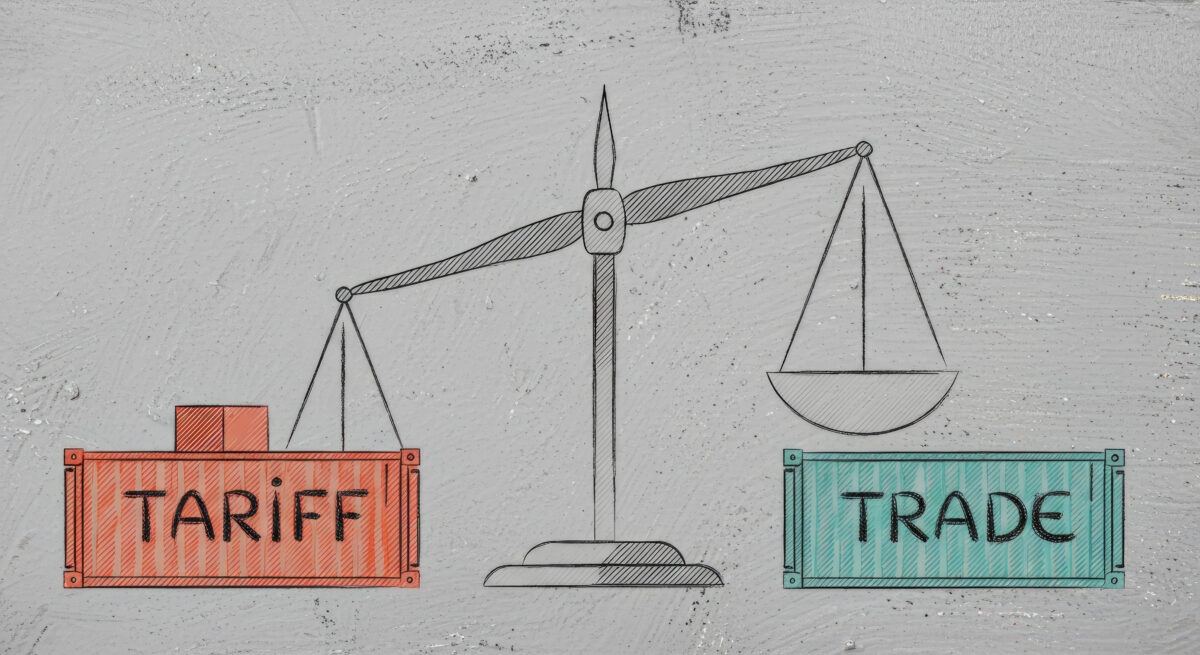
A tariff is collected from the American company importing a covered product. It is not a bill that the U.S. government sends directly to a foreign country.
What happens next depends on the market. A foreign supplier might reduce its price, or an American importer might absorb part of the additional expense. The importer may also raise the price charged to wholesalers, retailers or consumers.
Consider a small shop that imports watches, clothing or specialty foods. If the cost of bringing those products into the country rises, the owner must choose between accepting a smaller profit, changing suppliers or charging customers more.
Large corporations may have more negotiating power and broader supply networks. Small businesses often operate with less room to absorb an unexpected increase.
The effects can also move through domestic manufacturing. An American company may build its final product in the United States but depend on imported parts, packaging, machinery or raw materials.
For shoppers, that means a tariff on an overseas supplier can influence the price of a product carrying an American brand.
The fight goes beyond one shopping bill
Supporters of tariffs argue that short-term costs can produce long-term benefits. Duties may encourage companies to purchase American-made goods, expand domestic production, or demand higher labor standards from foreign partners.
Critics respond that changing a global supply chain takes time. Some products cannot be produced domestically at the same scale or cost, leaving businesses and consumers to pay more while the transition unfolds.
The forced-labor justification adds another layer to the debate. Few Americans would object to keeping abusive labor out of supply chains. The legal question is whether broad tariffs are a properly targeted response.
The lawsuit also carries constitutional significance. The Constitution grants Congress authority over tariffs, although lawmakers have delegated parts of that power to the executive branch through trade laws.
The states argue that the president crossed the boundary of that delegation. The administration says Congress already gave the trade representative the authority being exercised.
Court filings will discuss statutory language, investigative procedures and the division of power between Congress and the president. Outside the courtroom, businesses will continue calculating costs and families will continue watching prices.
That is what makes this tariff challenge more than another Washington power struggle. If the administration wins, the president’s ability to use trade law broadly may expand. If the states prevail, the ruling could reinforce limits on executive control over import taxes.
Either way, the final cost will not remain inside a courtroom. It could reach Americans the next time they walk into a store.