Air Force Sergeant Sparks Outrage After Calling Trump “The Cheeto” Over Iran Strikes
A U.S. Air Force sergeant has found herself at the center of a political firestorm after a video showing her criticizing President Donald Trump and U.S. military action against Iran spread across social media.
The controversy erupted after online users identified the service member as Melissa “Angel” Mece, an Air Force sergeant reportedly assigned to NATO in Italy. In the video, she criticized U.S. foreign policy decisions, expressed disappointment over American strikes against Iran, and referred to President Trump by the nickname “the Cheeto.”
The comments quickly triggered backlash from some Americans who argued that an active-duty military member should face disciplinary action for publicly attacking the commander in chief while wearing the uniform.
Others pushed back, saying the situation raises difficult questions about the balance between military discipline, personal expression, and constitutional rights.
The video that ignited a national debate
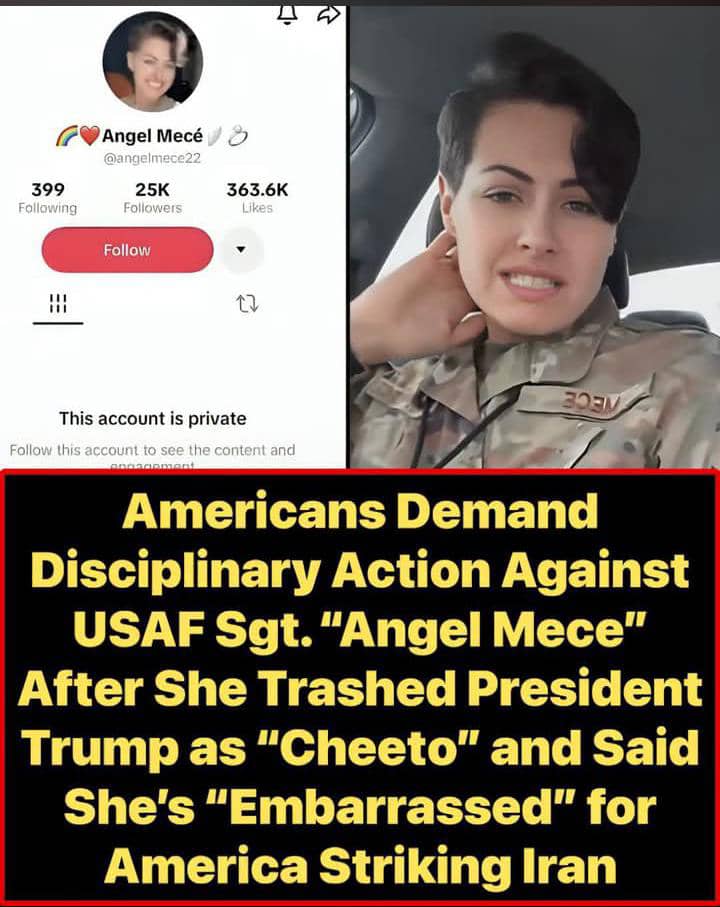
The controversy began after footage circulated online showing the Air Force sergeant sharing her personal views about U.S. military operations and international affairs.
According to reports circulating online, Mece criticized several U.S. actions, including the strikes against Iran, and said she felt embarrassed by America’s decisions. She also reportedly stated that she worked for NATO, emphasizing her role within an international alliance rather than only a single country’s mission.
The remarks came during a period of heightened tensions between the United States and Iran. The U.S. military had carried out strikes against Iranian targets, while Iran responded with attacks against American positions in the region.
For many critics, the timing made the comments especially controversial because American service members were involved in an active conflict.
Some social media users tagged senior defense officials and demanded that military leaders investigate whether the comments violated military rules.
However, public criticism alone does not automatically determine whether a service member has broken military regulations. Any potential disciplinary action would depend on official reviews and applicable military policies.
Supporters demand consequences while others defend free speech
The reaction online quickly divided into two camps.
Critics argued that military personnel have unique responsibilities because they represent the armed forces while serving. They said insulting the president, particularly while discussing active military operations, could damage public confidence in the institution.
Some called for the Air Force to investigate the matter and determine whether Mece’s actions violated standards expected of service members.
Supporters of Mece, however, argued that members of the military do not surrender all personal opinions when they enlist. They said service members remain American citizens with constitutional protections, even while serving.
The debate highlights a long-running tension inside the U.S. military: how to protect individual expression while maintaining discipline and trust within the ranks.
Military members are generally allowed to hold personal opinions, but there are limits on political activity and public statements depending on circumstances, including whether a person appears to speak officially for the military or undermines good order and discipline.
Iran strikes, and military politics collide
The controversy surrounding Mece’s comments comes as the U.S.-Iran conflict has become one of the most politically divisive foreign policy issues in America.
President Trump has defended the military action, arguing that U.S. strikes were necessary to protect American interests and counter threats from Iran.
The conflict has also brought renewed attention to the risks faced by American troops. Several U.S. service members have been killed during operations connected to the conflict, including Sgt. Angel S. Rampersad, 1st Lt. Tyler James Feehan, Pvt. Isabella Gonzales, and Sgt. Michael Emmanuel Swinton.

That reality has intensified emotions surrounding public comments about military decisions. For families of service members and many veterans, criticism of military operations can feel personal because troops are the ones carrying out those decisions on the ground.
At the same time, opponents of the strikes argue that questioning government decisions is part of a democratic society, even when those questions come from people connected to the military.
A controversy bigger than one sergeant
The uproar surrounding Mece is about more than one video or one military member’s opinion. It reflects a broader national argument over how Americans should discuss war, leadership, and patriotism.
For some, loyalty means standing behind the president and military decisions during international conflicts. For others, loyalty means having the freedom to criticize leaders when they believe government actions are wrong.
As of the latest reports, there has been no publicly confirmed announcement of disciplinary action against Mece. Claims that she will face punishment remain demands from critics rather than confirmed military action.
The case has become another example of how social media can turn a personal statement into a national debate within hours, forcing institutions like the military to navigate the complicated space between individual rights and professional responsibility.