Karoline Leavitt Faces ‘Disgraceful’ Backlash After ‘Classic Washington Hoax’ Epstein Files Remark Resurfaces
White House Press Secretary Karoline Leavitt is back at the center of the Jeffrey Epstein files debate after an old interview clip resurfaced and spread across social media, drawing criticism over her description of the controversy as a “classic Washington hoax.”
The distinction at the heart of the story matters. Leavitt was not calling Jeffrey Epstein’s crimes or his victims a hoax. In the original interview, she was attacking what she portrayed as a politically engineered news cycle built around selectively released Epstein-related emails and claims involving President Donald Trump. But as the clip circulated again in July 2026, many critics heard something broader and more troubling in her choice of words.
The Karoline Leavitt Epstein clip is from November 2025, not a new interview
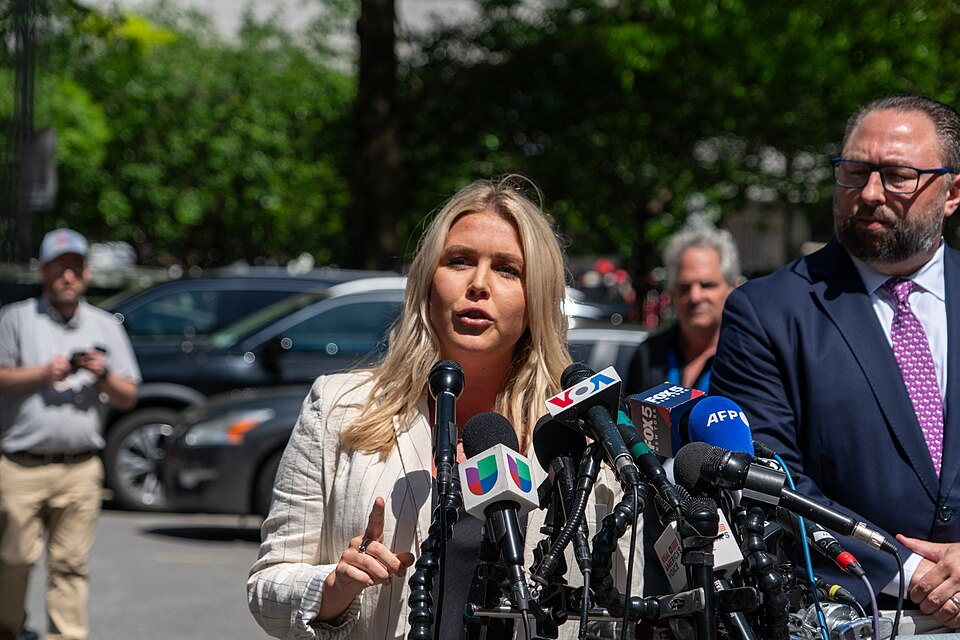
The viral footage did not originate in July 2026. It came from Leavitt’s appearance on Miranda Devine’s “Pod Force One,” published November 19, 2025, when the White House was fighting intense scrutiny over newly released Epstein-related emails and calls for greater disclosure of government records. Apple Podcasts lists the full episode as a 47-minute interview covering Leavitt’s role in the Trump White House and several political controversies.
The Epstein portion was later circulated separately, and the clip gained fresh attention after the FactPost account shared it on X on July 15, 2026. Reporting at the time said that the repost had accumulated about 5.9 million views within days.
In the footage, Leavitt says that if people examine how the Epstein story had developed during the previous week, “it’s a classic Washington hoax.” She then argues that Democrats on the House Oversight Committee had released redacted information to the media while failing to emphasize information the administration believed provided important context.
That context is essential if we want to describe her remarks accurately. Leavitt’s argument was that the political narrative surrounding the documents was manufactured, not that Epstein’s sexual abuse never happened.
What Leavitt was defending Trump against
The original controversy erupted on November 12, 2025, when Democrats on the House Oversight Committee released emails obtained from Jeffrey Epstein’s estate that referenced Trump.
One 2011 exchange between Epstein and Ghislaine Maxwell referred to Trump while discussing a woman who had spent time at Epstein’s home. Another 2019 email from Epstein to author Michael Wolff claimed Trump “knew about the girls,” although the meaning of that statement was unclear and the email itself did not establish criminal conduct by Trump.
The White House immediately pushed back. Leavitt accused Democrats of selectively releasing the material to construct a damaging narrative and said the emails “prove absolutely nothing” about wrongdoing by Trump.
The administration also identified the unnamed woman referenced in one of the exchanges as Virginia Giuffre, one of Epstein’s most prominent survivors. ABC News reported that Giuffre never accused Trump of wrongdoing. In a later sworn deposition, she also said she could not remember seeing Trump and Epstein together or seeing Trump at one of Epstein’s homes.
Those facts form the backbone of Leavitt’s defense and explain why simply presenting the resurfaced clip as her declaring the entire Epstein case a hoax would leave out important context.
Why the ‘classic Washington hoax’ language still triggered outrage
The criticism was driven largely by the language itself. Epstein was not an invented political scandal. He was a convicted sex offender, and Ghislaine Maxwell is serving a 20-year federal prison sentence for crimes connected to his sexual exploitation and trafficking of girls. As a result, describing an Epstein-related controversy with the word “hoax”, even when aimed specifically at political messaging surrounding certain documents, was bound to carry a heavier meaning than an ordinary dispute over Washington leaks.
When the clip resurfaced, some social media users focused on Leavitt’s demeanor and accused her of appearing too dismissive while discussing records connected to a case involving sexual abuse. One widely circulated response criticized her for smiling while talking about a subject involving abused girls. Other critics used terms including “disgraceful” and framed their objections around the fact that Leavitt is herself a mother.
That “she’s a mother” criticism is an emotional judgment, not evidence about what Leavitt knew or intended. Still, it reveals why the clip traveled so quickly. For many viewers, the argument was no longer simply about Democratic leaks or media framing. It became a debate over how government officials should talk about an investigation involving survivors of sexual exploitation.
The Epstein files debate did not disappear after the interview
The resurfaced clip also landed differently in 2026 because the fight over the Epstein records had grown considerably since Leavitt originally spoke.
On November 19, 2025, Trump signed the Epstein Files Transparency Act, requiring the attorney general to release Justice Department documents and records relating to Epstein. The House had approved the legislation in a striking 427-to-1 vote, while the Senate passed it without amendment by unanimous consent.
The Justice Department subsequently released large volumes of material. Deputy Attorney General Todd Blanche said in January 2026 that the department was producing responsive records pursuant to the law as documents were indexed and uploaded.
Yet the disclosure process did not end the controversy.
In March 2026, the Justice Department released FBI interview summaries that had been missing from earlier disclosures. Those records included allegations against Trump from a woman interviewed by investigators. The department cautioned that released records could contain untrue or sensational claims, while Trump’s representatives rejected the allegations and said there was no credible evidence supporting them. No criminal charge against Trump resulted from those allegations.
The transparency dispute remains active. On August 5, New Mexico sued the Justice Department seeking greater access to Epstein-related records for its investigation into alleged crimes connected with Epstein’s former Zorro Ranch. The federal government has cited privacy protections and court restrictions surrounding victim information as reasons some material cannot simply be released without limitations.
The viral version leaves out an important distinction
When we separate the social media framing from the complete record, one point becomes especially important: Leavitt did not say Epstein’s abuse was fictional.
Her argument was directed at Democrats, the media, and the interpretation of specific Epstein-related documents mentioning Trump. She contended that opponents were using selective information to manufacture another damaging Trump story.
Critics nevertheless argue that describing any part of the Epstein controversy as a “classic Washington hoax” risks collapsing two separate issues into one. There can be legitimate disputes over what a document proves, whether political operatives released it strategically and whether allegations involving a public figure are supported. Those questions exist alongside the indisputable reality that Epstein abused girls and that Maxwell was convicted for helping facilitate his crimes. That distinction explains both Leavitt’s defense and the furious reaction to it.
Why Karoline Leavitt’s Epstein comments are resurfacing now
The clip has staying power because the underlying controversy remains unresolved in the public mind. Trump has consistently denied wrongdoing connected to Epstein. Giuffre did not accuse him of abusing her, and an appearance in an email, contact list, photograph or investigative document does not by itself demonstrate criminal misconduct. At the same time, continuing fights over unreleased or redacted material have kept lawmakers, survivors and the public asking how much information remains unavailable and why.
That is the political environment into which Leavitt’s old interview returned. What sounded in November 2025 like a familiar White House attack on Democratic messaging became, months later, a viral test of tone, transparency and trust. Critics saw a press secretary casually using the language of a “hoax” around one of America’s most disturbing sexual abuse scandals. Leavitt’s actual argument was narrower: that Trump’s political opponents had manipulated selective information to create a misleading story about the president.
Both pieces of context matter. The social media backlash may eventually move to another clip, but the broader question will remain as long as the Epstein records continue generating litigation, congressional scrutiny and demands for disclosure: Can Washington fight over the politics of the files without losing sight of the victims whose abuse made those files matter in the first place?