Udon Carbonara Is the Creamy Noodle Mash-Up Everyone Wants to Try
Carbonara has officially wandered away from spaghetti and found a great new home in a bowl of thick, chewy udon. Udon carbonara combines Japanese noodles with the egg, cheese, pepper, and salty pork elements of the Italian classic, creating a rich, glossy dish that is equal parts comfort food and conversation starter.
The idea is not as random as it first sounds. Udon’s springy, substantial texture stands up to a silky egg-and-cheese sauce, while Japanese ingredients such as dashi or kombu can bring a savory depth that feels different from, rather than simply copied from, a traditional Roman carbonara. The result is a cross-cultural noodle dish appearing in high-profile restaurants, viral food coverage, and home kitchens alike.
Why Udon Makes So Much Sense Here
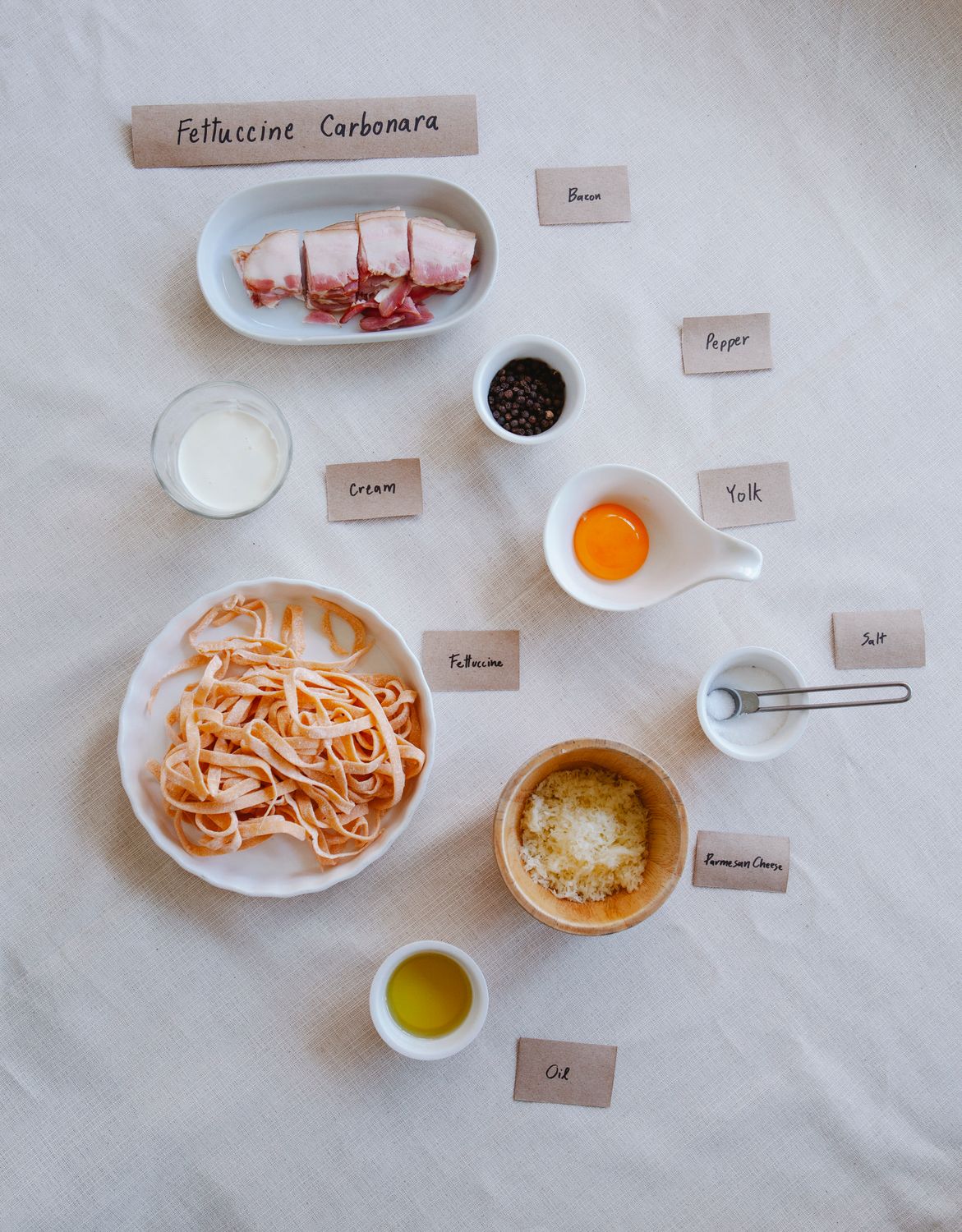
Traditional carbonara is famously spare: pasta, cured pork, egg, hard cheese and black pepper. No cream is needed when the pasta’s heat, the egg, and finely grated cheese emulsify into a smooth sauce. Udon carbonara keeps the comforting core of that idea but swaps in Japanese wheat noodles, which are thicker, softer, and notably chewier than the long, firm pasta strands usually associated with the Italian original.
That textural switch is the entire point. Instead of coating delicate spaghetti, the sauce clings to broad, bouncy noodles that add heft to every bite. It is a little like the difference between a light silk blouse and a favorite oversized sweater: both can be satisfying, but they deliver comfort in completely different ways. The udon doesn’t try to impersonate pasta; it gives the carbonara-style sauce a new personality.
At Perry’s in Washington, D.C., chef Masako Morishita makes a version with Sanuki-style udon, a style of Japanese noodle known for its springy chew. Her dish pairs those noodles with a Parmesan-and-egg sauce, crisp prosciutto, chives, and black pepper. It also uses kombu tea powder, which Food & Wine says supplies “a subtle savory depth” without delivering a strongly seafood-forward flavor.
Morishita’s approach has arrived at a notable moment. She was named one of Food & Wine’s 2026 Best New Chefs, an annual honor that has previously highlighted chefs including Thomas Keller, Rick Bayless, Nancy Silverton, Roy Choi, Kwame Onwuachi and Paola Velez. Explaining this year’s group, Food & Wine editor-in-chief Hunter Lewis said, “This class has that electricity,” adding that the chefs have “a distinct point of view, extraordinary command of their craft, and the ability to make you see something familiar in an entirely new way.”
Udon carbonara fits that description neatly. It takes a dish many diners recognize immediately and reworks it through a Japanese noodle lens. The appeal isn’t novelty for novelty’s sake; it is the pleasure of a familiar flavor combination in a completely different eating experience.
The Dish Is Bigger Than One Viral Bowl
The current attention around udon carbonara is also connected to the international reputation of Udon Shin, the Tokyo noodle specialist founded in 2011. The restaurant is known for hand-cut, thick udon and long customer queues in Tokyo, where diners have waited up to three hours for its noodles, according to The Straits Times.
When Udon Shin opened its first overseas location in Singapore in November 2025, its Carbonara Udon was one of the menu’s standout dishes. The restaurant’s version includes bacon tempura, Parmesan, butter and black pepper, a lineup that nods directly to carbonara flavors, but with a fried, crunchy bacon element that adds a distinctly playful twist.
The dish is built around what makes a good bowl of udon so satisfying. Udon Shin’s noodles are cut on-site and cooked for 16 minutes before they are shaped into their signature swirl in the bowl, The Straits Times reported. That attention to the noodle itself matters because a sauce as rich as carbonara needs structure beneath it. Flimsy noodles would disappear; properly made udon pushes back.
Udon Shin chef-owner Narahara Shinji described the philosophy behind his restaurant in a statement before the Singapore opening: “I started Udon Shin in Tokyo out of a deep love for noodles and the joy they bring when made right. Our udon is not just food, it is also a reflection of time, care, and tradition of this timeless craft.”
That care matters when the phrase “fusion food” gets thrown around casually. Udon carbonara isn’t automatically successful just because it combines Italian and Japanese references. The strongest versions start with respect for the fundamentals on both sides: properly cooked udon, a sauce that stays glossy rather than scrambled, enough pepper to cut through the richness, and ingredients that add contrast instead of competing for attention.
What Makes a Great Udon Carbonara
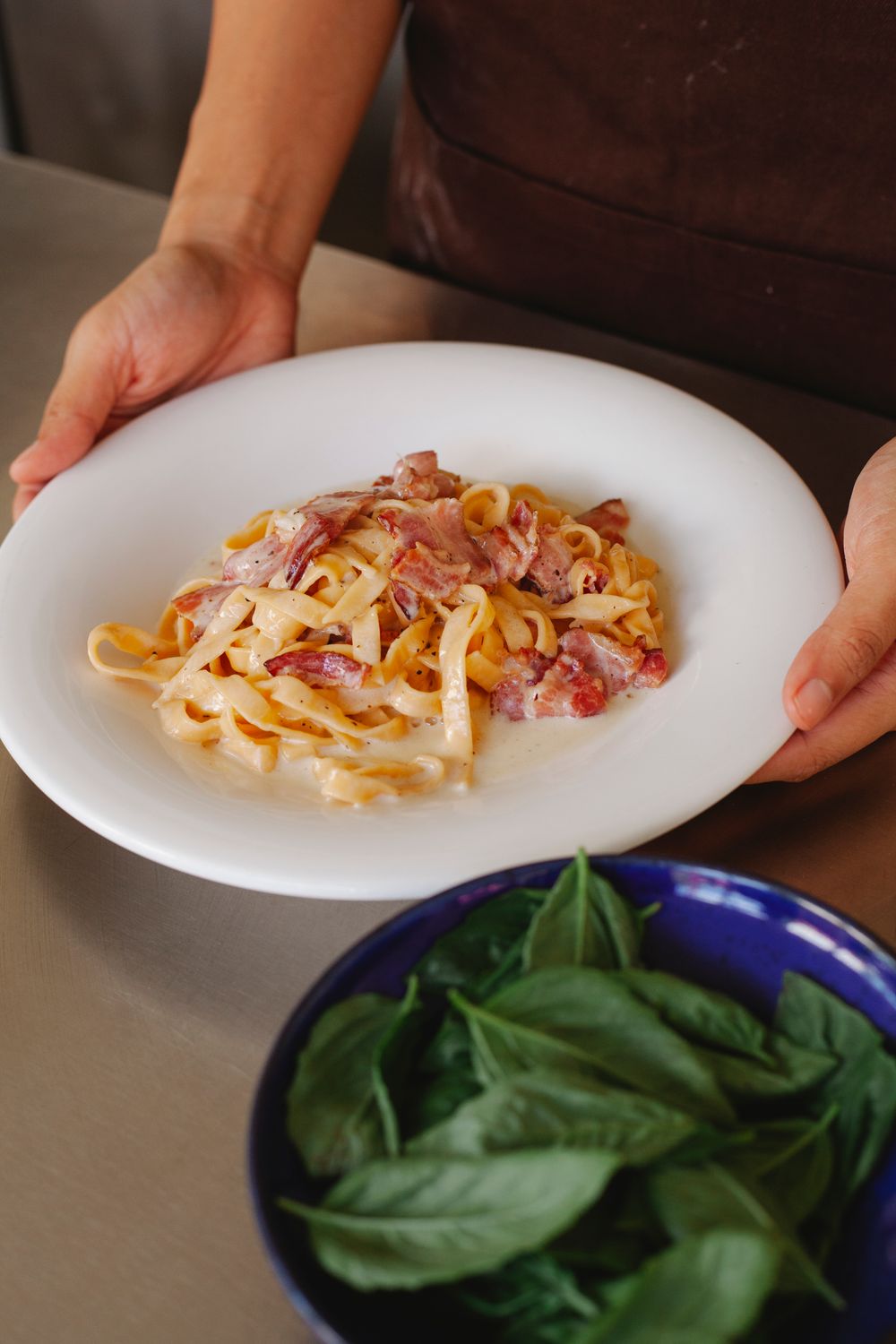
A good udon carbonara should feel indulgent without becoming heavy or dull. Eggs and cheese create richness, but black pepper adds heat and aroma. Salty cured pork, whether prosciutto, bacon, or bacon tempura, gives the bowl a crisp, savory counterpoint. Fresh elements such as chives or scallions can brighten the overall flavor and keep the dish from becoming a one-note cheese situation.
Dashi and kombu are especially interesting additions because they layer in umami, the savory quality found in ingredients such as aged cheese, cured meats, seaweed, and broth. In Udon Shin’s carbonara udon, the dish centers on udon with dashi alongside Parmesan, butter, pepper, spring onion, and bacon tempura. That combination doesn’t try to hide its influences. It lets dashi, dairy, pork and pepper all participate in the same bowl.
The technique, however, is where home cooks can make or break it. Egg-based carbonara sauces need gentle residual heat, not a raging burner. In a recipe inspired by the dish, Modern Honey advises turning off the heat or removing the pan before tossing cooked udon with the egg-and-Parmesan mixture, so the eggs become creamy rather than scramble. The recipe also calls for starchy noodle water, which helps loosen and emulsify the sauce as it coats the noodles.
That is the move worth borrowing even if you are not making a formal recipe: cook the udon, save some noodle water, combine the egg and grated cheese separately, and toss everything together off the heat. Add the hot noodle water gradually until the sauce looks shiny and reaches the texture you want. Finish with pepper and the crispy pork element last, so it keeps some crunch.
Udon carbonara will not replace classic carbonara, nor should it. Traditional dishes have their own rules, histories, and devoted defenders. But this is not a competition between a Roman staple and a Japanese noodle bowl. It proves that when cooks understand why a dish works- salt, fat, egg, cheese, heat, and texture- they can create a new version that feels exciting without feeling gimmicky.
As Food & Wine restaurant editor Erika Adams said of the publication’s 2026 Best New Chefs, “These visionary chefs are ready for a much larger stage than within the four walls of their restaurants.” Udon carbonara has that same larger-stage energy: familiar enough to spark curiosity, unusual enough to spark conversation, and comforting enough to make people go back for another forkful.