Charcuterie’s New Rival: Why Seafood Boards Are Taking Over High-End Menus
For years, the charcuterie board had the run of the table: cured meats, a wedge of cheese, some fig jam, done. That reign is getting quietly challenged by something built almost entirely from the sea.
Seacuterie, seafood arranged and prepared with the same techniques traditionally used for cured meats, has been showing up on more high-end restaurant menus and dinner party tables alike. It isn’t brand new. But 2026 appears to be the year it stopped being a niche chef’s trick and became its own category.
Here’s what’s actually on one, where it came from, and why it’s spreading.
It Started With a Pastrami That Wasn’t Beef
The concept dates back to the early 1990s and chef David Burke, who worked at Park Avenue Cafe in New York City. Burke took the technique used to cure beef into pastrami and applied it to salmon instead, creating what he called pastrami salmon, according to coverage in The Nibble. It wasn’t marketed as a trend back then. It was just one chef’s spin on a classic. But the idea, curing seafood the way you’d cure meat, quietly stuck around in professional kitchens for the next three decades, resurfacing periodically rather than exploding all at once.
Related: Never Buy These 8 Foods Again, They’re Cheaper to Make at Home
Octopus Took the Idea Further Than Salmon Ever Did
Once salmon pastrami proved the concept worked, other chefs pushed it into stranger, more ambitious territory. Chef Markus Glocker, at the Michelin-starred restaurant Bâtard in New York, built what The Nibble described as a mosaic of octopus pastrami, treating the ingredient with the same layered curing approach usually reserved for cold cuts. It’s a good example of how seacuterie isn’t really about swapping salmon for salami. It’s about applying an entire technique- curing, smoking, pressing- to whatever seafood can hold up to it.
Growing Number of Restaurants Are Building Whole Menus Around It
Individual dishes eventually turned into full spreads. At Oceana in New York, a seacuterie plate has combined octopus salami, gravlax, and a crab spread on toasted baguette, according to The Nibble’s coverage. At PB Catch, a raw bar in Palm Beach, an individual seacuterie board pairs octopus salami with salmon pastrami and smoked cod. These aren’t gimmicks tacked onto an existing menu. They’re built as a complete first course, occupying the same slot a traditional charcuterie board would normally take.
Freshness Does More Work Than the Recipe Does
Ask chefs actually building these boards what matters most, and the answer isn’t the seasoning. Chris Feldmeier, chef and partner at Los Angeles bodega Bar Moruno and its sister spot Rapido, told Sunset Magazine that quality tinned seafood is often prepared at its peak, since the shellfish moves from the shell straight into the can. He described it as a self-contained option simple enough to take anywhere and still deliver a genuinely fresh bite. That same idea drives the plated version of seacuterie: let well-sourced seafood do the talking instead of burying it under heavy seasoning.
It’s Genuinely Practical for a Busy Kitchen
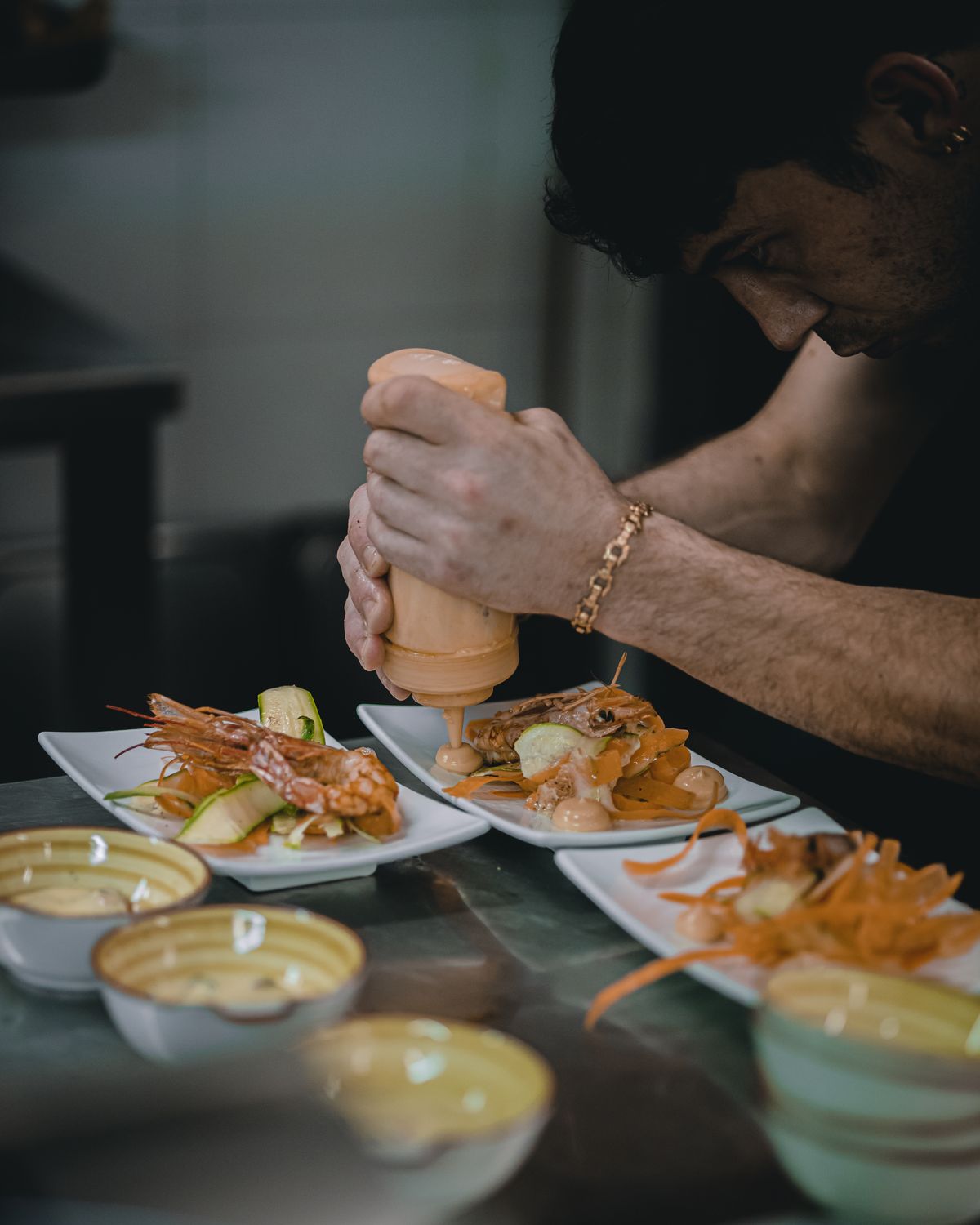
Part of seacuterie’s appeal to restaurants has nothing to do with flavor. According to Sysco’s food-service coverage of the trend, seacuterie components can be prepped well ahead of service and held, which takes pressure off a kitchen during a rush. A shared plate built from cured, smoked, or pressed seafood doesn’t require last-minute cooking, which makes it an easy way for a menu to offer something that looks elaborate without demanding much from the line right before it goes out.
The Home Version Looks Different, and That’s Fine
Not every seacuterie board involves a Michelin kitchen or a curing chamber. Home cooks have been building their own, simpler versions, often centered on tinned fish, smoked salmon, and shrimp, arranged alongside crackers, pickles, and a few sauces. It’s a much lower barrier to entry than pastrami-curing an octopus, and it’s part of why the trend has been able to move in both directions at once, upward into fine dining and sideways into ordinary dinner parties, without either version undercutting the other. A high-end restaurant board and a backyard version do the same basic thing: they replace salami with something that came out of the water instead.
Why This One Might Have Staying Power
Food trends usually burn out once the novelty wears off. Seacuterie has a slightly different shape. It’s been quietly present in professional kitchens since the early 1990s, popping back up every few years rather than appearing out of nowhere and then vanishing. That kind of slow-build history tends to outlast a trend that peaks in a single viral summer and disappears the next.
There’s also the matter of who’s driving it. This isn’t a dish being pushed primarily by marketing teams or food brands looking for a moment. It’s chefs solving a real kitchen problem: how to give a menu something visually striking that can be prepped ahead of time, while also giving pescatarians and seafood lovers something more substantial than a lone shrimp cocktail. That mix of practicality and craft usually predicts a trend that sticks around rather than fading by next season.
Whether seacuterie fully replaces the classic charcuterie board or earns a permanent spot next to it, it’s already done something meaningful: it gave chefs a socially acceptable reason to cure a piece of octopus like it was salami. That’s nothing.