Why Food Rating Apps Can Miss the Mark on Nutrition: The Problem With Turning Food Into a Number
Today, shoppers in grocery store aisles have something previous generations did not: instant nutrition advice on their phones. By scanning a barcode, an app can quickly analyze a product, assign it a score, and tell you whether it seems like a good choice. With so many confusing labels, health claims, unfamiliar ingredients, and endless products, these apps offer what many people want most: a simple answer.
A high score on a food does not mean it is the best choice for everyone, and a low score does not mean it cannot be part of a healthy diet. As food-rating apps become more popular, nutrition experts, researchers, and consumers are asking whether these tools help people make better choices or if they oversimplify a complex topic by reducing it to a single number.
Food-rating systems can be helpful. They let shoppers compare similar products, spot foods with more sodium or added sugar, and encourage people to look more closely at nutrition labels. Still, experts say these tools should be seen as a guide, not the final word on whether a food is healthy.
The Rise of Food Rating Apps

Food-rating apps. The main problem is that food is more than just numbers. Consumers are surrounded by products advertising benefits such as “high protein,” “low sugar,” “natural ingredients,” “organic,” or “whole grain,” but those claims often don’t provide the full picture.
Reading nutrition labels requires time and knowledge. Ingredient lists can be difficult to understand; serving sizes can be Reading nutrition labels takes time and some know-how. Ingredient lists can be hard to understand, serving sizes can be confusing, and two products that look similar on the outside can have very different nutrition inside.
Some systems focus mainly on nutrients like calories, sugar, sodium, fiber, protein, and saturated fat. Others also consider ingredients, additives, processing, or certifications.
For example, some front-of-package systems such as Nutri-Score evaluate positive nutritional elements, including fiber and protein, while also considering nutrients that public health organizations recommend limiting, such as sugar, sodium, and saturated fat.
Apps such as Yuka combine nutritional quality, ingredient evaluations, and other factors to generate product ratings.
These systems are useful when comparing similar foods. For example, if you are choosing between two cereals, soups, or snacks, you can see which one has less added sugar, more fiber, or lower sodium.
Problems start when people see the score as the only way to judge if a food is healthy.
The Problem With Reducing Food to One Number
The main draw of a food score is also its biggest flaw. It makes something complicated seem simple.
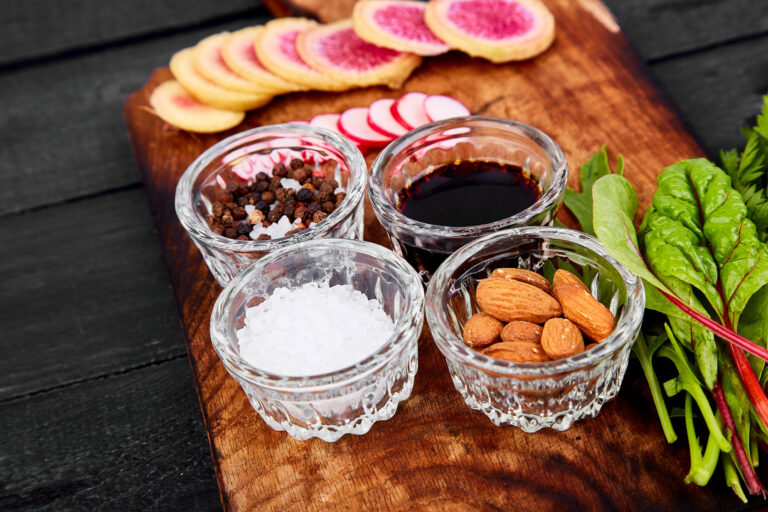
A single number cannot fully explain how a food affects different people. One number cannot explain how a food affects people with different needs, lifestyles, health issues, or goals. Nuts are a common example. They are calorie-dense and contain fat, but they also provide fiber, protein, and beneficial unsaturated fats.
Someone who only looks at calories might think nuts are a bad choice, but a nutrition expert might see them as a valuable part of a balanced diet.
The same thing can happen with dairy. A full-fat yogurt and a low-fat flavored yogurt might get different scores because one has more saturated fat and the other has more added sugar. The score shows these differences, but it cannot say which is better for everyone.
People have different nutrition needs. Someone training for a sport, an older adult trying to keep their weight, a person with diabetes, or someone with a medical condition may all need different things from their food.
That is why many experts say we should look at food as part of the whole diet, not judge it on its own. health, just as a single “healthy” product does not automatically create a healthy lifestyle.
When Algorithms Miss the Bigger Picture
Most food-rating apps use information from nutrition labels, ingredient lists, product categories, and user input. This means their advice is only as good as the information they have.
If a company changes a recipe but the app is not updated, the score might not match the product you find in the store.
Artificial intelligence brings new possibilities and challenges. AI nutrition tools can analyze pictures, estimate calories, identify foods, and give personalized advice. But food is more complicated than just recognizing what is in a photo. A bowl of pasta, for example, does not reveal everything that matters. The camera cannot always determine how much oil was used, how much cheese was added, what ingredients are hidden in the sauce, or how large the portion actually is.
Research shows that AI diet-tracking systems are improving, but they still struggle with mixed dishes, foods from different cultures, unclear portion sizes, and hidden ingredients.
The Challenge of Understanding Processed Foods
Another major debate surrounding food-rating apps is how they handle processed foods.
Some systems focus heavily on nutrients, while others consider how processed a food is and what it contains. But processing alone does not always show if a food is healthy.
Many foods are processed but still healthy. Frozen vegetables, canned beans, plain yogurt, whole-grain bread, and canned fish are all processed in some way but can be good for you.
On the other hand, many highly processed snacks, sugary drinks, and engineered foods are made for convenience and strong taste.
The challenge is that “processed” does not always mean unhealthy, and “natural” does not always mean healthy. must look beyond one factor and consider the bigger picture.
The Future of Food Ratings and AI Nutrition Tool
Experts say being open about how these systems work is important. People should know what the system measures, what it leaves out, and when its advice might not fit.
Even the best technology cannot replace real nutrition experts. Instead, it should help people make better choices and remember that food decisions depend on more than just numbers.