The One Kitchen Habit That Can Transform Your Cooking Forever
Great cooking is often associated with sharp knives, expensive cookware, secret ingredients, or advanced techniques. Yet one of the most useful kitchen habits is much simpler: prepare and organize everything before you start cooking.
Professional cooks know this practice as mise en place, a French phrase commonly translated as “everything in its place.” It refers to having ingredients measured, prepared, and organized in advance, along with the tools and equipment needed for the job. It is a foundational practice in professional kitchens, but it can be equally useful for anyone cooking at home.
Mise en place does not require a collection of tiny bowls or a restaurant-style workstation. At its core, it means reading your recipe, checking that you have what you need, preparing ingredients that must be chopped or measured, and placing essential tools within reach before cooking becomes time-sensitive.
Why Preparation Changes the Way You Cook

Many kitchen problems happen because several tasks suddenly compete for attention.
Garlic is browning while an onion still needs chopping. A sauce is reducing while you search the cupboard for a spice. The oven is ready, but the baking pan isn’t prepared.
Organizing first reduces these interruptions.
This is especially useful for dishes that require close attention once cooking begins. Risotto is a good example because the cook often needs to remain involved with the pan while stock is gradually incorporated. Having ingredients ready means there is less reason to leave the stove at an important moment.
Preparation also gives you a chance to discover problems before heat is involved. You might realize that you are short on an ingredient, that vegetables need more preparation than expected, or that the pan you planned to use is still dirty.
Those problems are much easier to solve before food is cooking.
Start by Reading the Entire Recipe
The first step is one of the easiest to overlook: read the recipe from beginning to end.
An ingredient list tells you what you need, but the method tells you when and how you need it. A recipe may require softened butter, a preheated oven, divided ingredients, or something that needs to rest, drain, marinate, or cool.
Seeing those instructions before you begin helps you plan.
It also lets you identify tasks that can happen at the same time. You might preheat the oven while preparing vegetables or bring water to a boil while measuring other ingredients.
The goal is not to rush. It is to understand the sequence before the cooking begins.
Gather What You Need
Next, gather the ingredients and equipment you need for the dish.
This can prevent the familiar mid-recipe search for a whisk, measuring spoon, can opener, or spice jar. More importantly, it helps you confirm you have every essential ingredient before you commit to the recipe.
You do not have to put every ingredient into a separate bowl. For a simple meal, arranging the ingredients together on a clear section of the counter may be enough.
Measure ingredients in advance when timing matters, precision matters, or the recipe moves too quickly to stop once cooking begins.
Related article: designers-say-these-once-trendy-kitchen-styles-no-longer-feel-fresh-in-2026/
Do the Knife Work Early
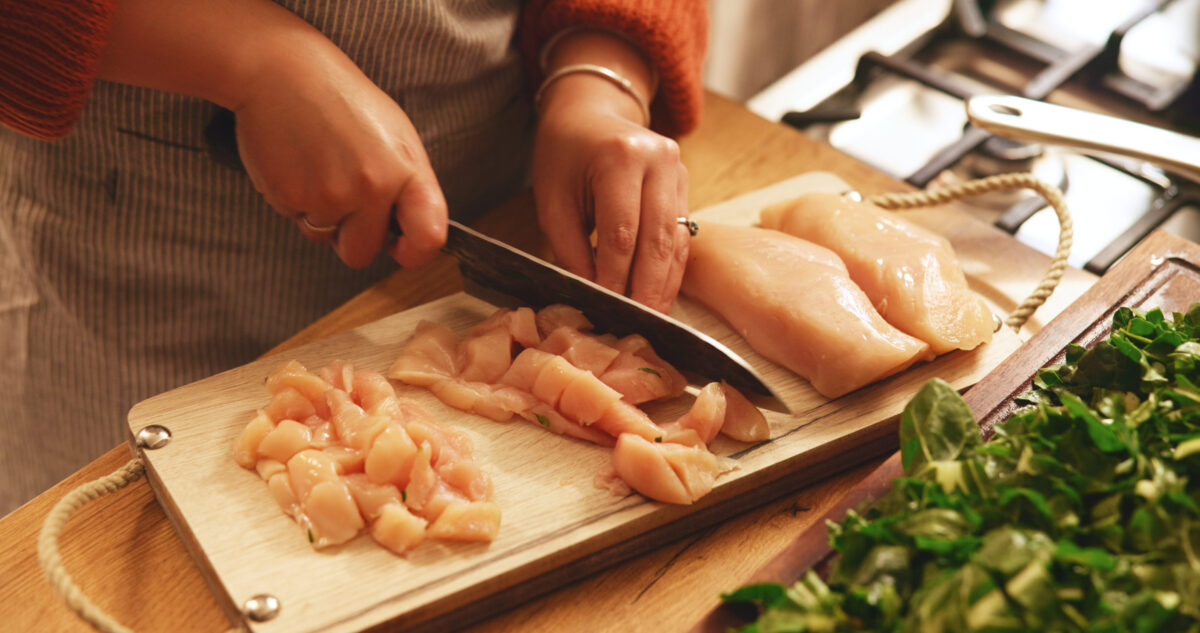
When a recipe allows it, complete chopping, peeling, grating, slicing, and mincing before turning on the heat.
There is a practical reason. Knife work requires attention and a stable workspace. Trying to chop vegetables while monitoring a hot pan divides your attention unnecessarily.
Preparing ingredients first also makes it easier to add them at the right stage.
Reasonably consistent knife cuts can improve cooking, too. Pieces of similar size tend to cook more evenly than pieces that are dramatically different in size.
You do not need restaurant-level knife precision. The goal is to make your ingredients consistent enough that they behave predictably in the pan.
Keep the Workspace Clear
Mise en place includes more than ingredients. It also applies to your workspace.
Begin with enough clear counter space to work comfortably. Move empty packaging out of the way, keep utensils within reach, and use a bowl for scraps if that makes prep easier.
Cleaning during natural pauses can also help keep your cooking area manageable. If something is simmering without needing constant attention, you may have time to wash a used bowl or clear part of the counter.
The goal isn’t to keep the kitchen perfectly clean every second. It is to prevent clutter from interfering with the cooking process.
Remember Food Safety
Preparation must also be handled safely.
Basic food-safety guidance commonly emphasizes four practices: clean, separate, cook, and chill. Clean hands and food-contact surfaces properly, and keep raw meat, poultry, seafood, and eggs separate from foods that will not be cooked further.
This means mise en place should not involve leaving perishable foods sitting at room temperature for unnecessarily long periods.
Refrigerate perishable foods, prepared foods, and leftovers promptly. A widely used food-safety guideline is to refrigerate them within two hours, or within one hour when the surrounding temperature is above 90°F (about 32 °C).
Good organization and good food safety should work together.
Adapt the Habit to the Meal
Not every recipe requires the same amount of preparation.
For a sandwich, mise en place might mean taking out the bread, filling, knife, and plate before you begin.
For a curry, it could mean chopping onions, preparing garlic and ginger, measuring spices, and opening canned ingredients before heating the pan.
For baking, it may involve measuring ingredients, preparing baking tins, and preheating the oven.
A useful question to ask is:
Once I start cooking, what will I wish I had already done?
Whatever comes to mind belongs in your preparation stage.
A Small Habit With Lasting Benefits
Mise en place will not automatically make every meal perfect. It cannot replace practice, proper seasoning, temperature control, or good ingredients.
What it can do is create better conditions for those skills to work.
When ingredients are ready and tools are within reach, you can focus more on the food itself. You can watch how quickly onions are browning, notice when a sauce changes consistency, and respond when something needs stirring or removing from the heat.
That is what makes this habit so valuable. Better cooking does not always require doing more. Sometimes it begins with preparing earlier.
Before your next meal, read the recipe, gather your ingredients and tools, complete the essential prep, clear your workspace, and only then begin cooking.
“Everything in its place” may have its roots in professional kitchens, but it is a remarkably practical principle for everyday cooking. A few minutes of prep at the start can make the whole experience feel calmer, more controlled, and more consistent.
Other articles you may like:
– kitchen-color-schemes-that-never-go-out-of-style/
– 5-healthy-spices-to-keep-in-your-kitchen-simple-ingredients-worth-knowing/
– 8-ultimate-guide-to-kitchen-remodel-ideas-transform-your-space-with-style/