7 Dishwashing Habits That Can Leave Residue on Plates and Glasses
A dishwasher can finish a full cycle and still leave you wondering what happened. Maybe a glass has a cloudy coating, a plate feels slightly greasy, or a bowl comes out with a few gritty particles stuck to it. Those results don’t all have the same cause. Residue can come from food, detergent, minerals in the water, or droplets that dry into spots and streaks.
Reaching for extra detergent isn’t always the answer. Sometimes the problem starts with how the machine is loaded, how freely water can move, or whether routine dishwasher maintenance has been overlooked.
Overloading the dishwasher
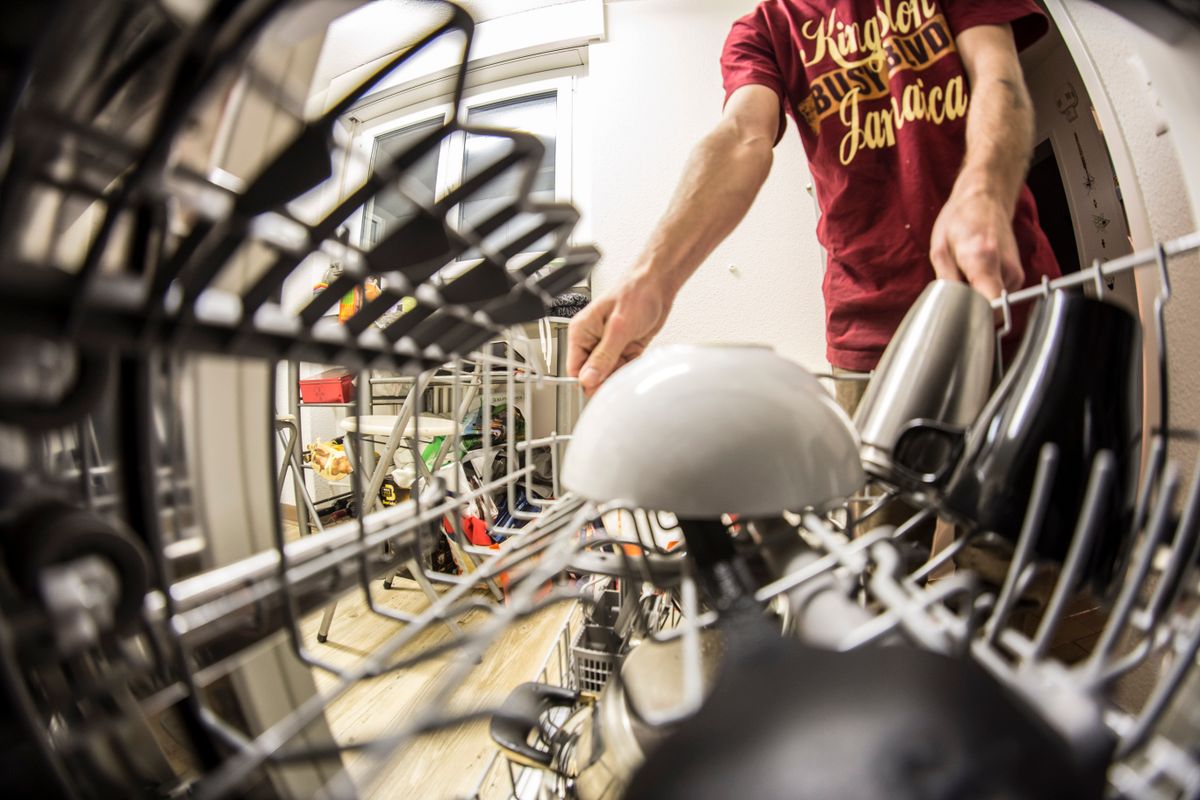
Packing in one more plate may seem efficient, but dishes still need enough space for wash water and detergent to reach their surfaces. When plates, bowls, and glasses are crowded together, some areas may come out with food residue or a cloudy film. An overloaded rack can also interfere with the spray arms.
Leave some space between items and aim dirty surfaces downward and inward toward the spray arms. Before starting the machine, give the spray arms a quick turn by hand. Make sure long utensils, handles, cutting boards, and oversized cookware aren’t in the way. Whirlpool’s dishwasher-loading guidance similarly advises spacing items apart and avoiding anything that blocks the spray arms.
Blocking the detergent dispenser
A large pan or platter can fit neatly into a rack while creating a problem you may not notice: blocking the detergent dispenser.
If the dispenser door cannot open properly, or water cannot reach the detergent cup as intended, detergent may stay behind instead of being released and dissolved during the wash.
Keep the area in front of the dispenser clear. Position large pans and platters away from the door, and check that handles or tall items aren’t touching the detergent compartment. If detergent remains in the cup afterward, look at the loading arrangement and spray-arm movement before assuming you simply need more soap.
Related: 9 Common Dishwasher Myths Debunked: Expert Advice for Cleaner, More Efficient Use
Using old, damp, or clumped detergent
Dishwasher detergent doesn’t do its job as well when moisture has turned it into a hard or sticky lump. Detergent exposed to damp conditions can clump, dissolve poorly, and even interfere with the dispenser door.
Store detergent tightly closed in a cool, dry location. The dispenser itself should also be dry and free of leftover detergent before you add powder, gel, or a pod. If the detergent has become noticeably hard, lumpy, or sticky, replacing it makes more sense than trying to squeeze another load out of it.
Whirlpool notes that detergent buildup inside the dispenser can prevent it from functioning correctly, and recommends removing caked detergent residue.
Assuming more detergent means cleaner dishes
It is tempting to think that an extra-heavy dose of detergent will handle an especially messy load. But more isn’t automatically better.
Using more detergent than the dishwasher and water conditions call for can contribute to too many suds, weaker cleaning performance, and residue. The appropriate amount can also vary with water hardness.
Follow the detergent’s dosage directions and the dishwasher’s guidance rather than automatically filling the compartment every time. Use detergent made specifically for automatic dishwashers, too.
Regular hand dish soap can create excessive foam and interfere with normal operation. Whirlpool warns that using too much detergent can cause residue buildup, while non-automatic dishwasher soaps can affect wash performance or create overflowing suds.
Skipping rinse aid when spots keep appearing
If glasses repeatedly come out with water spots, streaks, or white residue, rinse aid may deserve more attention. Rinse aid helps water spread and run off dish surfaces during the final rinse instead of remaining in droplets that dry in place. It can be particularly useful where hard water contributes to mineral deposits.
Check the rinse-aid reservoir and refill it according to your dishwasher manual. If water stains continue, the setting may be too low. Rainbow-like streaking can indicate that the setting is too high. Wipe away rinse aid that spills outside the reservoir. According to Whirlpool, rinse aid supports washing and drying performance and helps control the buildup of hard-water deposits and white film.
Related: 8 Cast Iron Mistakes That Are Destroying Your Skillet, And How to Fix Them
Ignoring hard water when glasses look cloudy
A milky-looking glass isn’t necessarily covered in food or detergent. Hard water can leave mineral deposits that create a cloudy film on glassware and inside the dishwasher.
There is also an important difference between removable mineral film and permanent glass etching. They may look similar, but etched glass may not clear up. The brief recommends gently rubbing a small amount of vinegar on a cloudy area as a test. If the haze comes away, deposits are a likely explanation.
For recurring problems, water hardness, rinse aid, detergent choice, and, when hardness is extremely high, a water softener may all be worth considering. Whirlpool says very hard water, 15 grains per U.S. gallon or more, can make good dishwasher results difficult and recommends a water softener in those circumstances.
Letting the filter and spray arms collect debris
Even a well-loaded dishwasher can struggle if water flow is restricted. Food buildup in the filter or clogged spray-arm openings can reduce washing performance and leave behind grit, stuck-on food, or detergent residue.
Scrape substantial scraps, bones, toothpicks, and other hard debris into the trash before loading. There’s no need to turn that into a rule about prewashing every plate.
Clean the dishwasher filter according to the appliance manual and inspect the spray-arm openings for debris. If dishes in the same corner repeatedly come out dirty, uneven water flow is worth checking before adding extra detergent. GE Appliances’ dishwasher-cleaning guide recommends checking removable filters and clearing clogged spray-arm jets; Whirlpool also advises making sure spray arms can move freely, and filters are clear.
When dishes come out looking less than clean, the solution isn’t automatically another scoop or pod. Residue can point to crowded racks, blocked spray arms or dispensers, aging detergent, incorrect detergent amounts, low rinse aid, hard-water deposits, or buildup in the filter and spray arms.
Looking at the type of residue and how the dishwasher is operating can help narrow down what needs attention instead of simply using more detergent.