A World Without Chocolate? Climate Change Is Putting Cocoa’s Future at Risk
Could chocolate really disappear within the next 30 years?
The idea sounds extreme, but scientists and cocoa-industry experts are increasingly warning that climate change is putting growing pressure on the tropical regions where cacao, the plant used to make chocolate, can thrive.
That does not mean chocolate is expected to vanish completely by 2050. Experts have pushed back against claims that cacao trees are literally heading for extinction.
But the crop does face serious challenges.
Rising temperatures, unpredictable rainfall, drought, disease and shrinking areas of suitable farmland could make cocoa harder and more expensive to produce, particularly in West Africa, where much of the world’s supply originates.
The result could be a future in which chocolate remains available but becomes more expensive, less predictable and increasingly difficult for farmers to produce.
Cocoa Needs a Very Specific Climate
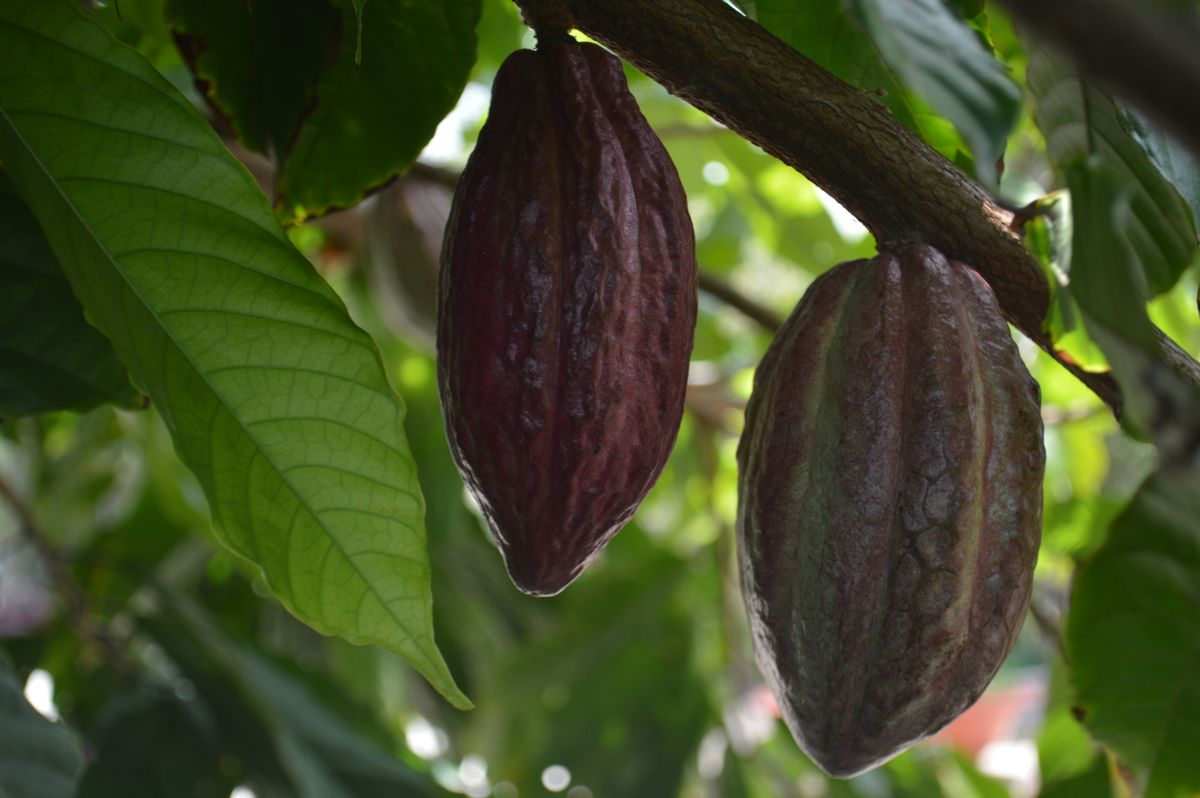
Chocolate begins with Theobroma cacao, a tropical tree with demanding growing requirements.
Cocoa is largely produced close to the equator. The International Cocoa Organization says the crop is typically grown between 10 degrees north and 10 degrees south of the equator, where temperatures, rainfall, and humidity are favorable.
Cocoa trees generally perform best with annual average maximum temperatures of around 30 to 32 degrees Celsius and minimum averages between 18 and 21 degrees Celsius.
They also need substantial rainfall, generally between 1,500 and 2,000 millimeters a year, and are particularly sensitive to prolonged dry soil.
That narrow range of conditions makes cocoa vulnerable to climate disruption.
Unlike crops that can be grown across many climates, cocoa cannot simply be relocated anywhere.
West Africa Is at the Center of the Risk
The greatest concern surrounds West Africa.
Côte d’Ivoire and Ghana have long been two of the world’s most important cocoa-producing nations, while Cameroon and Nigeria are also major suppliers.
Together, the four countries produce about 70% of the world’s cacao, according to Climate Central.
That concentration creates a major vulnerability.
If extreme heat or shifting rainfall patterns reduce production across West Africa, the effects can quickly ripple through global chocolate markets.
Climate Central found that human-caused climate change is already increasing the number of extremely hot days during the main cocoa-growing season.
During the last decade, climate change added at least three additional weeks per year of temperatures above 32 degrees Celsius during the main crop season in parts of Côte d’Ivoire and Ghana.
In 2024 alone, climate change added the equivalent of roughly six extra weeks of temperatures above that threshold across 71% of cocoa-producing areas studied in Côte d’Ivoire, Ghana, Cameroon and Nigeria.
Excessive heat can reduce both cocoa yields and bean quality.
The Bigger Problem May Be Water
Temperature alone is not the whole story.
Cacao trees can tolerate fairly warm conditions if they have sufficient moisture.
The greater danger may come when higher temperatures combine with inadequate rainfall.
NOAA has explained that rising temperatures increase evapotranspiration—the loss of water from soil and plants into the atmosphere.
If rainfall does not increase enough to replace that moisture, cacao trees experience greater water stress.
That problem is already visible in producing regions.
In September 2026, cocoa farmers in Côte d’Ivoire warned that below-average rainfall was affecting young pods and threatening future supply. Some farmers reported small pods falling from trees prematurely and said the main harvest could end earlier than expected if dry conditions continued.
These fluctuations make an already sensitive crop even harder to manage.
Could Cocoa-Growing Areas Shrink by 2050?
Several climate studies have examined how suitable today’s cocoa-growing areas may be several decades from now.
One influential NOAA analysis found that most of the cocoa-growing locations studied in Ghana and Côte d’Ivoire were expected to become less climatically suitable by 2050.
Of 294 locations evaluated, only about 10.5% were projected to become more suitable, while nearly 90% were expected to lose some suitability.
Some of the areas becoming more favorable are located at higher elevations.
That creates another challenge.
Moving cocoa cultivation uphill is not always practical.
Higher ground may already be forest, protected habitat, or land being used for other purposes.
NOAA noted that some potentially improved cocoa-growing locations include environmentally sensitive areas such as Ghana’s Atewa Range, where agriculture could conflict with conservation efforts.
The result is not simply an agricultural problem.
It can also become a land-use problem.
But Chocolate Is Not Going Extinct
The claim that chocolate itself could disappear by 2050 has circulated widely online.
Scientists have cautioned against taking that literally.
Cacao expert Mark Guiltinan of Pennsylvania State University has previously described claims that the cacao tree could become extinct within decades as greatly exaggerated, saying the likelihood of worldwide extinction is extremely low.
Recent scientific research also presents a more complicated picture than a simple collapse.
A 2025 study examining climate change and cocoa production in West and Central Africa found that future outcomes could vary by geography, management techniques, and how carbon dioxide affects plant growth.
Under some scenarios, cocoa production in Côte d’Ivoire and Ghana could even increase if farmers successfully adapt and other growing conditions remain favorable.
So the scientific message is not that chocolate will inevitably disappear.
It is that growing cocoa in traditional regions is becoming increasingly difficult and uncertain.
Farmers Face More Than Climate Change
Climate is only one problem confronting cocoa farmers.
Disease, aging trees, poor soil fertility, limited access to credit, and low farmer incomes all influence production.
Many cocoa farms in West Africa are small family operations.
Farmers may lack the money needed to replace aging trees, install irrigation systems, or buy better planting material.
That creates a difficult cycle.
Adapting to climate change requires investment, but the farmers most exposed to climate risks often have the least ability to afford it.
Industry organizations have increasingly focused on climate-resilient agriculture, forest protection and farmer support.
The World Cocoa Foundation’s Cocoa & Forests Initiative brings together governments, cocoa companies, and other organizations to encourage sustainable production, restoration of degraded landscapes, and protection of forests in major producing countries, including Ghana and Côte d’Ivoire.
Chocolate Could Become More Expensive
For consumers, one of the most noticeable consequences could be price.
When cocoa harvests fall, supply tightens.
Chocolate manufacturers may face higher raw-material costs, and those increases can eventually reach supermarket shelves.
Companies may respond in several ways.
They could raise prices, reduce product sizes, reformulate recipes, or use more alternative ingredients.
Premium chocolate could become especially expensive if high-quality cocoa becomes harder to source.
That possibility means the future of chocolate may be less about disappearance and more about affordability.
Chocolate could remain widely available while becoming more of a luxury product.
New Cocoa Regions Could Emerge
Climate change may also shift where cacao is produced.
Brazil is already investing in cocoa cultivation as part of efforts to restore degraded land and diversify rural economies.
A September 2026 Reuters report highlighted expanding cocoa production in Brazil’s Amazon region, where agroforestry systems combine cacao with other trees and crops. Some farmers reported significant income gains after shifting from cattle production to cocoa-based systems.
If traditional regions lose suitability, countries in Latin America, Africa and Southeast Asia could become more important suppliers.
That shift would not happen overnight.
Cacao trees take years to establish, and successful production requires processing infrastructure, trained farmers and reliable export networks.
Science Is Trying to Protect the Chocolate Supply
Researchers are also working on more resilient cacao varieties.
Breeding programs aim to develop trees that can better tolerate drought, heat and disease.
Farmers are experimenting with shade trees, improved soil management and agroforestry systems designed to reduce heat stress and retain moisture.
Some techniques mimic cacao’s natural rainforest environment by growing trees beneath taller vegetation.
That shade can reduce temperatures around cocoa plants while improving biodiversity.
Better irrigation and weather forecasting may also help farmers respond to droughts and unpredictable rainy seasons.
The challenge is deploying those solutions widely enough and affordably enough to make a difference.