7 Worst Foods to Eat When Invited to Dinner
Some foods are at their best when nobody is worried about looking graceful. Sticky sauce, overloaded toppings, runaway noodles; half the fun can be accepting that dinner may require extra napkins.
But the equation changes when you’re eating at someone else’s home, especially around people you’ve just met or at a table that feels a little more polished.
None of these foods is “bad,” and none should be rejected if a host serves it. They simply require more coordination than some guests may want while making conversation, protecting their clothes, and trying not to redecorate the tablecloth.
Saucy barbecue ribs
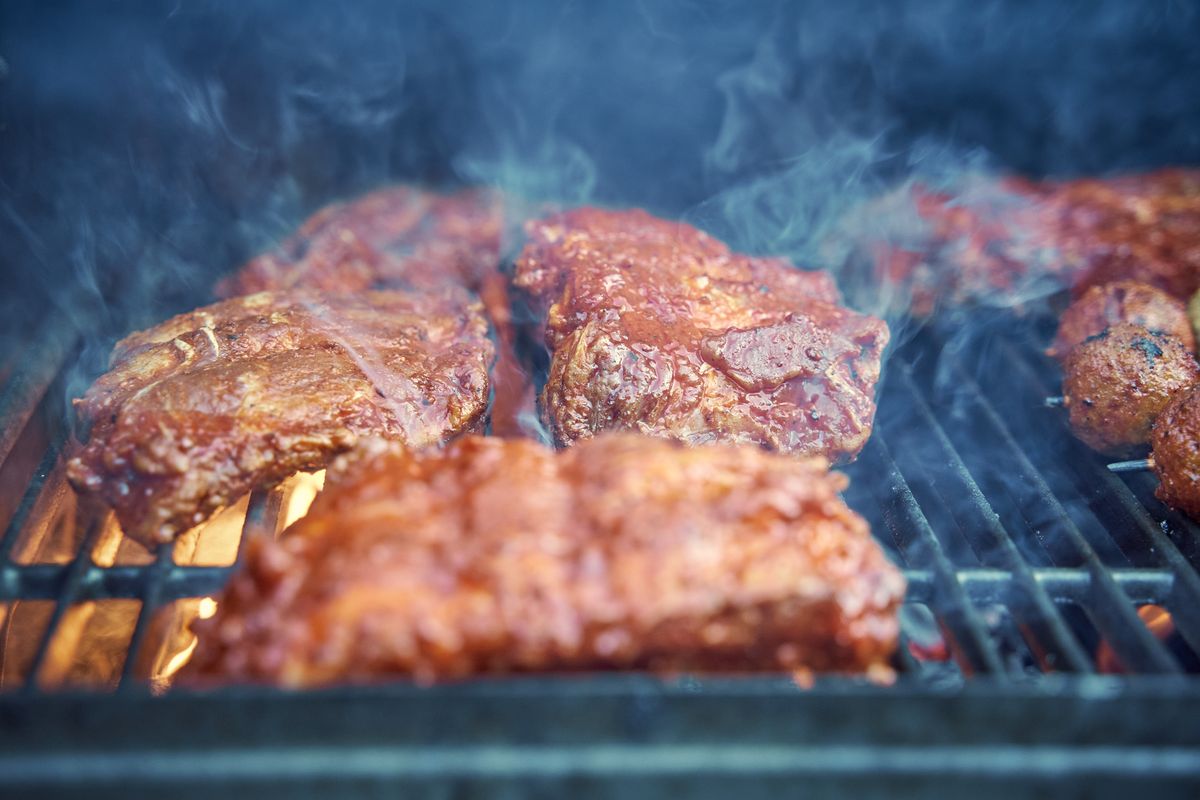
Barbecue ribs are built for hands-on eating. Emily Post notes that a knife and fork can be used to separate ribs from the rack, but the ribs themselves are typically eaten with the fingers. In more formal situations, utensils are generally the safer starting point unless the host signals otherwise.
That makes heavily sauced ribs a particular challenge when you’re trying to look composed. There are bones to manage, sticky fingers to monitor, sauce to keep off your sleeves, and a napkin that suddenly becomes your most important dinner companion.
At a backyard barbecue? Perfect. At a dressier meal with unfamiliar company? They can demand more attention than you planned to give your entrée.
Buffalo chicken wings
Chicken wings don’t exactly encourage passive dining. Eating them may involve holding them by the ends, taking careful bites and, especially with flats, dealing with cartilage and bones using your fingers. Etiquette guidance for messy foods also emphasizes taking smaller bites and avoiding a rushed approach.
That’s sensible advice, but wings still have a way of turning dinner into a small tabletop project. You’re handling sauce, bones, and napkins while also attempting to participate in the conversation like nothing complicated is happening below chin level.
At a game-day gathering, nobody thinks twice. At a more traditional dinner, though, wings can make looking effortlessly relaxed surprisingly difficult.
Spaghetti with red sauce
Spaghetti looks innocent right up until the first forkful. Formal-dining guidance recommends twirling spaghetti against the side of the plate rather than using a spoon, and slurping is discouraged. That leaves the diner with one main task: get those long strands from plate to mouth under control.
Add red sauce, and every twirl suddenly feels slightly more important. A loose strand can wander. A forkful can become larger than intended. One ambitious rotation can leave you wondering whether the noodle is coming with you or staying behind.
Spaghetti is perfectly normal food for company, but when you’re dressed nicely and trying to chat, it can require a level of concentration that feels suspiciously close to a coordination test.
Related: 5 Forgotten Retro Desserts That Were Dinner Party Showstoppers
Overstuffed tacos
Tacos are generally eaten with the fingers, and using a fork for fillings that fall onto the plate is perfectly appropriate. The trouble begins when the taco has been loaded beyond what its shell or tortilla seems prepared to negotiate.
An overstuffed taco can start out looking magnificent and then lose structural confidence halfway through the first bite. Lettuce shifts. Salsa heads for daylight. Cheese and beans begin considering separate travel plans.
Suddenly you’re trying to hold the taco together while listening thoughtfully to someone’s story across the table. A well-balanced taco can be easygoing. An overloaded one earns its place here because keeping dinner contained may require both hands, quick reflexes, and a fork standing by for cleanup duty.
Corn on the cob
Corn on the cob is completely at home at informal family dinners, barbecues and seafood boils, where eating it with your hands is common. Emily Post’s food-and-drink guide notes that at a formal dinner party, corn should instead be cut from the cob and served in a dish.
That distinction makes sense once you consider the mechanics. An ear of corn asks you to pick it up, hold it firmly, rotate it as you eat, and repeat the process until the job is done.
In a casual setting, that’s part of the fun. At a more polished gathering, it can feel a little funny trying to maintain elegant conversation while methodically turning a buttered cob like you’re working a hand crank.
Related: How to Host a Casual Outdoor Dinner Party That Still Feels Elevated
A dripping, overloaded pizza slice
A sturdy pizza slice is one of life’s simpler assignments. Pick it up, eat it, carry on. An overloaded slice is a different proposition.
Pizza can absolutely be eaten with the hands in casual settings. But etiquette guidance suggests that a knife and fork may make more sense in a more formal setting when a slice is piled with toppings or falling apart.
That’s where the trouble starts: toppings slide, melted cheese stretches, and the crust may fold just when you need it to remain cooperative. One moment you’re having dinner; the next you’re trying to prevent half the slice from making an unscheduled landing on your plate.
Pizza isn’t the problem. Pizza that refuses to stay assembled is.
Saucy burger or towering slider
There is nothing inherently unsuitable about a burger or slider at dinner. The challenge is purely practical when the sandwich becomes unusually tall, heavily sauced, or difficult to hold together.
Protocol guidance notes that even foods that look like finger foods, including saucy sliders, may call for a fork or pick depending on the setting and the host’s cues.
A towering burger can require a plan before the first bite. Do you compress it? Approach from one side? Commit to both hands and hope the fillings remain in formation?
Once sauce begins escaping and the layers start shifting, casual eating can turn into tabletop engineering.
The best rule for all seven foods is simple: read the room. If your host serves ribs at a barbecue, enjoy them. If pizza is the casual dinner plan, grab a slice.
If corn arrives on the cob, there’s no reason to panic. Some foods simply require more hands-on attention than others, and the setting and your host’s example can tell you how relaxed you can be.