9 Foods That Can Be Awkward to Order on a First Date
The conversation is going well. Then the burger arrives, stacked so high that picking it up feels like a separate decision.
Nothing is wrong with the burger, and nothing is wrong with ordering it. But when you are getting to know someone, a dish that requires both hands, several napkins, and a strategy can compete with the conversation.
No universal list of foods ruins first dates. This is a practical look at dishes that may require more handling, cutting, or cleanup than you want during an introductory dinner.
The Emily Post Institute’s dining-out guidance emphasizes small bites, handling spills discreetly, and waiting to swallow before speaking. Those basics matter more than choosing a supposedly perfect entrée.
Consider these nine foods if your goal is to keep attention on the person across the table.

Towering, heavily loaded burgers
A burger becomes a different undertaking when several patties, slippery toppings, and a generous amount of sauce are stacked inside the bun.
Before ordering, check the description rather than assuming every burger is equally manageable. Extra layers may be delicious, but they can make each bite less predictable.
If it arrives larger than expected, use your knife and fork. Cutting it into manageable portions is a practical solution, not a dining failure. A simpler burger may be easier to handle, but you don’t need to abandon your favorite order just because it looks ambitious.
Saucy bone-in wings
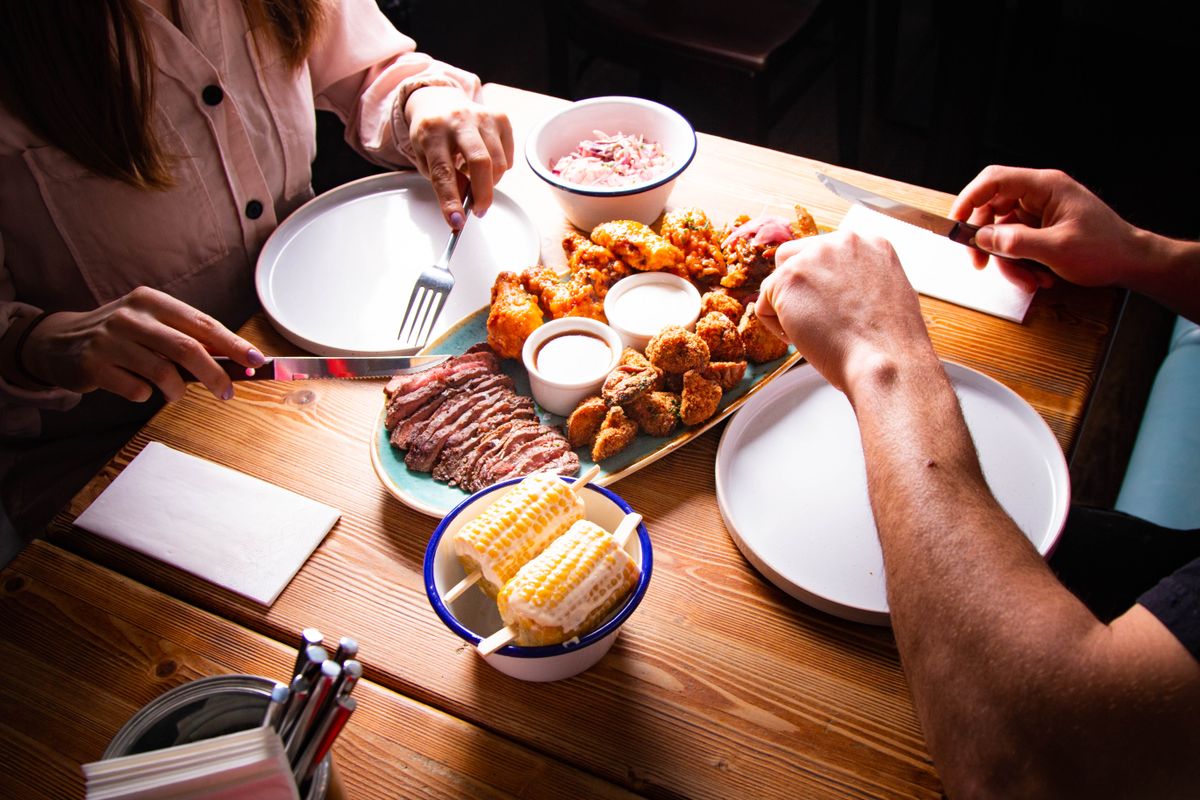
Wings ask for a particular kind of participation: picking them up, working around the bones and finding somewhere to put the finished pieces.
That is entirely appropriate in a casual setting. The complication is a sticky glaze that makes you reach for your napkin repeatedly while trying to answer questions.
Check whether the table has a place for bones, and ask for extra napkins before beginning. Pause between eating and speaking rather than trying both at once.
The restaurant’s setting matters. Wings fit naturally into some dates, especially when both people have chosen a relaxed meal.
Long pasta with a loose sauce
Spaghetti and linguine are not forbidden first-date foods. They reward a little attention.
A large forkful can leave strands hanging, while a loose tomato sauce gives those strands somewhere to drip. Take a smaller amount and go slow.
The Emily Post Institute’s guide to eating tricky foods provides practical instructions for handling foods that require more than a straightforward forkful. Its approach is technique, not avoiding entire cuisines.
If you know long noodles make you uncomfortable, a shorter pasta shape offers an alternative without changing the spirit of dinner.
Shell-on crab or lobster
A shellfish dinner can involve cracking, pulling, dipping, and sorting the edible portions from the shells.
For someone familiar with the process, that may be part of the pleasure. For someone learning at the table, it can require more concentration than expected.
Read whether the dish arrives whole, in the shell, or already prepared. Ask your server if the description is unclear.
Nothing is embarrassing about needing instructions. But if you would rather spend the meal listening than working out how to use a cracker, choose a preparation with the shell removed.
Related: 9 Everyday Foods People Are Choosing as They Think About Aging Well
Slippery, overfilled tacos
An overfilled taco combines several moving parts: a tortilla, loose toppings, sauce, and a filling that may escape after the first bite.
The issue is construction, not the taco itself. A modestly filled version may be perfectly easy to eat.
Keep the taco over your plate, avoid adding every available topping at once, and use utensils for anything that falls out. You do not have to restore the original arrangement.
If you are sharing, check what your date wants before placing an order. A platter chosen together is different from assuming someone else wants to manage the same fillings.
Barbecue ribs with a sticky glaze
Ribs can make a meal wonderfully hands-on. They can also keep your fingers occupied and your napkin busy.
Decide whether that suits the occasion. A casual barbecue restaurant creates different expectations from a more formal dining room.
Avoid treating the plate as a challenge to finish quickly. Work through manageable portions and pause when you want to talk.
If you would rather keep your hands available, consider another preparation on the menu. That is a choice about comfort, not a judgment on barbecue or the people who enjoy it.
A whole fish with bones
Whole fish may require separating the flesh from the skeleton and watching for smaller bones.
If you eat it regularly, that can be familiar work. If you do not, an introductory dinner may not be the moment you want to learn without guidance.
Ask whether the kitchen offers a fillet or can prepare the fish for easier serving.
If you encounter a bone, deal with it discreetly. It is advised to use the utensil or fingers that brought the food to your mouth to remove an unwanted item, then placing it to the side of the plate.
Oversized sushi rolls
A compact piece of sushi and an oversized roll topped with sauce are different eating experiences.
The larger version may not fit comfortably in one bite, and forcing it can make conversation difficult.
Choose pieces you can manage, or use utensils when necessary. Emily Post’s food guide acknowledges that unusually large pieces may require more than one bite or cutting with a knife and fork.
Familiarity matters more than performing a technique. Order something you can enjoy without turning the meal into a test of your chopstick skills.
A heavily powdered dessert
A pastry generously dusted with powdered sugar can leave a visible trace on fingers, clothing, or the table.
Cut a small piece before lifting it, keep your napkin handy, and resist rushing the first bite.
Sharing dessert should also be a shared decision. Ask before ordering one plate and two forks.
None of these dishes is inherently a bad choice. Food & Wine’s advice on navigating food preferences reinforces the value of knowing and communicating what you enjoy rather than feeling ashamed of it.
Choose food that lets you feel comfortable, and treat an occasional dropped topping as an ordinary part of dinner. If both people can laugh kindly over a little sauce on the table, might that tell you more than a perfectly tidy meal ever could?