
8 Things You Should Think Twice About Cleaning With Dish Soap
Dish soap is one of the most convenient cleaners in the house. It cuts through grease, handles everyday messes, and is usually sitting right beside the sink when you need it. That convenience can make it tempting to use the same bottle everywhere. But dish soap isn’t a universal cleaner, and some appliances, finishes, and fabrics have specific cleaning requirements.
The important distinction is that not every item on the following list is automatically ruined by dish soap. In several cases, the issue is simply that the manufacturer recommends something else. In others, using a water based cleaner can conflict with the item’s care instructions.
Your Dishwasher’s Detergent Compartment
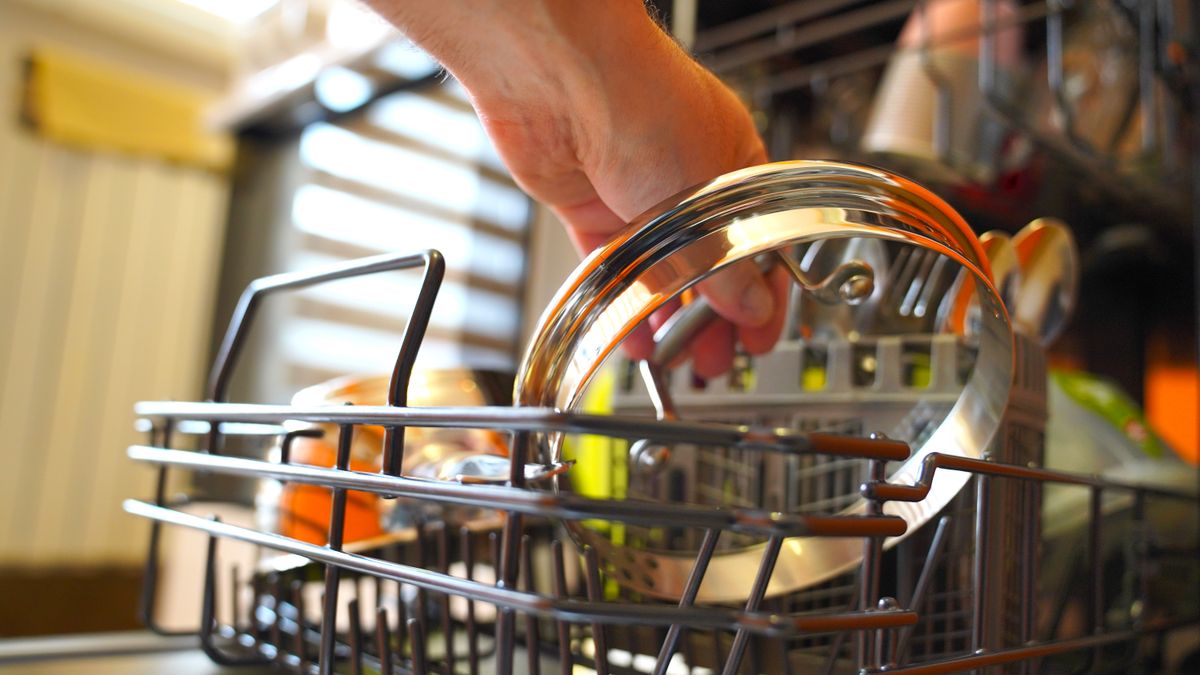
Running out of dishwasher detergent can make a bottle of liquid dish soap look like an obvious substitute. It isn’t. Whirlpool specifically warns against putting hand dishwashing detergent into an automatic dishwasher because it can create excessive suds. Those suds can interfere with washing performance and, in some circumstances, contribute to overflow.
The fix is simple: use detergent labeled for automatic dishwashers. Dishwasher pods, powders, and gels made for that purpose are different products from the liquid soap you use in the sink. This warning applies to using dish soap as the detergent for a dishwasher cycle, not to all exterior cleaning around the appliance.
Related Post: 4 Common Kitchenware Items You Should Never Clean in the Dishwasher
Your HE Washing Machine
A washing machine is another place where dish soap can seem like a clever emergency substitute. It can also create a sudsy mess. Whirlpool’s guidance says HE washers require the appropriate HE laundry detergent and notes problems with excessive suds, including reduced spin performance, extra rinses, longer cycles, and poorly rinsed loads. So if you are out of laundry detergent, resist the urge to pour dish soap into the drum.
Instead, use the HE laundry detergent specified for your machine and follow its dosage instructions. A small amount of dish soap for a compatible garment spot treatment is different from using it as the washer’s main detergent, so don’t treat the two uses as interchangeable.
TV and Computer Screens
Your screen may look like glass, but cleaning it like a kitchen surface isn’t necessarily a good idea. Samsung’s cleaning guidance specifically prohibits soap for its TV screens and warns that unsuitable cleaning methods can damage the screen’s anti-glare coating.
Instead, follow the instructions for your particular display. Samsung’s guidance calls for gently wiping the screen with a microfiber cloth and, when necessary, using distilled water on the cloth rather than spraying liquid directly onto the display. The important word here is particular. Apple, Samsung, and other manufacturers don’t necessarily provide identical cleaning instructions. Some Apple displays, including nano texture models, have their own specific requirements. Don’t assume a method approved for one screen applies to another.
Leather Furniture With Restrictive Care Instructions
A greasy armrest can make dish soap seem like the perfect solution. After all, dish soap is designed to deal with grease. But leather furniture is not one size fits all. Ashley Furniture’s care guidance excludes soaps, detergents, and household cleaners for its leather furniture and warns that improper cleaning can affect the product’s care and warranty.
The safer approach is to follow the furniture manufacturer’s instructions, using a soft cloth and an approved leather-care product when appropriate. One important wrinkle: other furniture manufacturers allow certain mild soaps for specific leather products. Herman Miller, for example, identifies particular mild soaps for some applications. That does not mean any dishwashing liquid is automatically suitable for every leather sofa.
Hardwood Floors Whose Care Guide Excludes Detergent
Adding a splash of dish soap to a bucket of water is a familiar floor-cleaning trick. Whether it is appropriate depends on the floor and its finish. Bona cautions about soap residue, while excess moisture presents a separate concern for wood flooring. The complication is that manufacturer instructions are not completely uniform. Bruce’s general floor-care guidance excludes detergents, while another Bruce guide for engineered hardwood allows a few drops of mild dish soap diluted in warm water and used sparingly.
That is why “never use dish soap on hardwood” is too broad. Before mopping, check the care instructions for your specific floor and finish. When in doubt, use the cleaner recommended by the flooring manufacturer with a microfiber mop and avoid saturating the floor.
Unfinished Decorative Wood and Antiques
Unfinished wood needs a different kind of caution. The concern isn’t that dish soap is hostile to wood. The Canadian Conservation Institute warns that wet cleaning can cause water to be absorbed into unfinished wood. This can lead to swelling, raised grain, dimensional changes, and staining, and dirt can also move deeper into the material.
So don’t automatically grab a bucket of soapy water to clean an unfinished decorative object, rustic wooden piece, or antique. For stable objects, gentle dry dusting may be a better starting point. Fragile or valuable pieces may require professional conservation advice. And don’t confuse decorative unfinished wood with purpose made wooden cutting boards. Those have their own care instructions, and some manufacturers specifically permit mild dish soap.
Upholstery Labeled S or X
Before applying dish soap and water to a sofa stain, check the upholstery cleaning code. That little letter can matter more than how dirty the fabric looks. La-Z-Boy’s care guidance distinguishes between upholstery codes. Fabrics marked S are intended for water-free cleaning methods, while X fabrics should be vacuumed or lightly brushed rather than cleaned with liquid or foam products.
That means a homemade dish-soap-and water mixture can be the wrong approach even if it works perfectly well on another couch. Other codes have different instructions. W and W-S fabrics can allow water-based cleaning under specified conditions, so don’t turn one upholstery code into a rule for every sofa in the house. Check the manufacturer’s tag or care guide first.
The Solution Tank in a Carpet Cleaning Machine
A carpet-cleaning machine is another place where “it’s just soap” can get you into trouble. BISSELL’s guidance for its Big Green carpet cleaner recommends compatible machine formulas and warns that other formulas or household cleaners may cause defects or damage. That makes filling the solution tank with dish soap a poor substitute for the formula the machine was designed to use.
Instead, use the compatible cleaning solution specified for your particular machine and follow its dosage instructions. This is a machine-compatibility warning. It does not establish that every carpet or upholstery fiber will be permanently damaged by every diluted dish-soap treatment. Those are separate questions governed by the material’s own care instructions.
A Few Popular Dish Soap Warnings Don’t Hold Up
Some of the most familiar cleaning warnings are more complicated than they sound. Cast iron is a good example. Lodge explicitly permits soap in its cleaning guidance, so the claim that dish soap automatically destroys cast-iron seasoning does not hold up as a universal rule. Marble is another. The Natural Stone Institute allows mild liquid dishwashing detergent for natural stone care, meaning marble does not belong on a blanket “never use dish soap” list.
The same principle applies to other household items. Warby Parker recommends lotion-free dishwashing liquid for cleaning certain eyeglasses, while manufacturers such as Made In and All-Clad allow gentle dish soap for specified nonstick and stainless steel cookware. The real lesson is less dramatic but much more useful: the material alone does not always tell you what cleaner to use. Before turning dish soap into your all-purpose cleaning solution, check the care instructions for the appliance, finish, fabric, or object in front of you. Sometimes dish soap is exactly what the manufacturer recommends. Other times, it is better left beside the kitchen sink.


