
9 Iconic ’80s Restaurants That Disappeared and Baby Boomers Still Miss
For Baby Boomers, eating out in the 1980s could mean a roadside stop beneath an orange roof, a budget steak dinner with a generous salad bar, or a fast-food meal from a chain that no longer exists in the same way.
Some of these restaurants were national names. Others were regional favorites that became just as memorable to the people who grew up with them. Their signs may be gone, their dining rooms repurposed, and their menus preserved mostly through old commercials and family memories.
Here are nine restaurant names that still bring back a very particular era of American dining.
Related: 9 Things Boomers Miss That Today’s World Has Left Behind
Howard Johnson’s
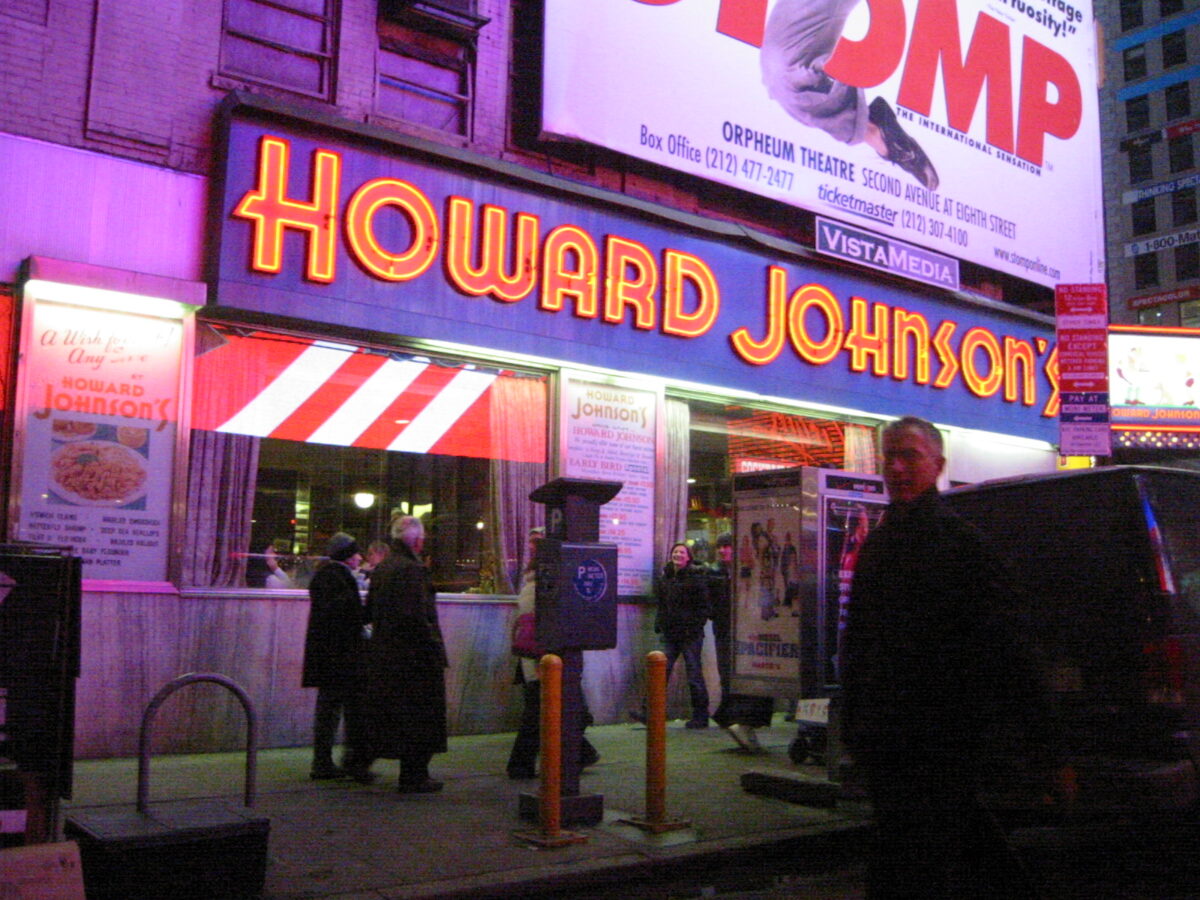
Orange-roof roadside restaurants, fried clams, and a famous ice cream program made Howard Johnson’s one of the most recognizable restaurant names for American travelers. The chain remained part of the cultural landscape into the 1980s, even as its restaurant business was shrinking.
The company changed ownership in 1980 and was acquired by Marriott in 1985. Marriott later closed or converted many of the restaurants, contributing to the disappearance of a familiar roadside sight.
For many families, stopping at Howard Johnson’s was part of the rhythm of a road trip. The restaurant itself could feel like a marker that a long drive had officially begun or paused.
Burger Chef
Burger Chef was once a major fast-food competitor, known for flame-broiled burgers and kid-focused Fun Meals. Although its biggest growth years came before the 1980s, the chain remained familiar to many customers entering the decade.
In 1982, General Foods sold Burger Chef to Imasco, which also owned Hardee’s. Many Burger Chef locations became Hardee’s, while others closed or changed hands.
Today, the chain is remembered as a reminder that the fast-food landscape once included more major competitors than the names most familiar today.
Sambo’s
Sambo’s was known for pancakes, breakfast served at any hour, and family-style meals that made it a familiar stop for road trips and weekend outings. It was once a major full-service restaurant chain before financial problems and attempts to change its name contributed to its decline during the 1980s.
There is an important part of this history that nostalgia cannot erase. The restaurant’s name and imagery were rooted in racist stereotypes, making the brand increasingly untenable.
Sambo’s belongs in this history not as harmless retro fun, but as an example of how a restaurant can remain memorable while also carrying a deeply troubling legacy.
Steak and Ale
Steak and Ale offered the kind of restaurant experience that felt more special than a typical burger stop without being positioned as an extravagant night out. Diners remember dark wood interiors, affordable steaks, salad bars, and quiet booths.
The chain helped establish the affordable, themed-steakhouse style that became a recognizable part of suburban dining during the 1970s and 1980s.
For families, a Steak and Ale dinner could turn an ordinary evening into an occasion. The steak, salad bar, and restaurant setting were part of the experience.
Beefsteak Charlie’s
Beefsteak Charlie’s was especially memorable in the Northeast, where it became known for steaks, generous salad bars, and an all-you-can-eat approach to casual dining. It developed a reputation as a value-driven destination for group dinners and family occasions.
Its regional identity is important. Beefsteak Charlie’s was not equally familiar across the entire country, but for diners who knew the chain, it represented a distinctly 1980s idea of value: plenty of choices, substantial portions, and a salad bar that felt like part of the main event.
Ownership changes and shifting dining habits eventually reduced its footprint.
D’Lites
D’Lites offered a different take on fast food. The chain served burgers, salads, baked potatoes, and frozen yogurt while trying to make its menu fit into the decade’s growing interest in lighter fast-food choices.
The company expanded quickly but filed for Chapter 11 bankruptcy in 1986.
Its story is interesting because it shows that restaurants were already experimenting with different approaches to fast food during the 1980s. D’Lites became an early example of a chain trying to combine the convenience of fast food with a lighter menu.
Lum’s
Lum’s had one of the most unusual signatures on this list: hot dogs steamed in beer. Alongside simple sandwiches, that specialty gave the chain an identity that was much more distinctive than that of a generic lost burger restaurant.
The chain gradually lost ground and had largely faded from national visibility by the end of the 1980s.
That unusual hot dog remains the detail most strongly associated with Lum’s, proving that a restaurant’s signature item can sometimes outlive the restaurant itself in public memory.
Chi-Chi’s
Chi-Chi’s brought a festive Mexican-style casual-dining experience to the 1980s, with fried ice cream, oversized meals and dining rooms designed for family nights, birthdays and group celebrations.
Unlike some of the other names here, Chi-Chi’s did not disappear during the 1980s. It was a defining restaurant of the decade that later largely vanished from the U.S. after financial problems and a major collapse in the 2000s.
That makes it a useful reminder that a restaurant can become strongly associated with one era even when its eventual disappearance happens much later.
Ponderosa Steakhouse
Ponderosa was a familiar family-steakhouse name during the 1980s, particularly in suburban and smaller-market communities. Diners remember steaks, baked potatoes, cafeteria-style ordering, buffet lines, and affordable family meals.
The appeal was built around affordability and abundance. A steak dinner combined with a buffet or salad bar could make family dining feel accessible without turning the meal into a major splurge.
Ponderosa has had surviving locations and changing ownership, so it is more accurate to say the brand became far less visible than it once was rather than calling it completely extinct.
Why These Restaurants Still Matter
These restaurants disappeared from the mainstream dining landscape for different reasons. Consolidation, financial pressure, changing tastes, rebranding problems, and newer competitors all played roles in the stories of different chains.
But for many Baby Boomers, these places were about more than food. They were stops after a Little League game, destinations during family vacations, or restaurants chosen when an ordinary dinner needed to feel like an occasion.
That is why details such as orange roofs, salad bars, sizzling steaks, plastic trays, and paper menus can still bring back such specific memories. The restaurants may have faded, but the experiences attached to them remain familiar to the people who remember them.


