7 Dishwasher Loading Mistakes Almost Everyone Makes
You can pack a dishwasher with dishes and still wonder why some come out dirty. Often, the problem isn’t the machine itself, but how everything was arranged inside it. A few common loading habits can block water, interfere with the detergent dispenser, or leave dishes sitting in spots where the spray cannot reach properly.
The good news is that most of these mistakes are easy to fix. Here are seven loading habits worth checking the next time your dishwasher does not deliver the clean dishes you expected.
Related: 7 Things You Should Never Put in The Dishwasher Unless You Enjoy Expensive Regret
Overcrowding the Racks
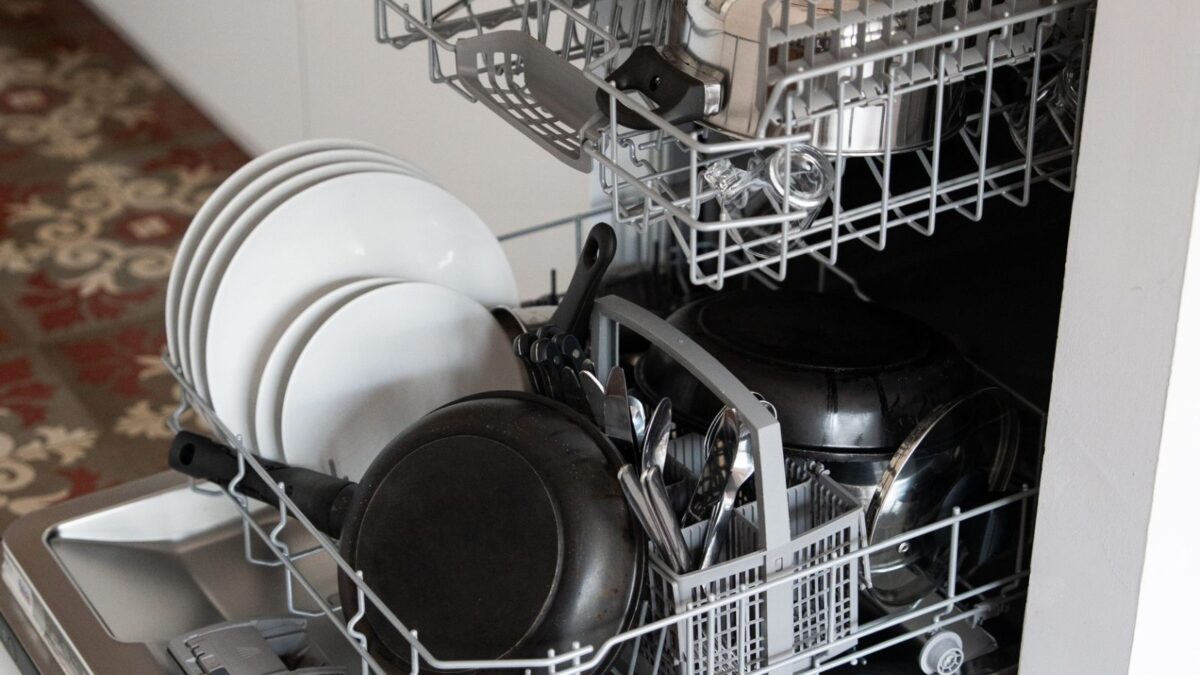
Cramming too many dishes into the dishwasher can restrict water circulation and leave food residue behind. Give dishes some visible breathing room instead of stacking them tightly together. A full dishwasher is useful, but filling every possible gap is not the goal.
Blocking the Spray Arms
Letting tall dishes, pots, cutting boards, or utensils get in the way of the spray arms can stop them from rotating properly. Before starting the cycle, make sure the arms can move freely. It is a quick check that can prevent one large item from getting in the way of the entire wash.
Blocking the Detergent Dispenser
Putting large flat cookware directly in front of the detergent dispenser can keep its door from opening properly. Baking sheets, platters, and pans are better positioned along the sides, back, or corners of the lower rack. Keep the dispenser clear so the detergent can be released during the cycle.
Nesting Bowls, Cups, and Silverware
Stacking bowls inside one another or letting utensils lock together creates areas that water may not reach. It can also leave water trapped inside bowls and between pieces of silverware after the cycle ends. Separate bowls and mix silverware rather than creating tight groups of identical pieces.
Putting Glasses and Dishwasher-Safe Plastics on the Lower Rack
Placing glasses, cups, and dishwasher-safe plastic items on the lower rack goes against the general loading guidance from GE Appliances and Whirlpool. These items are generally placed on the upper rack, while the dishwasher’s manual should take priority if it gives different instructions. Always check that an item is actually labeled dishwasher-safe before loading it.
Laying Dishes Flat or Facing Them Away From the Spray
The direction and angle of your dishes matter. Plates, bowls, and cookware should be positioned so water can reach the dirty surfaces and drain away afterward. Heavily soiled areas should generally face the water source, while the rack design and owner’s manual should guide the exact placement.
Pre-Rinsing Every Plate
Running every dish under the faucet before putting it in the dishwasher is usually unnecessary. ENERGY STAR recommends scraping dishes rather than rinsing them and notes that pre-rinsing can use up to 20 gallons of water before the dishwasher even starts. Remove large scraps, bones, and toothpicks, then let the dishwasher handle the rest according to its instructions.
A Better Way to Load the Dishwasher
The basic idea behind good dishwasher loading is surprisingly simple: keep the spray arms moving, leave room for water to circulate, and make sure dishes are positioned where the spray can actually reach them. It is less about creating a perfectly packed rack and more about avoiding the obstacles that interfere with the wash.
Remember that dishwasher designs vary. Rack layouts, spray patterns, and other features are not identical across models, so your owner’s manual should have the final say when its instructions differ from general loading advice.
The next time your dishwasher leaves a few dishes looking less than clean, take a look at how they were loaded before blaming the machine.