Cincinnati’s Crispy Breakfast Obsession Started With German Thrift and a Helping of Oats
Oatmeal and breakfast sausage usually occupy different corners of the plate. Cincinnati’s goetta puts them together and makes a convincing case for the arrangement. Pronounced “get-uh,” this regional specialty combines meat, pinhead oats, onions, and seasonings into a mixture that cooks, chills, slices, and fries. The result has a browned exterior and a soft, savory center. It may need a little explanation before the first bite, but the texture does most of the talking afterward.
Goetta is closely associated with Cincinnati, but its territory extends across the Ohio River into northern Kentucky. Its ancestry goes back even further, to the grain sausages of northwestern Germany. Immigrants brought those traditions to the Cincinnati area in the 19th century, where recipes evolved into a distinctly German-American specialty. What began as a practical way to stretch meat became a familiar breakfast food and, eventually, something worth building festivals, restaurant dishes, and considerable hometown pride around.
“Goetta is more than the sum of its parts. It’s this weird, unique food,” historian Dann Woellert, author of Cincinnati Goetta: A Delectable History, told Ohio Magazine in 2019. His explanation gets to the heart of its staying power: “It represents our German heritage, the culture of Cincinnati, that we keep what we love close to us.” The story behind the crisp-edged slices is therefore as much about immigration and memory as it is about breakfast.
Before It Was a Cincinnati Favorite, It Was a Practical German Tradition
Goetta belongs to a larger family of German grain sausages, commonly described as gruetzwurst. These preparations combined meat with grains to make limited supplies go further. Woellert traces goetta’s ancestry to farming communities in northwestern Germany, where different places developed their own variations. “A lot of people think goetta is something Germans made up here,” he told Ohio Magazine, explaining that grain sausage “was very much a part of their culture where they came from.”
That distinction matters: goetta did not arrive in Cincinnati as a completely finished, universally standardized dish, nor did someone invent the entire meat-and-grain concept there. German immigrants brought related food traditions during the large immigration of the 1830s. Cincinnati Magazine describes settlers working in the region’s meatpacking and shipping industries and establishing themselves in Over-the-Rhine. As their cooking adapted to the place they now called home, those older sausage recipes developed into the local specialty.
The surrounding city helped shape that transformation. Cincinnati’s meatpacking industry earned it the nickname “Porkopolis,” and German immigrants in Cincinnati and northern Kentucky used grains to turn meat into something economical and substantial. The modern dish commonly includes pork and beef, although recipes vary. “Plus the oats and meat combination was a great way to fuel the working man for the day,” Josh Lillis, fifth-generation owner of Eckerlin Meats, told Food & Wine in 2026.
Its German roots, then, explain the foundation rather than every detail of the version served today. Cincinnati Magazine identifies German relatives such as knipp and pinkel among the broader grain-sausage family. Goetta’s local identity emerged through adaptation, family cooking, and butcher-shop production on both sides of the river. Calling it simply “German sausage” leaves out that second chapter: the regional changes that made it recognizably Cincinnati’s own.
The Oats Aren’t a Side Note, They Make the Texture
For anyone encountering goetta for the first time, the ingredients can sound more puzzling than the finished dish tastes. Meat, steel-cut or pinhead oats, onions, and seasonings are cooked together until thick, then formed into loaves and chilled. Slices go onto a hot griddle or into a skillet, where the outside browns while the interior stays tender. It is not a conventional sausage link, and its distinctive texture is central to understanding the appeal.
“I think the texture is what is misunderstood with goetta,” Lillis told Food & Wine. “You have to have a little crispiness with the soft oats.” The oats are not simply something to conceal beneath the meat flavor; their softer texture supplies the contrast. Lillis described the product as “an oat sausage or kind of like a meat oat hash,” which gives newcomers a useful starting point without suggesting it behaves exactly like either one.
Butcher shops have their own approaches. At Eckerlin Meats, a family-owned business dating to 1852, Lillis credits his great-grandmother Frieda’s recipe while acknowledging changes in production. He told Food & Wine that his father moved toward whole-muscle pork shoulder and beef chuck, along with standardized cooking times and temperatures, to make the product more consistent. Tradition did not mean refusing every adjustment; it meant preserving a recognizable result that customers could count on.
Glier’s, founded in Covington in 1946, played another important role in goetta’s commercial growth. Cincinnati Magazine reports that founder Bob Glier learned from neighbors’ homemade versions and developed a meatier mixture that held its shape better than earlier, porridge-like preparations. The company helped popularize the specialty, and it remains closely associated with the dish. Its northern Kentucky home also serves as a useful reminder: Cincinnati’s breakfast identity has never stopped neatly at the riverbank.
Related:16 Items Grandma Had in Her Pantry That Younger Generations Rarely Keep Today
From the Breakfast Skillet to Hush Puppies and a Festival
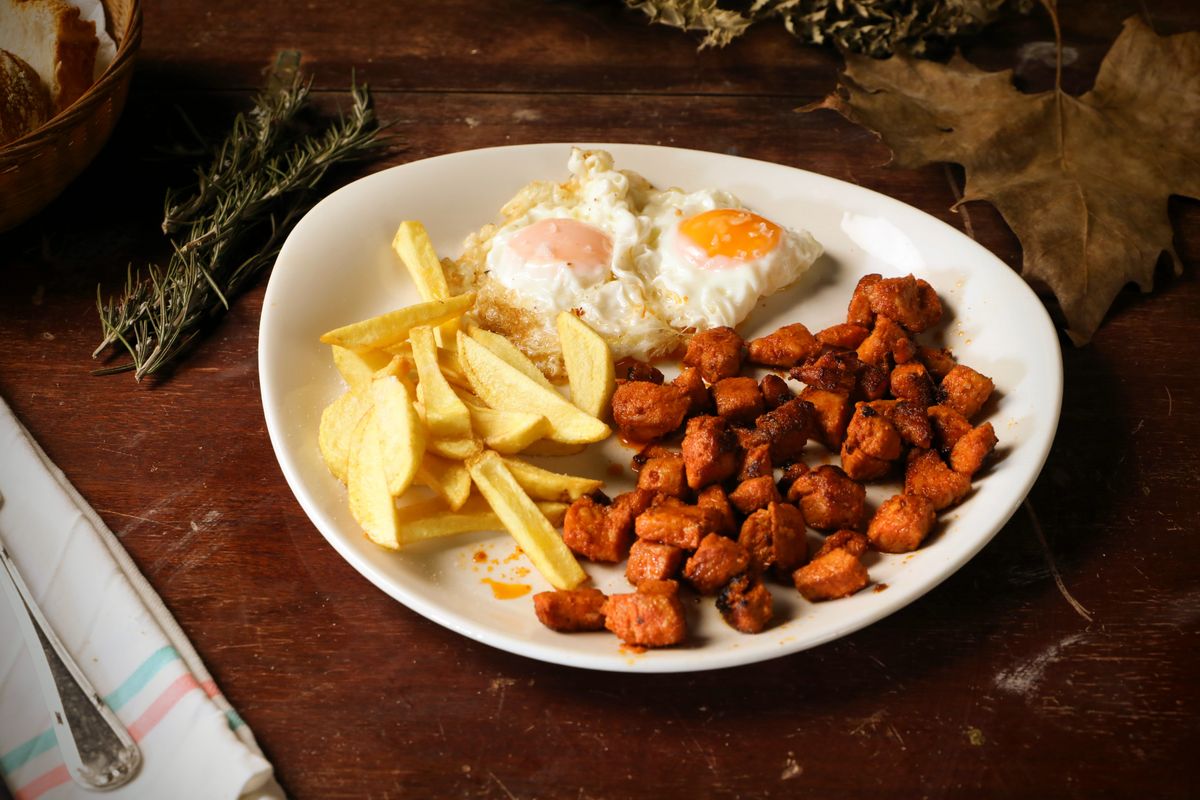
The straightforward introduction is still a fried slice beside eggs and toast. Lillis told Food & Wine that he cooks goetta in a little butter, turning it only once to help keep it intact. His preferred accompaniment is scrambled eggs, with strawberry jam when he feels like adding something extra. That sweet touch is not an error: Woellert notes that locals debate toppings such as syrup and ketchup, alongside how crisp or soft the goetta should be.
Restaurants have also taken it beyond the breakfast plate. At Libby’s Southern Comfort in Covington, goetta appears in hush puppies served with remoulade. Owner Brad Wainscott told Food & Wine that the idea grew from family discussions about a Southern restaurant reflecting their Cincinnati roots. “It has such a strong connection to Cincinnati and family,” he said, explaining why the ingredient made sense. The dish is a newer interpretation built around an older attachment.
That attachment gets a public celebration at Glier’s Goettafest in Newport. The festival began in 2001; Dan Glier described its original purpose to Cincinnati Magazine as a thank-you to longtime customers. By 2019, it had expanded to two weekends. A food once valued for making meat stretch farther had become the centerpiece of a regional gathering. Between family recipes, butcher counters, and playful restaurant versions, goetta’s appeal remains grounded in something simple: a familiar food, cooked with care, that tastes like home.