The Great Betrayal? Lebanon’s Israel Deal Turns Sovereignty Into a Dangerous Gamble
Lebanon has a new deal on the table, and nobody seems calm about it.
President Joseph Aoun says the framework agreement signed with Israel is the “first step” toward restoring Lebanon’s sovereignty after the latest war between Israel and Hezbollah. Supporters are calling it a path back to state control, full withdrawal, and the return of displaced families. Critics, especially Hezbollah and its allies, see something very different: a humiliating bargain that gives Israel time, gives Washington leverage, and forces Lebanon into a showdown over Hezbollah’s weapons.
That is why this moment feels bigger than a diplomatic photo-op in Washington. It is not just about Israel and Lebanon signing paperwork. It is about who controls Lebanon’s borders, who carries guns inside the country, who gets to decide war and peace, and whether “sovereignty” means liberation — or a trap wrapped in polite language.
A Deal Sold as Sovereignty, Not Surrender
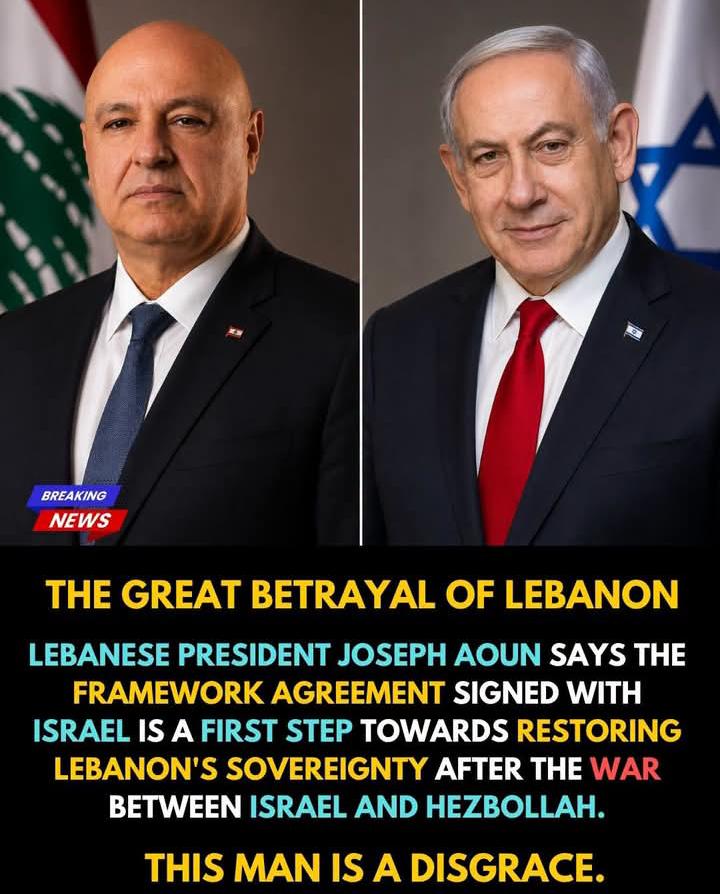
The framework agreement was signed in Washington by Israel’s ambassador to the U.S., Yechiel Leiter, and Lebanon’s ambassador to the U.S., Nada Hamadeh Moawad, with U.S. Secretary of State Marco Rubio present. It is being described as a first step toward ending the long conflict between Israel and Lebanon, following months of fighting between Israel and Hezbollah.
Aoun welcomed the deal as a “first step on the path” to Lebanon restoring sovereignty over all its territory. He also said the framework begins the road for displaced people to return to liberated towns under a Lebanese state with “no partner” over its land and people. That phrase matters because it points directly at Lebanon’s old and explosive question: can the Lebanese state be sovereign while Hezbollah remains armed?
Prime Minister Nawaf Salam backed the same argument. He said the agreement aims to secure Israel’s withdrawal from Lebanese territory, restore state sovereignty, and allow citizens to return home. He added that Lebanon’s obligation is to extend state authority through its armed forces across the country.
In plain English, the government’s sales pitch is this: Lebanon cannot fully recover from war while Israel controls land in the south, and it cannot fully claim sovereignty while any armed group operates outside the state.
The U.S. State Department framed the deal in similar terms, saying it gives Lebanon a “genuine pathway” out of crisis and gives Israel a verifiable route to removing the threat on its northern border. Rubio said the framework sets a process to restore Lebanese sovereignty, disarm Hezbollah, and dismantle its military infrastructure.
That sounds neat on paper. But Lebanon has never lived on paper.
Why Hezbollah Calls It a Betrayal
Hezbollah was not part of the agreement, and that absence is the match near the gasoline.
Hezbollah leader Naim Qassem rejected the U.S.-brokered deal as “null and void,” calling it a surrender to Israel. He accused Lebanon’s government of making unilateral concessions and said linking Israel’s withdrawal to Hezbollah’s disarmament legitimizes Israel’s military presence.
His message was blunt: Hezbollah will not simply walk away from its weapons because Washington, Beirut, and Tel Aviv signed a framework. “We will not leave it,” Qassem said of the battlefield.
Another Hezbollah figure, Hassan Fadlallah, warned that Lebanese authorities would not be able to enforce the Washington agreement unless they move, with American support, toward civil war. That is not just tough talk. It is a warning that the real battle may shift from the border to Lebanon’s own political system.
For Hezbollah and many of its supporters, the deal looks upside down. Israel gets to remain in a security zone for now. Hezbollah is expected to disarm. The Lebanese army is expected to take control of pilot zones. Reconstruction and civilian return come only after disarmament and verification.
That sequence is why critics call it betrayal. They argue Israel is being rewarded with continued leverage while Lebanon is being asked to solve its most dangerous internal problem under outside pressure.
And there is another sensitive issue: accountability. Human rights advocates have raised concerns about language in the framework that requires both sides to avoid hostile or negative actions in international legal or political forums. Some legal experts fear that this could weaken efforts by victims of alleged war crimes to seek justice. Lebanon’s national human rights commission stressed that pursuing accountability for war crimes is not an act of hostility but a legitimate right.
That point could become politically explosive. For families who lost homes, relatives, journalists, emergency workers, or entire neighborhoods, peace without justice may feel less like healing and more like being told to stay quiet.
The Hard Part Begins Now

Israel is also celebrating the framework, but for very different reasons.
Israeli Prime Minister Benjamin Netanyahu called it a “great achievement” and said Israel would remain in the security zone in southern Lebanon as long as Hezbollah is not disarmed and continues to threaten Israel. Israeli officials say the deal gives their country a path to security and eventual withdrawal once Hezbollah’s threat is removed.
Leiter, Israel’s ambassador, used warmer language, saying Israel wants to “embrace Lebanon” and even imagined people driving between Tel Aviv and Beirut. But he also made clear that the dream depends on Hezbollah being disarmed and dismantled.
That is the entire deal in one sentence: peace is promised, but only after the hardest thing happens first.
The framework outlines pilot zones in which the Lebanese Armed Forces would gradually assume security responsibilities. It also creates a U.S.-facilitated Military Coordination Group for Lebanon to help implement the process. Washington has also tied the deal to humanitarian support.
But even after the signing, violence did not magically disappear. Reuters reported that Israel carried out a drone strike in southern Lebanon the day after the agreement, saying it targeted an individual who posed a threat to its forces. For many Lebanese watching from bombed towns, displacement shelters, or tense neighborhoods, that makes the word “peace” sound premature.
So, is this the great betrayal of Lebanon?
The honest answer is this: it depends on what happens next.
If the deal brings Israeli withdrawal, allows families to return, puts all weapons under the Lebanese state, and opens the door to reconstruction, Aoun may be remembered as the president who took a risky but necessary step toward sovereignty.
If it leaves Israel in place, corners Lebanon into internal conflict, weakens accountability for wartime abuses, and turns Hezbollah’s disarmament into a new domestic explosion, critics will say they saw the betrayal coming from day one.
For now, Lebanon has not received peace. It has received a test.
And in Lebanon, tests like this rarely stay quiet for long.