7 U.S. Presidents Whose Decisions Still Divide Americans Today
A president can make a decision in a matter of days, but Americans may spend generations arguing about its consequences. Some choices arise during wars or national emergencies, when leaders face enormous pressure to act quickly. Others reflect political priorities that later generations question.
From the forced removal of Native Americans to the invasion of Iraq, presidential decisions have shaped American laws, freedoms, and relationships with other nations.
These seven presidents faced very different circumstances. Yet their decisions continue to raise difficult questions about power, responsibility, national security, and the human cost of government action.
Andrew Jackson
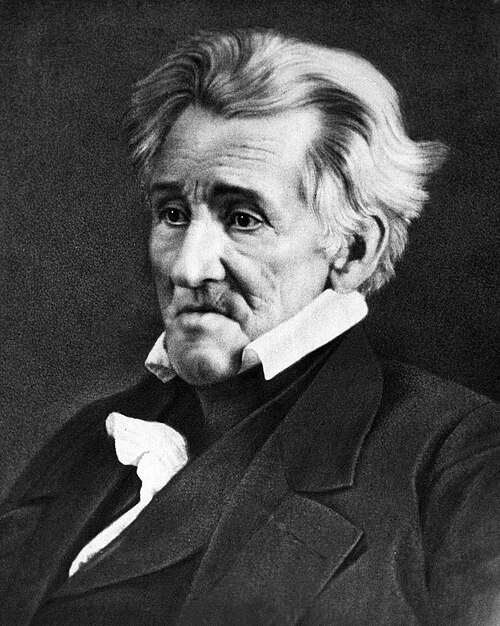
On May 28, 1830, President Andrew Jackson signed the Indian Removal Act, giving the federal government authority to negotiate treaties relocating Native nations west of the Mississippi River.
Jackson promoted the policy as a way to encourage American settlement and expand opportunities for eastern states. His administration negotiated nearly 70 removal treaties, contributing to the relocation of approximately 50,000 Native Americans.
The consequences extended beyond his presidency. Under President Martin Van Buren, the Cherokee Trail of Tears occurred in 1838–1839. According to the National Archives, approximately 4,000 of the 16,000 Cherokees forced west died during the journey.
Jackson’s legacy continues to provoke debate about territorial expansion, Native sovereignty, and the lasting injustice of Indigenous dispossession.
Abraham Lincoln
Abraham Lincoln faced an extraordinary challenge when the Civil War began in 1861. With Washington, D.C., potentially vulnerable to Confederate forces, protecting military transportation and communication routes became urgent.
On April 27, 1861, Lincoln authorized the suspension of habeas corpus along military routes between Washington and Philadelphia. Habeas corpus allows individuals to challenge unlawful detention in court.
Lincoln acted without prior congressional authorization, prompting constitutional objections. In Ex parte Merryman, Chief Justice Roger Taney argued that only Congress possessed the authority to suspend the protection.
Congress eventually authorized presidential suspension in 1863. Lincoln’s decision continues to raise a fundamental constitutional question: How far should presidential emergency powers extend when national survival appears threatened?
Franklin D. Roosevelt
Following Japan’s attack on Pearl Harbor, President Franklin D. Roosevelt faced mounting national-security fears. On February 19, 1942, Roosevelt issued Executive Order 9066, allowing military commanders to establish exclusion zones.
Although the order did not specifically identify Japanese Americans, its implementation led to the forced removal and incarceration of approximately 120,000 people of Japanese ancestry, including nearly 70,000 American citizens.
Families lost homes, businesses, personal freedoms, and financial security. In 1988, the federal government formally apologized through the Civil Liberties Act and provided restitution to eligible survivors.
The government acknowledged that racial prejudice, wartime hysteria, and failed political leadership contributed to the injustice.
Today, this history remains a powerful warning about discrimination and the vulnerability of civil liberties during national emergencies.
Harry Truman
Few presidential decisions have generated as much historical debate as Harry Truman’s authorization of atomic weapons against Japan. On August 6, 1945, an American atomic bomb struck Hiroshima. Another devastated Nagasaki three days later.
Japan had not accepted Allied surrender demands, and American leaders were considering military and diplomatic options for ending World War II. The bombings killed tens of thousands immediately, with additional deaths occurring afterward.
Japan surrendered shortly after the attacks and the Soviet Union’s entry into the war against Japan. Supporters argue that using atomic weapons accelerated Japan’s surrender and potentially avoided a costly invasion.
Critics question their necessity and the morality of killing civilians on such a massive scale. Historians continue examining the role of Soviet intervention and whether alternative approaches might have ended the conflict.
Lyndon B. Johnson
Lyndon B. Johnson inherited an American commitment to South Vietnam, but his decisions substantially expanded U.S. military involvement. In August 1964, American destroyers reported attacks by North Vietnamese forces in the Gulf of Tonkin.
Johnson requested congressional authorization to respond. Congress passed the Gulf of Tonkin Resolution on August 7, granting broad authority for military action in Southeast Asia.
Questions subsequently emerged about whether the reported August 4 attack had occurred. Johnson used the resolution’s authority to escalate American involvement, including sustained bombing operations against North Vietnam.
His administration argued that stronger military intervention was necessary to prevent South Vietnam’s defeat. The controversy concerns the reliability of the intelligence presented to Congress and whether lawmakers surrendered too much authority over decisions involving war.
Gerald Ford
When Gerald Ford became president in August 1974, the Watergate scandal had already forced Richard Nixon from office. Less than a month later, Ford made a decision that shocked many Americans.
On September 8, 1974, he granted Nixon a full pardon for federal offenses committed or potentially committed during his presidency. Ford argued that prolonged legal proceedings would keep the country trapped in political turmoil.
The pardon eliminated the possibility of federal prosecution for covered offenses. Public reaction was intense. Ford’s press secretary, Gerald Terhorst, resigned, and Ford later testified before a congressional subcommittee.
Some Americans suspected a secret agreement between Ford and Nixon, although Ford denied any deal. Supporters view the pardon as an attempt at national reconciliation. Critics argue that it denied Americans an opportunity to see presidential accountability tested in court.
George W. Bush
In March 2003, President George W. Bush launched a U.S.-led invasion of Iraq. His administration argued that Saddam Hussein’s government posed a serious threat, particularly because of alleged weapons of mass destruction.
The invasion initially attracted substantial American public support and quickly removed Hussein from power. However, the conflict developed into a prolonged war, and postwar investigations failed to uncover the weapons stockpiles central to the administration’s case.
The consequences included extensive casualties, political instability, and years of military involvement. According to Pew Research Center, 62% of Americans surveyed in 2019 believed the Iraq War was not worth fighting.
The debate continues over whether removing Hussein justified the invasion, how intelligence failures influenced the decision, and what accountability leaders should face when major military actions rest on faulty claims.
Why These Presidential Decisions Still Matter
These seven decisions expose recurring tensions in American government: security versus freedom, executive authority versus constitutional limits, military goals versus human costs, and reconciliation versus accountability.
Historical circumstances help explain why presidents acted. They do not necessarily justify the consequences, especially when those consequences included displacement, lost freedoms, or civilian deaths.