A Comedian Watched How Some British People Wash Their Dishes, and Her Horrified Reaction Has Sparked a Transatlantic Debate About Rinsing
A bowl of soapy water. A quick scrub. Then the plate goes straight onto the drying rack, suds and all.
That one step, or rather the missing one, has set off a fresh round of the internet’s longest-running kitchen argument after a comedian’s reaction video racked up millions of views in a single day.
The Video That Restarted the Fight
The clip comes from Linda Landeros, a comedian and reaction-video creator known online as America’s Tia, who also posts on TikTok as @americastia. As Know Your Meme reported on Nov. 13, her Instagram video passed 2.9 million views within a day.
She made it after a commenter told her to look up how British people wash dishes. She then reacted to several clips showing the method: dishes washed in a bowl of soapy water in the sink, then set on the rack without a rinse.
Her Reaction Was Not Subtle
Landeros covers her face, asks why anyone would do this, and argues that the leftover suds are just soap film sitting on the plates. She closes with a jab that has been quoted all over the comments: “Britain is not the country to be judging how others clean.”
It is played for laughs, and that is the point. She is a comedian reacting to other people’s videos, not a cleaning expert running a test.
What the Clip Can’t Tell Us
The video shows a handful of short clips, so it cannot tell us how most British households actually wash up. Plenty of people in the UK rinse, many use dishwashers, and plenty of Americans skip the rinse too.
It also can’t tell us how clean any particular plate ended up. What it captures is a cultural habit that looks strange from the outside, which is exactly why it travels so fast online.
So What Is the British Method, Exactly
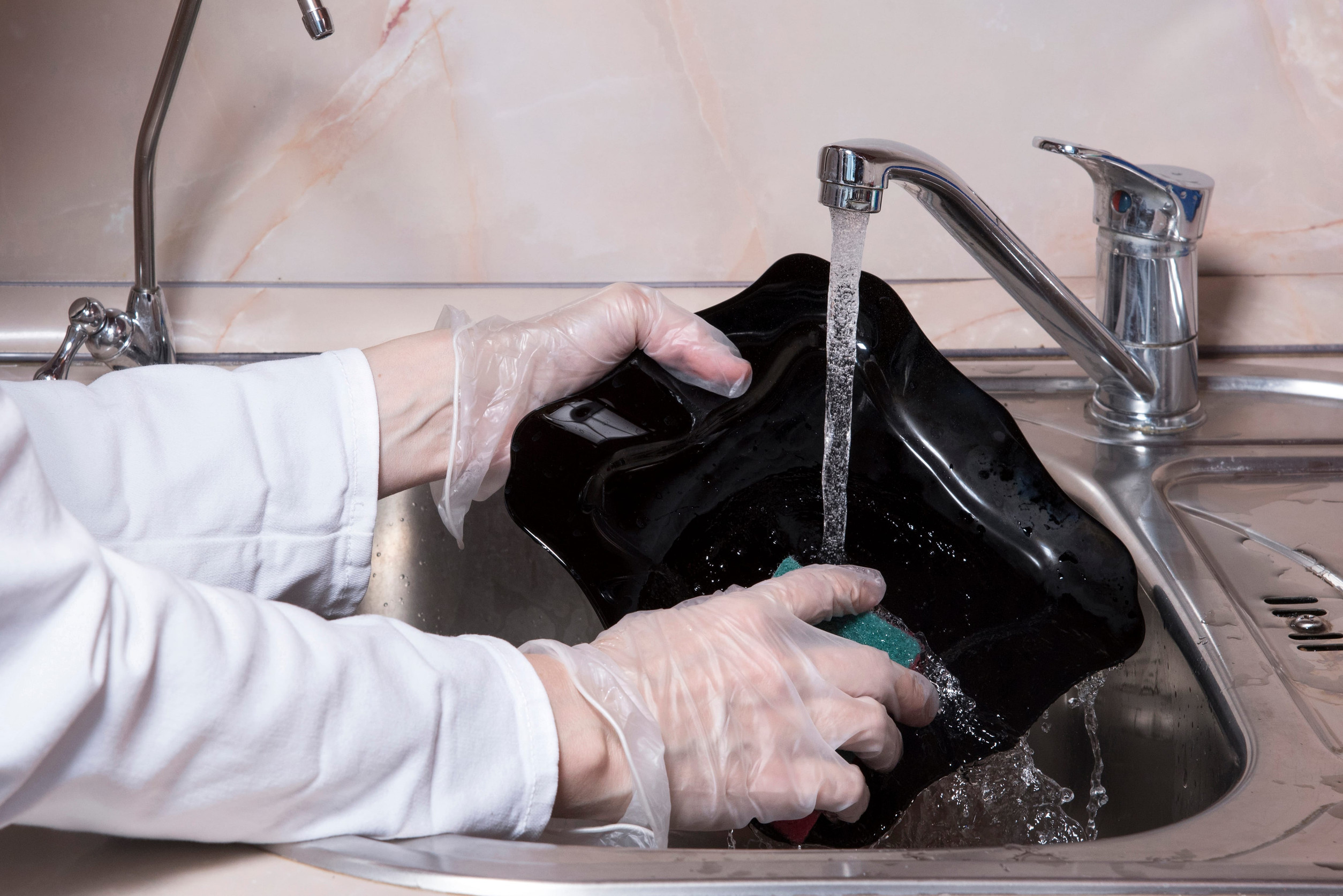
Hunker explains the washing-up bowl routine like this: fill a plastic bowl in the sink about two-thirds full with hot water and a drop or two of dish soap, scrape off food, scrub each dish, and change the water only when it gets dirty. At the end, skip the rinse and let dishes air-dry or give them a quick wipe with a towel.
Fans say it uses less water than running the tap and keeps the other side of the sink free. It is the kind of habit that looks like one of the kitchen mistakes that make people cringe to some viewers and like perfectly sensible thrift to others.
Blame the Plumbing
There is real history behind the bowl. In a piece for the New Statesman on Britain’s washing-up bowl habit, Sebastian Shehadi pointed to the UK’s old housing stock, where many kitchens have just one sink rather than the double sinks common elsewhere.
He also noted that many British homes have long had separate hot and cold taps instead of a single mixer, which makes washing under running water a choice between too cold and too hot. A bowl lets you set the temperature once. Relatively expensive water and heating made a small bowl the thrifty choice, too.
It is the mirror image of the American traditions that confuse the rest of the world, and a good reminder that most kitchen habits start with the kitchen itself.
Americans Have Their Own Ritual
Many American kitchens grew up around double sinks and mixer faucets, so the common routine is wash on one side and rinse on the other, or rinse under the tap. People who keep a spotless kitchen tend to have firm routines, much like the habits of people who always seem to have a clean kitchen.
Dish duty is also one of those chores where everyone thinks their way is the right way, which is why it lands on lists of kitchen duties couples fight over the most. A good drying rack and a decent sponge are among those super useful things nobody argues about.
The Taste Test Argument
For a lot of rinse loyalists, the complaint is not complicated. They do not want a soapy taste in their morning coffee or a film on their wine glasses.
Defenders of the bowl say a quick towel dry takes care of it, and that a drop or two of soap in a full bowl of water leaves very little behind. Hunker notes that rinsing is still the best way to get soap off completely, so even the method’s fans tend to admit a rinse does not hurt.
The Comment Section Divided Along Familiar Lines
Viewers who were horrified made up much of the reaction, according to Know Your Meme, with plenty of people saying they had no idea this was a thing. Others recognized the routine from their own families or travels and shrugged.
The usual side debates popped up too, from dishwashers to whether a soaking pan counts as washing at all.
A Simple Middle Ground
If you like the water savings of a bowl but not the suds, there is an easy compromise. Wash in the bowl, then give each piece a quick rinse in a second bowl of clean water or a short run under the tap before it hits the rack.
And if you are a guest in someone else’s kitchen this holiday season, the polite move is to wash up their way.
Rinse or No Rinse
Whether the British washing-up bowl is a clever, thrifty tradition or a sudsy crime against glassware probably depends on which side of the Atlantic, and which side of the sink, you grew up on. Either way, you may never look at a drying rack the same way again.