Security Concerns Led Trump to Leave Turkey on Older Air Force One
President Donald Trump left Turkey aboard an older Air Force One after security officials reconsidered his travel arrangements amid escalating tensions with Iran. On Thursday, July 9, the White House said protective measures included “distraction and misdirection,” while defending the recently converted aircraft donated by Qatar.
Trump departed Ankara on Wednesday after attending a NATO summit. Officials sent the Qatar-sourced Boeing 747-8 ahead to RAF Mildenhall in England before the president left aboard the heavily modified VC-25A used by previous administrations.
Several U.S. officials said security concerns shaped the departure, although they knew of no specific new threat against Trump. The president later transferred to the newer aircraft in Britain and continued to Washington.
Secret Service Recommended Caution
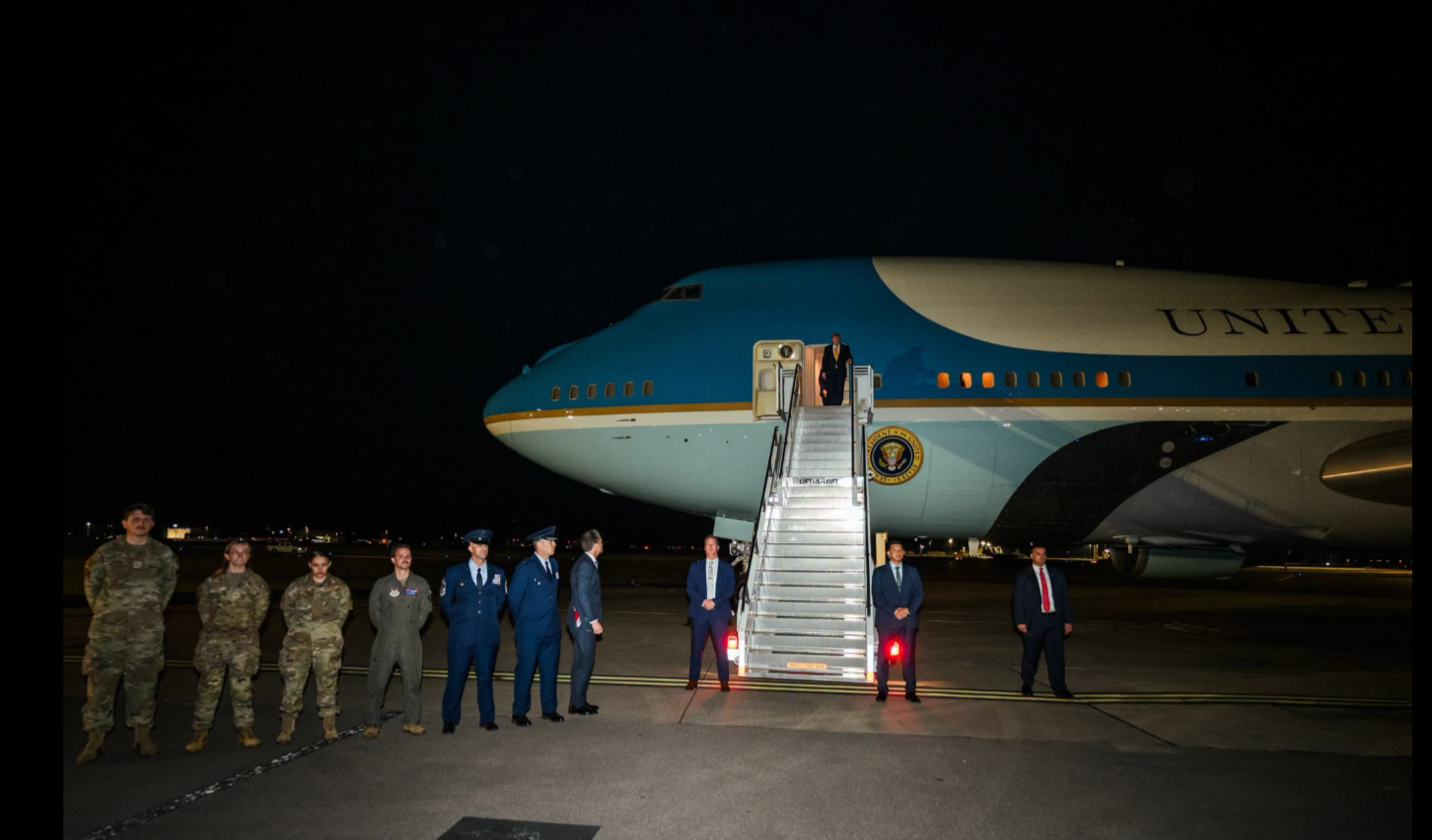
The Secret Service recommended using the older aircraft for the flight out of Turkey. The advice reflected an abundance of caution as the conflict with Iran intensified.
The decision partly involved differences between the aircraft’s security capabilities. Officials viewed the older plane as a more established option for travel near a high-risk region.
The Secret Service urged caution because presidential travel requires preparations for both identified and unexpected threats. The agency did not disclose specific intelligence or classified aircraft vulnerabilities.
White House communications director Steven Cheung said the newer plane had advanced protections for Trump and his staff. He said officials use every available method to counter threats, including efforts to conceal or divert the president’s movements.
Trump denied that a security problem caused the aircraft change. However, he told reporters in Ankara that he was “number one on the kill list for Iran.”
Two Aircraft Split Flight
The Qatar-sourced jet left Ankara before Trump and flew to RAF Mildenhall, a British base used by American forces. Trump departed later aboard the legacy Air Force One.
Passengers traveling with the president were instructed to lower their window shades. Public flight information also did not track the presidential aircraft during part of its movement from Turkey.
Those precautions did not confirm an immediate danger. They showed that security teams treated the flight differently from a routine international departure.
Trump said the newer aircraft traveled ahead so American service members could tour it. After landing at the base, he met military personnel and boarded the converted 747-8.
The aircraft reached Mildenhall before Trump completed the transatlantic portion of his trip. He later arrived at Joint Base Andrews outside Washington.
Iran Conflict Changed Calculations
Trump’s departure followed renewed U.S. strikes against Iran, which shares a border with Turkey. The military confrontation increased concern about possible attacks involving missiles, drones, or hostile intelligence operations.
The president had also discussed the possibility of an Iranian assassination attempt during the NATO summit. Officials have previously described Iranian threats against Trump and other former U.S. officials.
No agency announced it had uncovered a new plot connected to the visit to Turkey. Officials instead described the change as a precaution shaped by the broader threat environment.
Presidential security teams regularly revise routes, aircraft, and departure procedures when intelligence conditions change. Those decisions may remain classified even after a trip ends.
Older Jet Has Specialized Systems
The legacy Air Force One fleet consists of two modified Boeing 747-200B aircraft known as VC-25As. The planes entered presidential service in the early 1990s.
They include secure communications equipment, independent boarding stairs, medical facilities, and dedicated areas for senior officials and security personnel. Their systems allow a president to remain connected with military commanders and government agencies during emergencies.
Legacy jets support refueling, allowing them to remain airborne longer when necessary. Many defensive and command features remain classified.
The aircraft have supported presidential travel for decades. Pilots, Secret Service agents, and military planners also have extensive experience operating around their established systems.
That operational record gave the older jet an advantage during a flight near an active conflict. The decision did not necessarily mean the newer plane was unsafe for other routes.
Qatar Jet Entered Service Quickly
Qatar donated the Boeing 747-8 to the United States as an interim presidential aircraft. Defense contractor L3Harris Technologies modified the former head-of-state plane for government service.
The Air Force describes the aircraft as the VC-25B Bridge. It is intended to reduce pressure on the aging presidential fleet while Boeing completes two permanent replacement planes.
The conversion took roughly a year and a half, far less time than the permanent Air Force One project. That accelerated schedule produced scrutiny over costs, omitted equipment, and the extent of its defensive protections.
The Air Force has said the aircraft is safe, secure, and equipped for the presidential mission. Officials also acknowledged that some less frequently used capabilities planned for the permanent aircraft were not included.
The jet retains much of its previous executive interior. It offers a larger press section, redesigned passenger spaces, and newer commercial aviation technology.
Replacement Program Faces Delays
Boeing is developing two permanent 747-8 aircraft under a fixed-price contract valued at about $3.9 billion. The planes will receive specialized communications, defensive, and medical systems.
The program is about four years behind schedule. Current estimates place the first delivery no earlier than 2028, extending the government’s reliance on both the older fleet and the bridge aircraft.
The Qatar-sourced jet has been valued at approximately $400 million. Lawmakers have sought additional details about conversion expenses, security reviews, and the proposed transfer of the aircraft after government service.
The Turkey flight gave those concerns new urgency because the aircraft was on its first major international presidential trip. Security officials still chose the older plane for the portion closest to Iran.
The White House has not announced any suspension of the new aircraft or investigation into its performance. It remains available for presidential travel alongside the two legacy VC-25As.
Officials have also not disclosed whether future trips to high-risk regions will follow the same arrangement. Aircraft assignments will continue to depend on intelligence, destination risks, and operational requirements.