Zohran Mamdani Says ICE Should Be Abolished Despite Working Relationship With Trump
The most revealing part of Zohran Mamdani’s relationship with President Donald Trump is not that two political opposites can share a cordial meeting. It is that Mamdani keeps the White House door open while arguing that one of Trump’s most important enforcement agencies should no longer exist.
The mayor said he had spoken directly to Trump about ICE and told the president that he believes the agency should be abolished. Mamdani also argued that the country needs an immigration system centered on humanity rather than fear. His remarks sharpen an already intense confrontation between New York City’s sanctuary policies and the Trump administration’s expanding immigration enforcement campaign.
That tension gives the story more weight than another immigration dispute. Mamdani is testing a harder form of leadership, one that treats access as a tool rather than proof of agreement. He can discuss New York zoning with Trump and still challenge the foundation of the president’s immigration policy.
A Working Relationship Without Political Surrender
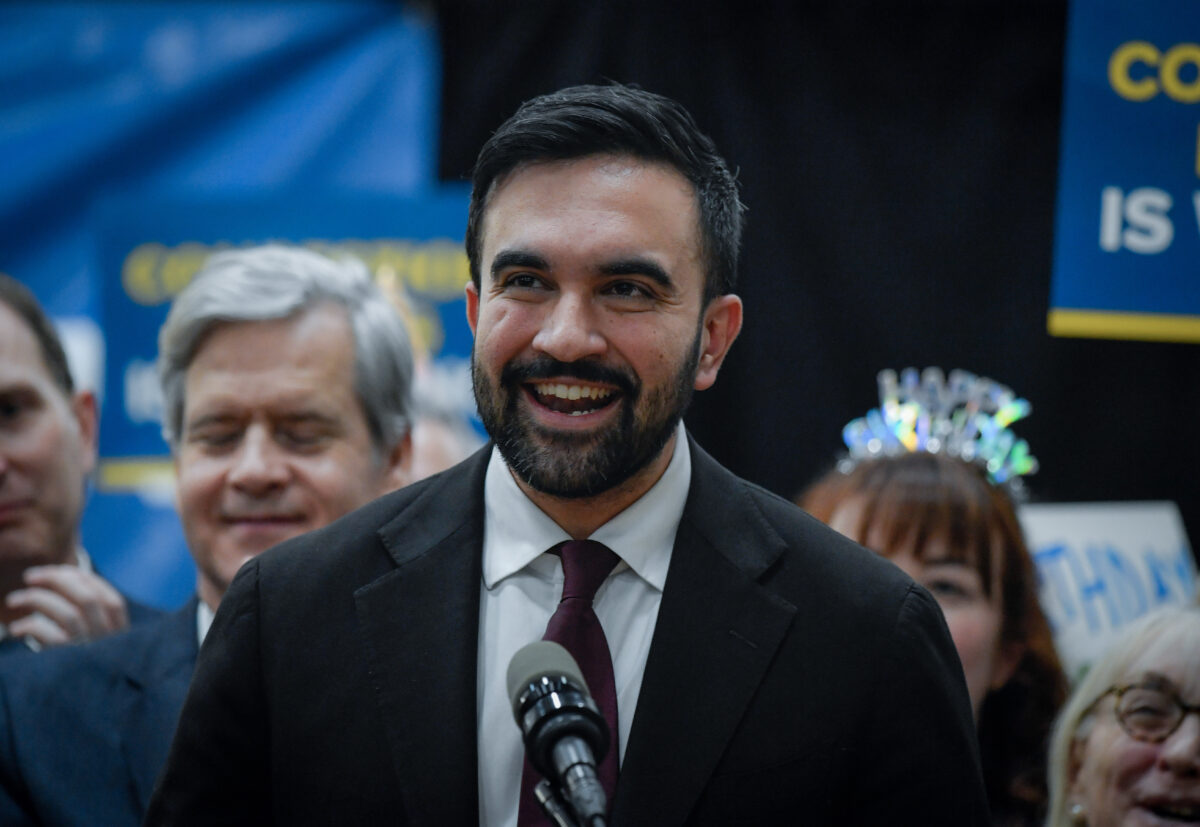
Metropolitan Transportation Authority, CC BY 4.0, via Wikimedia Common Licensed under Zohran Mamdani in 2026
In an interview published Tuesday, Mamdani said his relationship with Trump remains rooted in their shared attachment to New York City. He recalled that their first White House meeting moved beyond national politics into conversations about community boards and zoning laws.
The friendly tone did not soften Mamdani’s position on Immigration and Customs Enforcement. He said he had directly described ICE to Trump as a cruel agency that does not serve public safety, adding that “ICE should be abolished” and replaced by an immigration system centered on humanity.
Mamdani’s argument is that cooperation does not require ideological surrender. In his view, honesty with the president includes naming policies he considers harmful.
Their Unexpected Rapport Has Practical Value
Trump and Mamdani surprised observers during their first White House meeting in November 2025. After months of criticism, they exchanged praise and found common ground on affordability, housing and the cost of living.
They met again in February 2026, when Mamdani raised housing shortages and the detention of students by federal immigration authorities. Reuters reported that Mamdani called the meeting productive and said Trump helped secure the release of a detained Columbia University student.
That result explains why Mamdani may prefer confrontation with an open phone line. Cutting off Trump could satisfy supporters demanding total resistance, but it could also reduce the mayor’s ability to advocate for residents affected by federal decisions.
Abolishing ICE Is More Than a Slogan

Mamdani has made the abolition of ICE a consistent part of his immigration platform. In January, he said the agency had failed to fulfill its stated purpose and argued that its methods spread fear rather than strengthen public safety.
Supporters of abolition do not necessarily argue that the United States should abandon immigration enforcement. Their case is that ICE has become too closely associated with detention, raids and removal operations to be repaired through limited reforms.
Opponents note that ICE also investigates human trafficking, smuggling and other cross-border crimes. Eliminating it would require Congress to decide where those duties should go. The real debate concerns which institution should hold that power and what limits should govern it.
New York Is Becoming the Test Case
Mamdani cannot abolish a federal agency from City Hall, but he can shape how New York agencies interact with it. His Executive Order 13 reinforced sanctuary protections, safeguarded city property and personal information, and required a review of municipal procedures involving federal immigration authorities.
Those rules create a boundary, not a shield over the city. Federal agents can still operate under federal law. The conflict centers on whether local police, schools, hospitals, shelters and municipal databases should assist civil immigration enforcement.
New York is becoming a live test of how far a city can resist federal enforcement while continuing to negotiate with the president on housing, funding and public safety.
The Real Story Is Political Compartmentalization
Mamdani’s critics may call his position contradictory. How can a mayor speak warmly about a president while demanding the abolition of an agency central to that president’s agenda?
Modern government leaves little room for permanent estrangement. New York depends on federal decisions involving transportation, emergency aid, housing and immigration. A mayor who refuses contact with Washington could weaken the city, while one who avoids confrontation could betray the voters who elected him.
Mamdani is treating the Trump relationship as a working channel, not an alliance. The friendliness keeps conversation possible, while the ICE position preserves the political line he does not intend to cross.
A Partnership With a Built-In Collision

The relationship may remain productive while discussions focus on housing and affordability. It becomes far more fragile when federal immigration operations collide with city sanctuary rules.
Mamdani has committed himself to protecting immigrant New Yorkers, while Trump has made stronger immigration enforcement a defining priority. Their shared love of New York may keep them talking, but it will not settle who controls immigration policy in the city’s institutions.
The deeper significance of Mamdani’s statement is not the phrase “abolish ICE” by itself. It is his insistence that political access should not purchase silence. His relationship with Trump may survive disagreement, but its value will be measured by what Mamdani says when agreement becomes impossible.