8 Ways to Cut a Thanksgiving Grocery Bill Without Shrinking the Menu
Thanksgiving gets expensive fast when the grocery cart fills with duplicate ingredients, oversized packages, and dishes that sounded great in the store but barely get touched at the table.
The good news is that cutting the grocery bill does not have to mean cutting your favorite Thanksgiving dishes. A little planning can help you keep the full spread while buying more carefully, using ingredients across multiple recipes and giving leftovers a purpose.
The goal is simple: shrink the waste, not the menu.
Set the Menu Before Looking at Sales
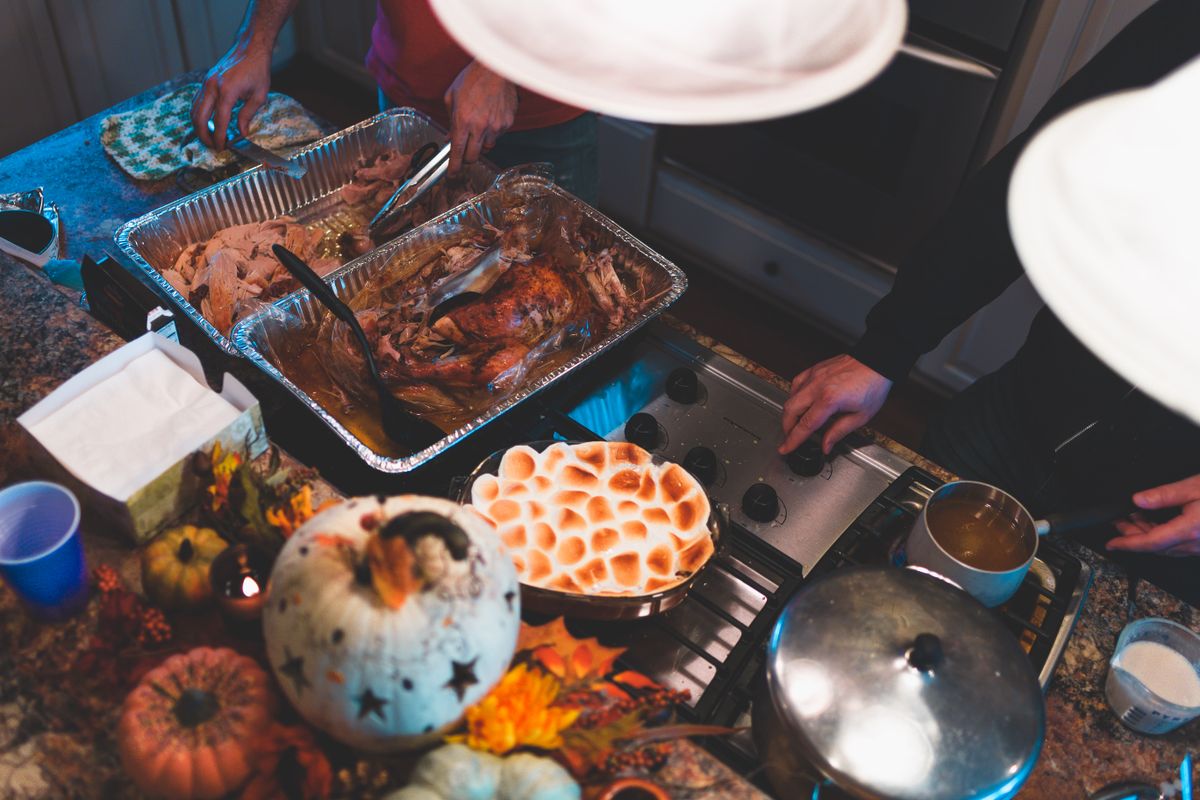
Start with the Thanksgiving menu before opening the grocery app or checking the weekly ads. Decide which dishes you actually want, how many people are coming, and which family traditions are nonnegotiable.
This keeps a sale from convincing you that Thanksgiving suddenly needs another casserole or dessert. Once the menu is set, promotions can help lower the cost of things you already planned to buy rather than encouraging extra purchases.
Related: 15 Grocery Store Secrets That Could Save You Money
Buy the Right-Size Turkey
The turkey can take up a significant part of the Thanksgiving grocery list, so choosing the right size matters. The USDA’s general guideline is about one pound of turkey per guest, or one and a half pounds per guest when leftovers are a priority.
That is a guideline, not a rigid rule. Bone-in weight, appetites, side dishes, and how many leftovers your household actually wants can all affect what makes sense.
A much larger turkey isn’t automatically a better deal if you don’t have a realistic plan for using the extra meat.
Keep Every Favorite Side, but Make Smarter Batches
You do not have to remove stuffing, mashed potatoes, green beans, sweet potatoes, rolls, or dessert just to spend less. Instead, consider how much of each dish your guests will realistically eat.
The trick is to shrink the batch, not the menu. If a particular side regularly comes home almost untouched, making less can preserve variety without leaving you with a refrigerator full of leftovers nobody wants.
That way, Thanksgiving can still feel like Thanksgiving without preparing enough food for twice the guest list.
Choose Ingredients That Appear in More Than One Dish
A smart Thanksgiving menu gives the same ingredient several jobs. Onions, celery, carrots, butter, broth, potatoes, herbs, flour, and canned pumpkin can all work across different recipes.
Onions and celery, for example, can go into stuffing, gravy, and turkey stock. Fresh herbs can season the turkey, mashed potatoes, and a next-day soup.
Instead of buying a specialty ingredient for one recipe, look for ways to build several dishes around ingredients you already need.
Compare Unit Prices Before Buying Bigger Packages
A bigger package is not automatically a better bargain. Before grabbing the largest option, check the unit price and consider whether your household can actually use, freeze, or store the extra food.
Unit pricing lets you compare cost by weight or volume instead of just the sticker price. That can be particularly useful when deciding between different package sizes or multi-buy offers.
Bulk purchases make the most sense when you already use the food regularly or have a realistic plan for storing the extra.
Buy Pantry and Freezer Items Early
There is no need to wait until the final Thanksgiving grocery trip to buy every ingredient. Durable items such as broth, flour, sugar, canned pumpkin, spices, frozen vegetables, and baking supplies can be purchased earlier.
Shopping ahead spreads out the cost and gives you more time to compare prices. It also gives you flexibility if something you need later is unavailable.
Early shopping does not guarantee lower prices, but preparation can make the final grocery run less stressful and reduce the temptation to pay more for a rushed substitute.
Use Holiday Promotions Only for Items Already on the List
Holiday promotions can be useful, but only when they actually reduce the cost of something you planned to purchase. Check retailer ads, loyalty-app offers, and Thanksgiving meal bundles after your menu and shopping list are already finished.
Before calling a promotion a deal, check the required quantity, coupon activation, brand restrictions, tax treatment, and final checkout price. A bundle is not necessarily useful simply because it has a holiday label or an attractive advertised price.
The best promotion is the one that lowers the cost of food you were going to buy anyway.
Plan Leftovers Before Thanksgiving Day
Think about leftovers before you even start cooking. Turkey, vegetables, and rolls can have a second purpose in sandwiches, soup, pot pie, breakfast hash, freezer meals, or take-home containers for guests.
Planning those meals ahead can also help you decide how much food to buy and prepare in the first place. Instead of cooking extra simply because Thanksgiving feels like a day for abundance, cook with a realistic plan for what happens after dinner.
There is one important distinction between saving money and saving every scrap of food. Perishable leftovers should be refrigerated within two hours, divided into shallow containers and used within three to four days when refrigerated. Portions intended for later meals can be frozen.
The Bottom Line
A lower Thanksgiving grocery bill does not have to mean a smaller Thanksgiving. Plan the menu first, buy according to the number of guests, choose ingredients that can work across several dishes, and give leftovers a job before they become forgotten containers in the refrigerator.
The best savings strategy is not serving less. It is making sure more of what you buy actually gets used.