The Thanksgiving Turkey Trick That Could Change the Way You Roast Your Holiday Bird
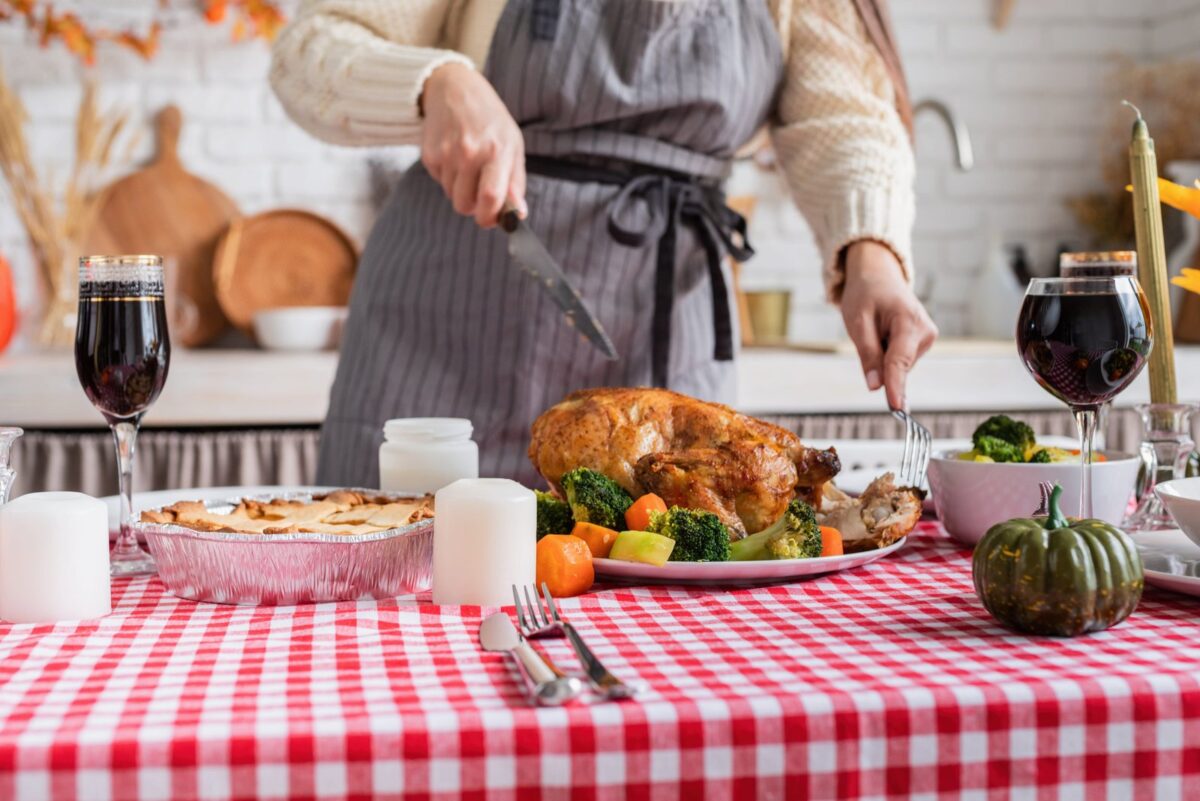
For many American families, Thanksgiving dinner revolves around one important dish: the turkey. It sits at the center of the table, takes up a lot of oven space, and often requires hours of prep before everyone can finally eat.
But what if roasting a whole turkey isn’t the only option?
A cooking technique called spatchcocking is giving home cooks another way to prepare their Thanksgiving centerpiece. Instead of placing the bird in the roasting pan with its legs tucked underneath, remove the backbone and flatten the turkey before cooking.
The result is a bird that spreads out across the roasting pan rather than standing upright. This changes how heat reaches different parts of the turkey and can significantly reduce cooking time.
It may look unusual if you have spent decades preparing turkey the traditional way, but the technique is worth understanding before this year’s holiday meal.
What Exactly Is the Spatchcock Turkey Trick?
Spatchcocking is a preparation technique in which you remove a bird’s backbone so you can open and flatten the body.
It is also sometimes called butterflying.
For a Thanksgiving turkey, the process involves cutting along both sides of the backbone with sturdy kitchen shears. Once the backbone is removed, the turkey is turned breast-side up and pressed firmly until it lies relatively flat.
Instead of having the breast positioned high above the legs, the flattened bird spreads across the roasting surface.
This arrangement helps the different parts of the turkey cook more evenly because they are exposed to the oven’s heat in a different position.
It also eliminates the need to wait for the entire bird to cook in its traditional upright shape.
Related: 10 foods that saw a significant price increase this year
Why Are Home Cooks Interested in This Method?
The biggest attraction is time.
A traditional whole turkey can take several hours in the oven, depending on its weight, whether it is stuffed, and the cooking temperature.
Spatchcocking can shorten that process considerably.
FoodSafety.gov’s Thanksgiving cooking guidance includes a spatchcocking option. Its example uses a 12-pound flattened turkey roasted at 450°F for approximately 70 minutes.
That is a useful illustration of how much the preparation method can change the cooking process. However, it should not be treated as a guaranteed cooking time for every turkey.
The other advantage is more even exposure to heat.
With a traditional whole bird, the breast and dark meat are positioned differently inside the oven. Flattening the turkey changes that arrangement and can help reduce the uneven cooking that sometimes frustrates home cooks.
For anyone trying to coordinate several Thanksgiving dishes, a turkey that cooks faster can also simplify oven scheduling.
How to Spatchcock a Turkey at Home
The technique may sound intimidating, especially if you have never cut apart a whole turkey before. However, the basic process is straightforward.
Make sure the turkey is completely thawed.
A frozen or partially frozen turkey is not a good starting point for this preparation method. Allow enough refrigerator thawing time before you begin.
Remove the giblets and neck.
Check the body cavity and remove any packaged giblets or neck before preparing the bird.
Place the turkey breast-side down.
Set it on a clean, stable cutting board with the backbone facing upward.
Cut along both sides of the backbone.
Use sturdy poultry shears to cut through the ribs on either side of the backbone. Remove the backbone and save it if you want to use it for stock or gravy.
Turn the turkey over.
Place the bird breast-side up and press firmly on the breastbone until the turkey flattens.
Arrange it in a roasting pan.
Place the flattened turkey on a suitable roasting pan or baking sheet that can safely accommodate its size.
Roast and check the temperature.
Follow a reliable recipe for your turkey’s weight and cooking method. Use a food thermometer rather than relying on appearance or the clock.
If you are uncomfortable cutting through the backbone yourself, a butcher may be able to prepare the turkey for you.
What About Getting Crispy Turkey Skin?
One reason some cooks find this method appealing is the increased exposure of the bird’s surface during roasting.
Because the turkey is flattened, more of its skin is exposed to the oven’s heat. This can help produce evenly browned skin when the bird is prepared and roasted properly.
Some cooks also use a dry brine before roasting. This involves rubbing salt on the turkey and letting it rest in the refrigerator before cooking.
The refrigerator time gives the salt an opportunity to season the meat, while the uncovered resting period can help dry the skin’s surface.
However, the final texture depends on several factors, including the preparation, oven temperature, moisture on the skin, and cooking time.
There is no need to promise perfectly crispy skin every time. Proper technique and monitoring still matter.
Related: Boomer Cooking Habits That Younger Generations Don’t Get
Does This Mean You Should Stop Stuffing Your Turkey?
Not necessarily, but there is an important practical consideration.
A spatchcocked turkey has its body cavity opened and flattened, so it is not suitable for the traditional approach of packing stuffing inside a whole bird.
That does not mean Thanksgiving stuffing has to disappear from the menu.
You can prepare it separately in a casserole dish, making it its own part of the holiday meal.
The Centers for Disease Control and Prevention recommends cooking stuffing outside the turkey because it is easier to ensure that it reaches a safe temperature.
If stuffing is cooked inside a turkey, its center must reach 165°F as measured with a food thermometer.
The One Turkey Rule You Should Never Ignore
Whether you roast a traditional whole turkey or try the spatchcock method, one rule should never be overlooked: check the internal temperature.
According to the USDA, turkey must reach a minimum internal temperature of 165°F to be considered safe to eat.
For a whole bird, check the thickest part of the breast and the innermost parts of the thigh and wing, avoiding the bone.
A golden-brown exterior does not prove that the inside has reached a safe temperature. A pop-up timer should not replace a food thermometer either.
You should also avoid washing raw turkey in the sink. The CDC warns that rinsing poultry can spread harmful bacteria around kitchen surfaces and nearby food.
Clean hands, utensils, cutting boards, and countertops carefully after handling raw turkey.
Related: 10 Everyday Foods You Didn’t Realize Came from U.S. Military Food Science
Is It Time to Rethink the Traditional Thanksgiving Turkey?
Spatchcocking will not replace every family’s favorite way of preparing Thanksgiving dinner.
Some households prefer the familiar appearance of a whole roasted bird brought to the table before carving. Others enjoy recipes passed down through generations and have no interest in changing what already works.
But for people who want a shorter roasting process and a different approach to cooking their holiday centerpiece, flattening the turkey is worth considering.
It is a practical reminder that sometimes a small change in preparation can make a familiar meal easier to manage.
And if it means spending less time worrying about the oven and more time enjoying Thanksgiving with family, some home cooks may find the change worthwhile.
Would you try removing the turkey’s backbone and roasting it flat, or would you rather stick with the traditional whole roasted bird your family has always served?