America Runs on Beef… So Why Does a Pound of Ground Beef Now Cost Nearly $7?
It’s grilling season. The sun is out, the backyard is calling, and all you want is a good burger.
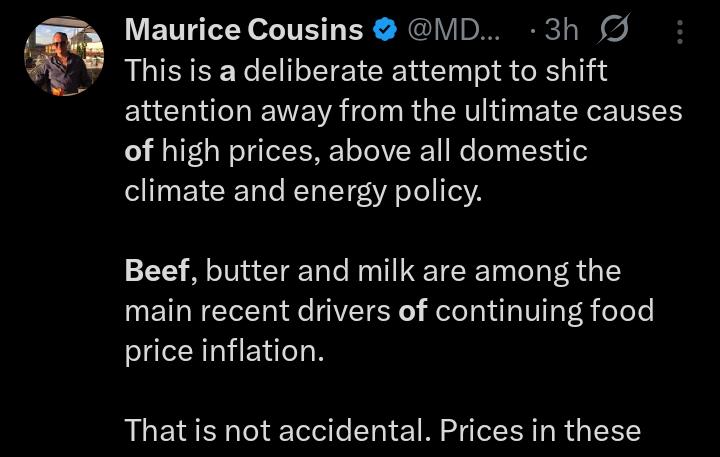
But there’s a catch: beef prices just hit a record high, and millions of Americans are feeling it every time they walk through the grocery store.
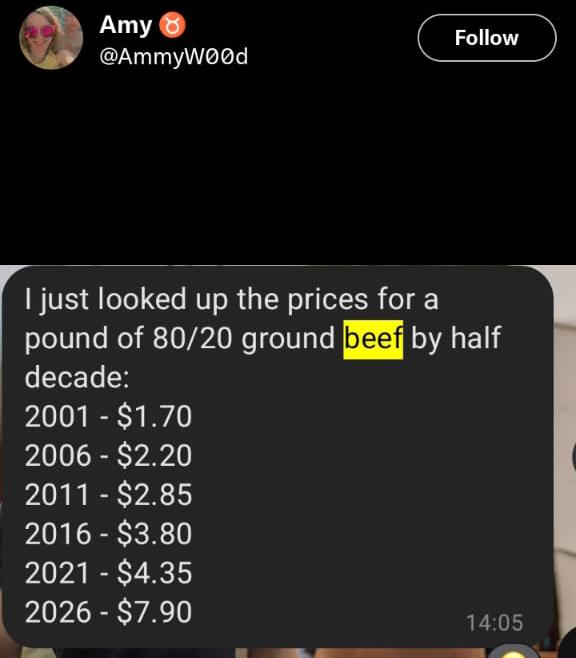
In May 2026, the average price of a pound of ground beef reached $6.90, up about 19% from just a year ago, according to Federal Reserve Bank of St. Louis data. The all-fresh retail price of beef hit $9.55 per pound in December 2025, setting a new record every single month since June of that year.
And the confusing part? The U.S. is one of the biggest beef producers on the planet.
So what’s going on? Here’s the full picture, broken down simply.
The U.S. Cattle Herd Is the Smallest It’s Been in 75 Years
This is the big one.
As of January 2026, there were just 86.2 million cattle and calves on U.S. farms, the lowest number since 1951, according to the USDA. Back in 2019, there were around 95 million. That’s nearly nine million animals gone in just seven years.
Bernt Nelson, an economist at the American Farm Bureau Federation (AFBF), has been closely tracking this. In his February 2026 analysis, he wrote that the U.S. is currently in “year 13 of the current cattle cycle and year eight of contraction.” That means ranchers have been shrinking the herd, not growing it, for almost a decade straight.
The numbers inside the herd are just as alarming. Beef cows totaled only 27.6 million, the lowest since 1961. The 2025 calf crop came in at 32.9 million, a record low, for the second year in a row.
So why has the herd been declining for so long?
Drought has hit cattle-raising regions hard, drying up grasslands that cows depend on for grazing.
Deadly heatwaves in the early 2020s made things worse. A single heat event in Kansas in 2022 killed at least 2,000 cattle in just a few days, according to NBC News. When temperatures become extreme, ranchers also stop breeding cows, so the damage echoes through the herd for years.
Rising feed costs have added more pressure. Drought reduces grass availability, so ranchers buy more feed. And tariffs imposed by the Trump administration have raised fertilizer prices, making feed crops more expensive to grow.
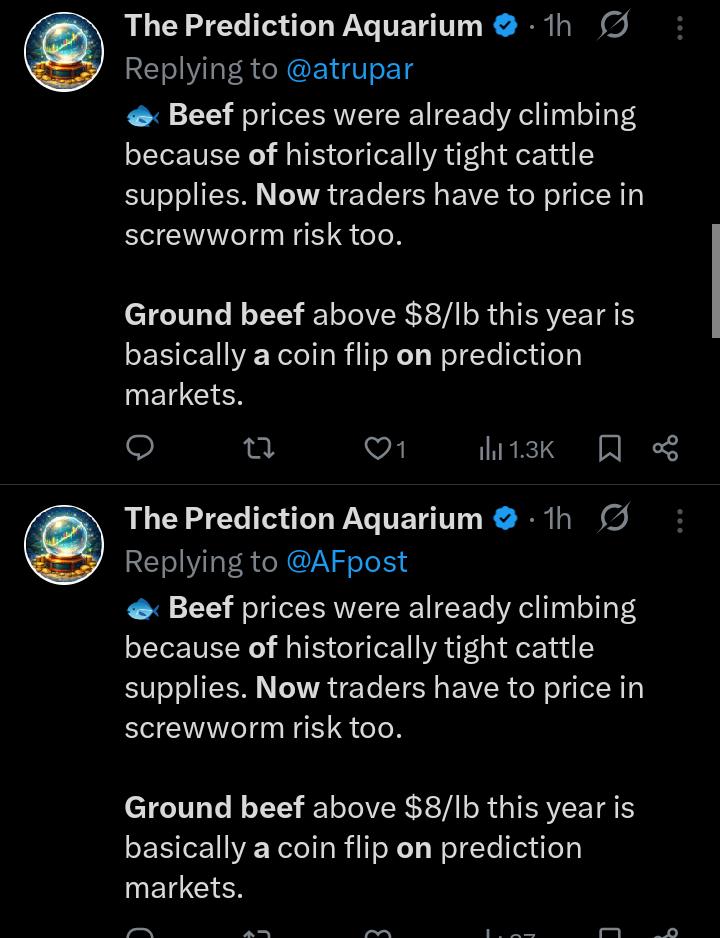
On top of all that, the U.S.-Mexico border remains closed to livestock imports to prevent the spread of New World screwworm, a parasite that threatens cattle. In normal years, between 1.2 and 1.5 million cattle cross from Mexico into U.S. feedlots. Right now, that supply is completely cut off.
The timeline for recovery is long. A calf takes 16 months to two years to reach market weight. Nelson’s AFBF report makes clear that meaningful herd expansion is unlikely to begin before 2028 at the earliest.
That means tighter supply and higher prices, for at least two more years.
More Beef Per Cow, But It’s Not Enough
Here’s a small silver lining worth knowing about.
Even though there are fewer cattle, each cow is producing more beef than ever before. That’s because selective breeding over many decades has made American cattle larger.
In the fourth quarter of 2025, the average live weight of a fed steer hit 1,460 pounds, about 50 pounds heavier than the five-year average, according to AFBF data. That’s a 3.5% increase.
But here’s the reality: heavier cows are slowing down the price rise, not stopping it. USDA estimates that total U.S. beef production in 2026 will be about 25.735 billion pounds, barely lower than 2025. The gains per animal are real, but they can’t fully replace the animals that are no longer there.
The U.S. has also been importing more beef to make up the difference. Beef imports jumped 17% between January and November 2025 compared to the same period in 2024. Australia is now the top source, with imports up 88% since 2020.
In February 2026, the White House also expanded the amount of lean beef trimmings the U.S. can import from Argentina at a lower tariff rate, adding 80,000 metric tons to the existing quota. But industry experts say that additional supply from Argentina won’t be sufficient to noticeably affect what consumers pay at the store.
Americans Won’t Stop Buying Beef, and That Keeps Prices High
Here’s the part that might surprise you.
Normally, when something gets really expensive, people buy less of it. That’s basic economics. But beef doesn’t quite work that way.
U.S. beef consumption has barely changed over the past 15 years, even as prices have kept climbing. According to USDA data, Americans are still buying almost as much beef today as they were before all of this started.
A 2012 USDA research paper measured exactly how much beef demand responds to price increases. The study found the price elasticity of demand for beef to be -0.70. In plain English: if beef prices go up 10%, demand only drops by about 7%. Compare that to chicken (-0.8) or pork (-1.26), which both see sharper drops in demand when prices rise.
Beef, in other words, is the kind of thing Americans keep buying even when it’s not cheap.
That creates a problem. When demand stays strong while supply is tight, prices don’t fall on their own. Ranchers have little incentive to rush herd rebuilding because the economics are still working in their favor — cattle cash receipts rose 39% from 2020 through USDA’s forecast for 2026, making beef cattle one of the rare bright spots in an otherwise struggling agricultural economy, according to Nelson’s AFBF report.
The market has also become more sensitive and unpredictable due to tight supply. In October 2025, an announcement that the U.S. would expand beef imports from Argentina briefly sent the five-market average cash cattle price down 13% in a matter of weeks, from $239 per hundredweight to $207 on November 28. Prices recovered, but the episode showed just how reactive the market has become when supply is this stretched.
The bottom line is straightforward.
The U.S. produces enormous amounts of beef, but a depleted herd, years of drought, rising costs, a closed border with Mexico, and Americans who refuse to give up their burgers have all combined to drive prices to record levels.
Relief isn’t coming fast. Cattle take time to grow. Herds take years to rebuild. And as long as demand stays strong, the market has little reason to bring prices back down on its own.
So this grilling season, your options are simple: pay up, switch to chicken, or fire up the veggie skewers and pretend you’re fine with it.