Amy Coney Barrett Becomes the New Target of Conservative Anger After Supreme Court Blocks Trump’s Birthright Citizenship Order
Justice Amy Coney Barrett is back in the political storm, and this time the fire is coming from the right. The Supreme Court’s decision to preserve birthright citizenship has triggered a sharp conservative backlash, not just against the ruling itself, but against Barrett, the Trump-appointed justice who joined the majority against President Donald Trump’s executive order.
The ruling rejected Trump’s attempt to deny automatic citizenship to children born in the United States to undocumented immigrants or temporary foreign visitors, keeping intact a long-standing understanding of the 14th Amendment. For Trump’s allies, the legal defeat was painful. For Barrett, it became personal.
Barrett sided with the majority and became the face of the fury.
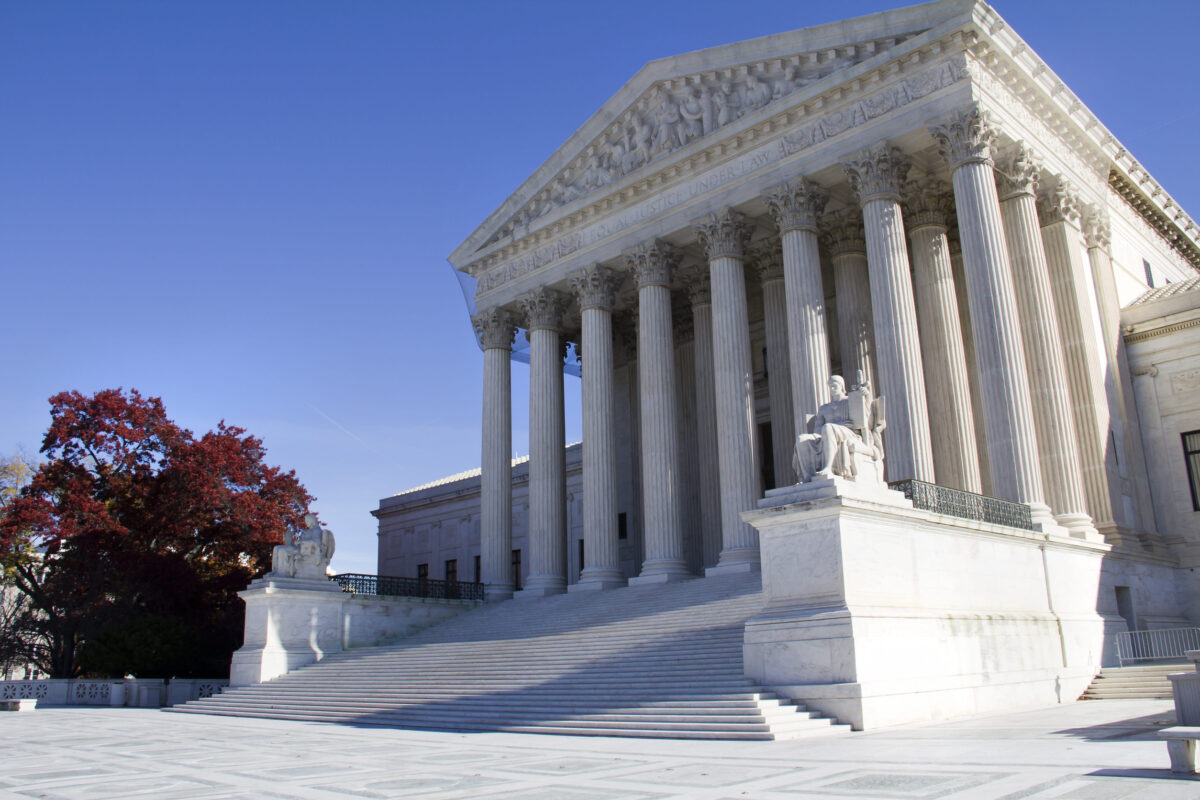
The Supreme Court ruled 6-3 that children born on U.S. soil are citizens at birth, with limited exceptions. Chief Justice John Roberts wrote the majority opinion, joined by the court’s three liberal justices and conservative Justices Brett Kavanaugh and Amy Coney Barrett. Justices Clarence Thomas, Samuel Alito and Neil Gorsuch dissented.
But Barrett has taken much of the heat.
A syndicated summary of The Hill’s report said Barrett is facing “fierce backlash” from conservative lawmakers and pundits after voting to uphold birthright citizenship, noting that she has taken “the brunt of the conservative outrage” after the ruling.
That reaction reveals something bigger than one court case. Barrett was confirmed in 2020 as one of Trump’s most consequential Supreme Court picks. For many conservatives, she was expected to be a reliable vote for the movement. But the birthright citizenship ruling has deepened a growing frustration among some Trump supporters who see any break from Trump’s agenda as betrayal.
The anger did not begin here. Barrett had already angered some conservatives after joining liberal justices in a separate mail-in ballot case involving Mississippi, where the court allowed ballots postmarked by Election Day to be counted after Election Day. Conservative critics called that ruling a blow to election integrity. Now, the birthright citizenship decision has turned that frustration into a louder revolt.
The ruling protected a constitutional guarantee.
At the heart of the case was Trump’s 2025 executive order, which attempted to declare that some children born in the United States would not automatically be American citizens if their parents were in the country illegally or temporarily. The Supreme Court rejected that argument and upheld the broad reading of the 14th Amendment’s Citizenship Clause.
The ruling reaffirmed the principle that citizenship comes from being born on U.S. soil, not from the immigration status of a child’s parents. The court also relied on the long-standing understanding of the 14th Amendment and the 1898 precedent of United States v. Wong Kim Ark, which has shaped American citizenship law for more than a century.
Trump responded by pushing the fight toward Congress. He called the decision “too bad for our Country” and argued that lawmakers could still act through legislation, saying he did not believe a Trump response was needed. That claim is already fueling a new political battle. The court may have closed the executive-order route, but Trump and his allies are now looking for another path.
The next fight may be “birth tourism”

The administration is shifting attention toward “birth tourism,” the practice of foreign nationals traveling to the United States to give birth so their children receive U.S. citizenship. After the ruling, Justice Department officials signaled a crackdown on schemes involving.
That strategy allows Trump’s team to keep the issue alive politically, even after losing the larger constitutional fight. Instead of directly ending birthright citizenship by executive order, the administration can target specific abuses tied to immigration fraud.
But that approach is narrower than Trump’s original order. The Supreme Court ruling still protects the broader constitutional guarantee for children born in the United States. That is why the backlash against Barrett has become so intense. For Trump loyalists, this was not just a technical legal defeat. It was a major blow to a signature immigration promise.
Why Barrett’s role matters
Barrett’s vote matters because it complicates the popular image of the Supreme Court as a predictable conservative machine. She remains a deeply conservative justice. She voted to overturn Roe v. Wade, has sided with conservative majorities in major gun-rights and administrative-power cases, and has often al.
But Barrett has also shown a tendency to draw legal lines more narrowly than some conservatives want. That makes her frustrating to activists who expected loyalty to Trump’s political goals, not just conservative legal reasoning.
That is the tension now boiling over. The Supreme Court is not supposed to operate as a loyalty club for presidents. Justices are appointed by presidents, but they do not serve presidents. Barrett’s latest vote has exposed how many people inside the political world still expect judges to behave like extensions of the campaign that nominated them. That expectation is colliding with a simple reality: a lifetime appointment gives a justice room to disappoint the side that celebrated her confirmation.
A conservative crackup over the courts
The outrage over Barrett is about more than immigration. It is about power, loyalty, and the limits of judicial politics.
For years, conservatives fought to build a Supreme Court majority that would reshape American law. Trump delivered three appointments: Neil Gorsuch, Brett Kavanaugh, and Amy Coney Barrett. The majority has handed conservatives historic victories, especially on abortion, gun rights, and federal regulatory power. But when that same court blocks Trump on a major immigration policy, some of his supporters see it as a betrayal rather than independence.
That is why Barrett has become such a symbolic figure. She is not a liberal justice. She is not a swing justice in the old-fashioned sense. She is a conservative justice who sometimes refuses to move exactly where Trump’s political movement wants her to go. And in today’s political climate, that can be enough to turn celebration into outrage.
The birthright citizenship ruling may stand as one of the clearest reminders yet that Trump’s reshaped Supreme Court is powerful, conservative and unpredictable in the one way his most loyal supporters dislike most: it is still capable of saying no to him.