B-52 Crash at Edwards Air Force Base: Cold War Bomber, Modern War Risk, and the High-Stakes Reality of Flight Testing
A Fatal Break in a Carefully Controlled System
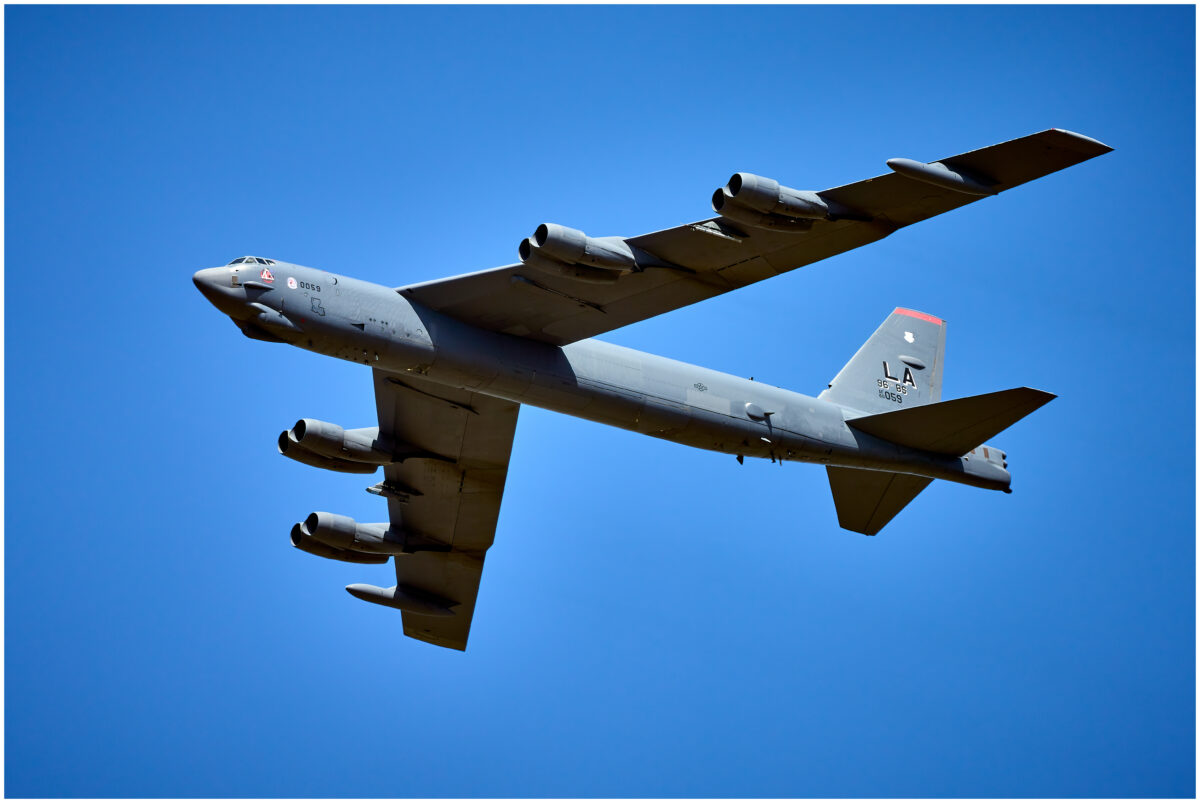
Eight lives were lost when a B-52 Stratofortress went down shortly after takeoff at Edwards Air Force Base in California during a routine test mission. What should have been a controlled, data-driven evaluation flight instead became a catastrophic failure inside one of the most advanced military testing environments in the United States.
Edwards is built to manage uncertainty. Its entire purpose is to isolate risk, measure performance, and push aircraft to the edge of operational limits under tightly monitored conditions. Yet even here, where aviation is most precisely engineered, the system failed in a way that ended in irreversible loss.
This crash is not only an aviation incident. It is a rare rupture inside a system designed specifically to prevent them.
The B-52 Stratofortress: A Cold War Airframe Operating in a Modern Combat Era
The aircraft involved was a B-52 Stratofortress, a platform first introduced in the 1950s and still central to U.S. strategic airpower. Its continued relevance is not accidental; it is the result of decades of incremental upgrades designed to keep the bomber compatible with modern warfare.
But this creates a structural paradox.
The aircraft is simultaneously:
- A Cold War deterrence symbol
- A modern precision strike platform
- A continuously modified engineering testbed
Each modernization cycle adds new digital systems to an airframe designed in a pre-digital era. That means every test flight is not just operational; it is an experimental integration of decades of aerospace engineering philosophies.
The crash transforms that ongoing modernization effort into a focal point of scrutiny.
Edwards Air Force Base: America’s Aviation Stress Laboratory
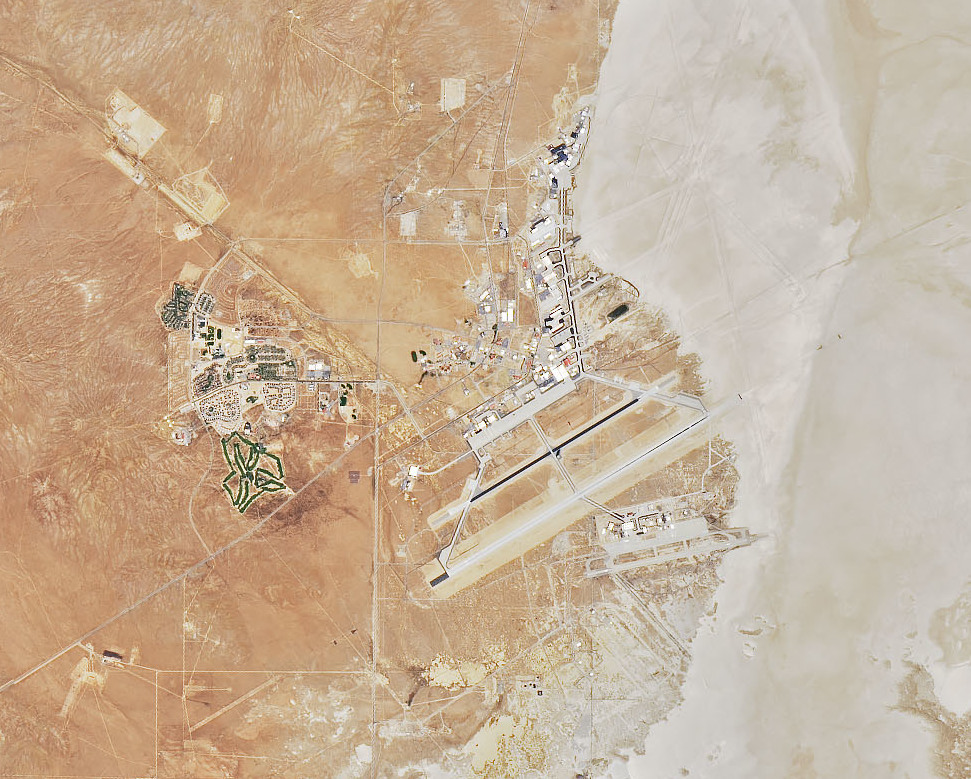
Edwards Air Force Base is not simply a military installation. It functions as an extreme-performance laboratory where aircraft are intentionally pushed beyond routine operational conditions.
The desert environment plays a crucial role:
- Wide open airspace for high-risk maneuvers
- Geographic isolation that reduces civilian exposure
- Weather conditions that allow repeatable test scenarios
Inside this environment, failure is not unexpected; it is anticipated as part of system validation. Test pilots, engineers, and contractors operate in a controlled acceptance of risk that does not exist in standard operational aviation.
However, the B-52 crash represents a different category of failure: not experimental success or partial system degradation, but total loss shortly after takeoff.
That distinction matters.
The Test Flight Economy: Where Risk Is Engineered, Not Avoided
Modern military aviation testing operates within what can be described as a risk economy.
Every flight is a calculated exchange:
- Unknown system behavior is traded for operational knowledge.
- Human exposure is accepted to validate machine reliability.
- Contractor expertise is embedded directly into live flight environments.
In this case, Boeing personnel were among those aboard, underscoring the increasingly hybrid nature of defense aviation testing. The boundary between manufacturer, engineer, and operator is no longer clearly delineated; it has fused into a single mission profile.
This creates efficiency, but it also concentrates risk inside a single flight envelope.
The crash raises a difficult question: how much risk is acceptable when validating systems already considered mission-critical?
The Critical Takeoff Phase: Where Most Catastrophic Failures Begin
While full investigation results are pending, aviation history shows that the takeoff and initial climb phase remains one of the most vulnerable segments of any flight.
This is where:
- Engine performance is transitioning from ground to sustained thrust.
- Flight control systems are stabilizing after rotation.
- Crew workload is at its highest, both physically and cognitively.
- Altitude margins for recovery are still extremely limited.
Even in highly controlled environments like Edwards, this phase leaves little room for correction if multiple variables align incorrectly.
What makes this incident especially significant is its timing; the failure occurred almost immediately after takeoff, compressing the entire accident sequence into seconds rather than minutes.
The Aging Fleet Dilemma: Extending Lifespan, Expanding Risk Surface
The B-52 program represents one of the longest aircraft lifecycle extensions in military history. Its continued modernization is driven by strategic necessity and cost efficiency, allowing the U.S. Air Force to maintain heavy bomber capability without fully replacing the platform.
However, extended lifespan introduces structural complexity:
- Multiple generations of upgraded avionics coexist within one airframe.
- Maintenance systems must support legacy and modern components simultaneously.
- Testing cycles become increasingly sensitive to integration mismatches.
This creates a layered engineering environment where every upgrade interacts with decades of prior modifications.
The result is not a simple aircraft; it is a continuously evolving system with deep historical engineering layers embedded within it.
The Invisible Workforce Behind Strategic Aviation
While headlines focus on the aircraft and the military, the operational reality is more distributed.
Modern B-52 missions rely on:
- Active-duty Air Force personnel
- Civilian engineers and contractors
- Avionics and systems integration specialists
- Flight test analysts and telemetry teams
The presence of contractor personnel aboard the aircraft highlights a critical shift in defense aviation: strategic systems are no longer operated solely by the military. They are co-developed and co-tested within blended human networks.
This structure increases technical capability but also means that every accident spans multiple institutional domains.
Investigation Timeline and the Search for Causal Chain Failure
Aviation investigations at this level do not focus on single-point explanations. Instead, they reconstruct a chain of conditions that may include:
- Mechanical performance under test conditions
- Software and avionics integration behavior
- Crew response timing and procedural adherence
- Environmental and atmospheric variables
- Maintenance and preflight configuration history
The goal is not simply to identify what failed, but how multiple systems may have interacted in a way that produced a cascading breakdown.
This process is methodical and often slow, with preliminary findings typically followed by extended technical analysis.
System-Level Questions Raised by the Crash
This incident extends beyond immediate tragedy and into broader structural questions:
- How sustainable is the continuous modernization of legacy airframes?
- Does an incremental upgrade strategy introduce hidden system instability?
- Are test environments accumulating risk faster than mitigation frameworks evolve?
- How should responsibility be distributed across military and contractor participants?
These questions are not unique to the B-52 program. They apply broadly to modern defense aviation systems that rely on long-term platform extensions rather than full replacements.
When Controlled Risk Becomes Real Loss
The crash at Edwards Air Force Base represents more than a failed test flight. It is a convergence point among decades of aircraft evolution, the complexity of modern defense engineering, and the inherent uncertainty of pushing systems to their limits.
The B-52 was not operating in combat. It was operating in its most controlled environment, yet even there, the boundary between experimentation and catastrophe proved fragile.
Eight lives were lost inside a system designed to understand failure without paying its ultimate cost. The investigation that follows will not only determine what happened but also how modern military aviation manages risk in an era in which legacy platforms and advanced systems are permanently intertwined.