Barack Obama’s Manchester Visit Revives Northwest England’s Hidden Presidential History.
When Barack Obama walks onto the stage at Manchester’s Co-op Live on October 15, he will enter a region whose relationship with the American presidency stretches far beyond modern politics and whose history helps frame the evening’s significance.
The former U.S. president’s appearance will complete a three-night tour beginning in Belfast on October 13 and continuing in Glasgow on October 14. Billed as “An Evening with President Barack Obama,” the event will explore democracy, leadership and America’s future as the United States marks 250 years since the Declaration of Independence.
Yet Obama’s journey north also highlights a lesser-known story: across Manchester, Liverpool, Lancashire and Cumbria are traces of American presidents whose families, political struggles and personal histories became tied to northwest England.
From an Irish emigrant boarding a ship in Liverpool to cotton workers supporting Abraham Lincoln while their own families faced hunger, the region has repeatedly been woven into America’s national story. Each of those moments shows the connection from a different angle.
Liverpool’s Role in the Obama Family Journey
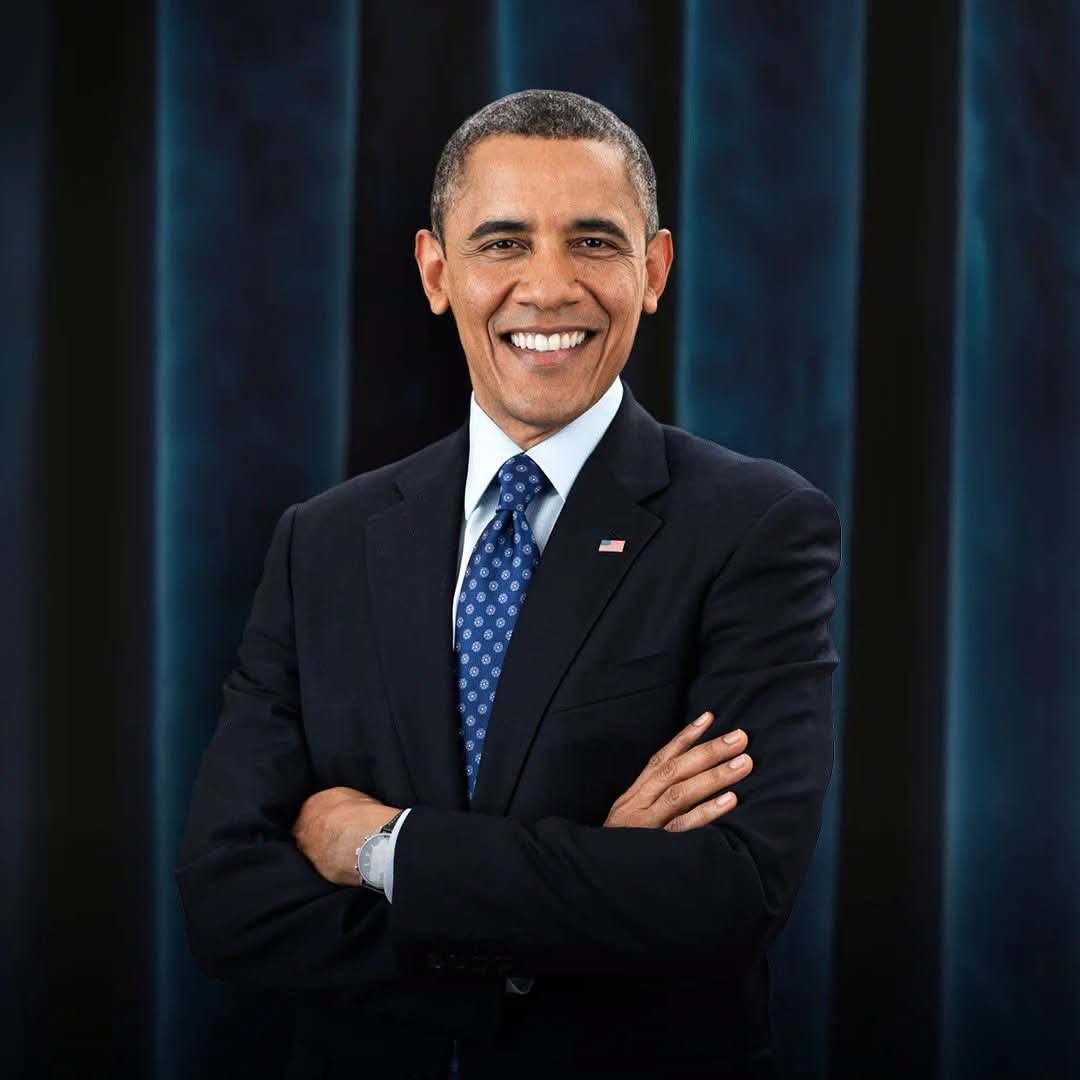
Obama’s most personal link to northwest England begins at Liverpool’s docks.
His maternal ancestry includes Falmouth Kearney, a young shoemaker from Moneygall in County Offaly who left Ireland during the years surrounding the Great Famine. In 1850, Kearney traveled to Liverpool and boarded the SS Marmion for New York, beginning a journey that would eventually take his branch of the family to Ohio and Indiana.
Kearney later married Charlotte Holloway and worked as a farmer. Several generations later, one of his descendants was Stanley Ann Dunham, Obama’s mother. Kearney was Obama’s third great-grandfather, making Liverpool more than a departure point. It became the place where one chapter of the future president’s family history ended, and another began. That family journey helps explain why the city still matters in the Obama story.
The story carries the emotional weight of a much wider migration. During the 19th century, Liverpool became a major gateway for people leaving Britain and Ireland for North America. Families arrived carrying what they could, often knowing they might never see their homes again.
For emigrants escaping hunger, poverty and limited opportunity, the waterfront represented fear, separation and possibility. The ships sailing west did not simply transport passengers. They carried family histories that would be rewritten in the United States.
Obama did not know the full story of his Moneygall ancestry until genealogical researchers confirmed it in 2007. Four years later, as president, he visited the Irish village with Michelle Obama, toured the site of the family’s ancestral home and met distant relatives.
The 2011 visit turned Moneygall into an international attraction, but its most powerful moment was personal. Obama was standing in a village that one of his ancestors had left more than 160 years earlier with no knowledge that a descendant would eventually reach the White House.
Liverpool is not included on Obama’s announced October itinerary. Still, his Manchester appearance renews interest in the nearby port from which Kearney began the crossing that changed the family’s future.
Manchester’s Costly Stand Against Slavery
Manchester’s bond with Abraham Lincoln is a deeper, more political and far more painful part of that story.l.
During the 19th century, the city stood at the center of Britain’s cotton industry. Its mills, factories and warehouses helped turn Manchester into one of the world’s leading textile centers, earning it the nickname “Cottonopolis.”
Much of the raw cotton supplying those mills came from the American South, where enslaved men, women and children were forced to grow and harvest it. Manchester’s prosperity was therefore connected to a system of human exploitation thousands of miles away.
When the U.S. Civil War began in 1861, Union naval forces blockaded Confederate ports. Cotton shipments fell sharply, mills reduced production, and workers across Lancashire lost jobs or had their hours cut.
The resulting crisis became known as the Lancashire Cotton Famine. Families who had depended on factory wages struggled to buy food, pay rent or keep warm. Charitable relief expanded, but poverty spread through communities whose livelihoods had been built around American cotton.
The economic pressure created an obvious temptation to support the Confederacy or demand that Britain intervene to restore supplies. Instead, many Manchester workers continued to support the Union and the destruction of slavery, even though the war was damaging their own lives.
At a meeting in Manchester’s Free Trade Hall on December 31, 1862, workers approved an address supporting Lincoln and emancipation. The timing was crucial. Lincoln’s Emancipation Proclamation was due to take effect the following day.
Lincoln replied on January 19, 1863. He acknowledged the suffering endured by Manchester’s workers and praised their position as an extraordinary act of moral courage. In his letter, he described their support as a powerful sign that justice and freedom could survive even under severe economic pressure.
His response secured Manchester a lasting place in the international history of the Civil War. It also showed that the fight over slavery was never confined to American battlefields. The conflict reached British factories, family kitchens and unemployment lines, where its effects were felt directly.
Today, a statue of Lincoln stands in Manchester’s city center. Created by American sculptor George Grey Barnard, it was presented to the city in 1919 and initially placed in Platt Fields Park. It was moved to the city center in 1986, where Lincoln Square preserves the memory of Manchester’s wartime sacrifice.
The story remains powerful because it was never morally simple. Manchester had grown wealthy from an industry closely tied to enslaved labor. Yet many workers who suffered when that supply chain collapsed still chose to support emancipation. That tension makes the city’s response especially striking.
Their decision did not erase the city’s involvement in the cotton economy. It showed, however, that ordinary people could challenge an unjust system even when doing so came with an immediate personal cost.
George Washington’s Lancashire Roots
Long before Lincoln or Obama, northwest England had already entered American presidential history through George Washington’s ancestry. The connection reaches back centuries and adds another layer to the region’s role.
A branch of the Washington family settled around Warton in north Lancashire during the 13th century. St Oswald’s Church, a medieval landmark in the village, contains a stone bearing the family’s coat of arms.
The design includes stars and horizontal bars, creating a striking resemblance to elements of the American flag. Local tradition has long suggested that the Washington arms helped inspire the Stars and Stripes.
Historians have never conclusively proved a direct link. The development of the American flag involved several designs, decisions and contributors. Still, the resemblance has become one of Warton’s most enduring historical claims.
The village marks its relationship with Washington every July 4 by flying the American flag from St Oswald’s Church. The annual gesture connects a quiet Lancashire community with Independence Day celebrations across the Atlantic.
Washington himself was born in Virginia in 1732 and never visited Warton. However, the family name and heraldry remained visible in Lancashire for centuries before one branch became established in colonial America.
The link feels especially vivid because it is physical. Visitors can enter the church, view the historic stone, and stand in a community that continues to treat its association with America’s first president as living heritage rather than a forgotten footnote.
The Bush and Wilson Links Complete the Picture
Other presidential ties are scattered across Lancashire and Cumbria, some firmly documented and others shaped by local tradition. Together, they broaden the picture beyond the best-known links.
George Herbert Walker, the maternal grandfather of President George H.W. Bush and great-grandfather of President George W. Bush, was educated at Stonyhurst College near Clitheroe.
Walker later became an influential American banker and served as president of the United States Golf Association. He proposed an international amateur competition and donated the trophy that became the Walker Cup, which continues to be contested by teams representing the United States and Great Britain and Ireland.
The Stonyhurst connection links two presidents to a Lancashire school through the man whose name became part of their family identity. George H.W. Bush carried Walker’s full name, while George W. Bush later became the 43rd president.
Lancashire also claims an association with Myles Standish, the military adviser who traveled aboard the Mayflower and became a prominent figure in Plymouth Colony.
Tradition has connected Standish to families around Chorley, Standish and Duxbury. However, missing and damaged records have prevented researchers from proving his exact birthplace and ancestry beyond dispute.
That uncertainty is important. It separates established history from local legend, but it also shows how communities use surviving names, documents and landmarks to place themselves inside larger historical events. In that way, the story mirrors other presidential links in the region.
Farther north, Carlisle holds one of the clearest presidential family links. Janet “Jessie” Woodrow, the mother of President Woodrow Wilson, was born in the city in 1830 before her family emigrated to the United States.
Wilson served as the 28th president from 1913 to 1921. Before entering the White House, he built a career as a scholar of government and examined how America’s constitutional system differed from Britain’s parliamentary model. That final link, like the others, shows how northwest England remains part of the wider story now brought back into view by Obama’s visit to Manchester.
Together, these connections form a clear presidential map across northwest England. Liverpool carries the memory of migration. Manchester preserves a working-class stand against slavery. Warton keeps Washington’s family symbols alive. Stonyhurst, Chorley and Carlisle add education, disputed ancestry and birthplace to the story.
Obama’s Manchester appearance will last one evening. The history surrounding it spans centuries.
That is what makes the visit more than another stop on a speaking tour. It places America’s first Black president in a region where workers suffered for supporting emancipation, where his own ancestor began an Atlantic crossing, and where the names of Washington, Bush and Wilson remain embedded in churches, schools, villages and family records.
Northwest England did not produce an American president. But in unexpected and deeply human ways, it helped shape the journeys that did.