Before Microwaves, These 8 Household Gadgets Were Found in American Kitchens Everywhere
Long before microwaves became a kitchen essential, preparing a simple meal often required patience, a little creativity, and some serious elbow grease. No convenient buttons let you reheat leftovers in seconds or pop a bag of popcorn while watching television.
Instead, American kitchens were filled with clever gadgets that helped families cook, bake, and serve homemade meals. Some were made of heavy cast iron, others had wooden handles, and many required someone to turn a crank, squeeze a handle, or stand patiently beside the stove.
For generations who grew up during the 1940s, 1950s, and 1960s, these tools were part of everyday life.
The first microwave designed for home use appeared in 1955, but its $1,295 price made it impractical for most families. Microwaves gradually became more affordable, and by 2000, approximately 90% of American households owned one.
Microwaves did not directly replace every older cooking tool. Other electric appliances, changing food habits, and modern conveniences also transformed the kitchen.
Still, these eight familiar gadgets offer a fascinating glimpse into how American families prepared meals before today’s push-button convenience.
The Stovetop Popcorn Popper
Remember when making popcorn meant standing beside the stove instead of pressing a button?
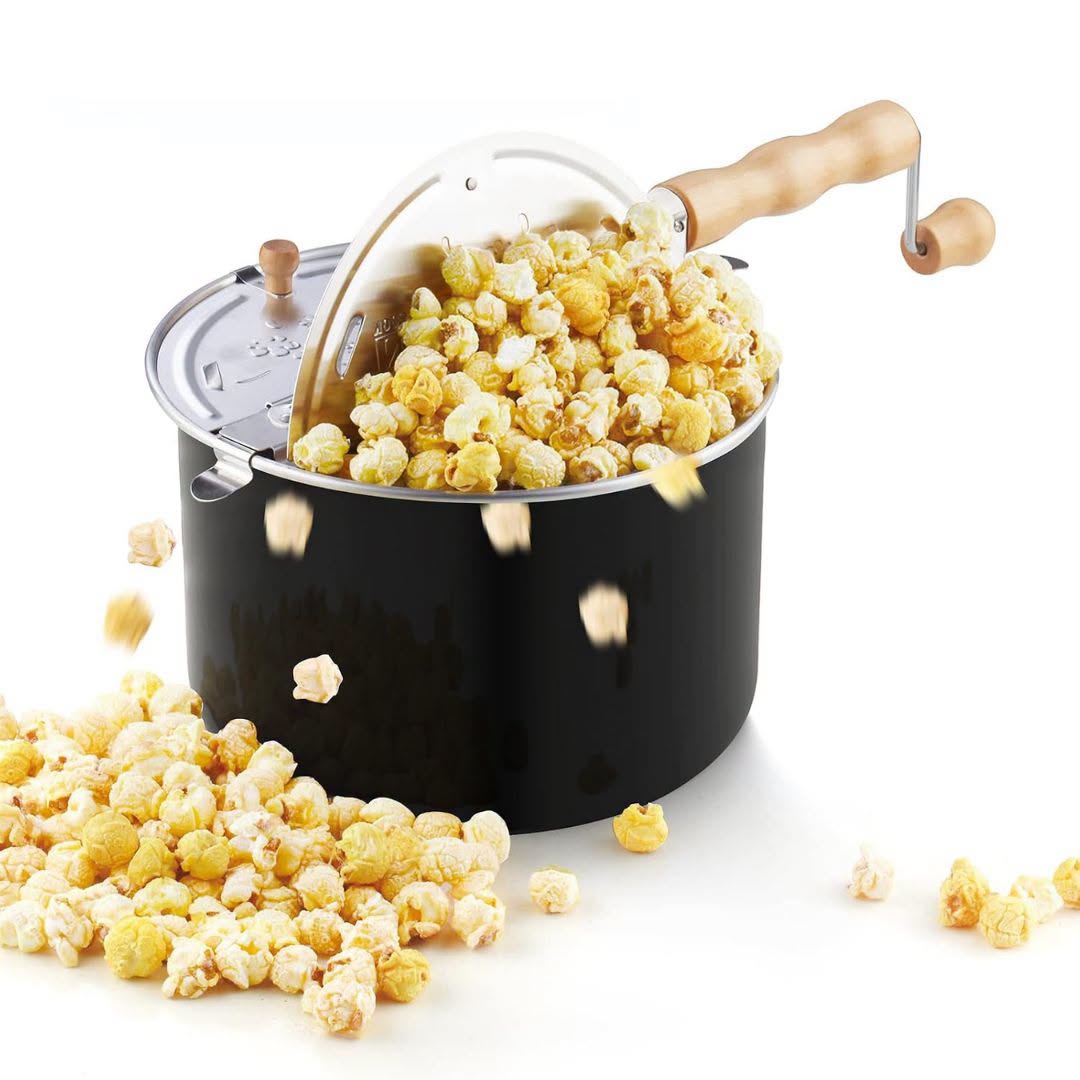
Before microwave popcorn became popular, families often made this favorite snack in a covered pot or a dedicated stovetop popcorn popper. The process required adding kernels, heating the pan, and shaking it occasionally to prevent burning.
For children, the familiar popping sounds added to the excitement. First came a few scattered pops, followed by a rapid burst that announced the snack was almost ready.
Some dedicated poppers featured handles or stirring mechanisms that made moving the kernels easier.
Making popcorn was practically an activity in itself, especially during family movie nights or evenings spent gathered around the television.
The Smithsonian notes that microwave popcorn first appeared in supermarkets in 1981, while bags that could be stored at room temperature became available in 1984.
Although stovetop popcorn never disappeared, microwave bags made it much easier to prepare a quick bowl.
The Old-Fashioned Coffee Percolator
Before modern single-serve coffee machines and automatic brewing systems, the coffee percolator was a familiar sight in American households.
These sturdy metal pots often sat directly on a stovetop, filling the kitchen with the unmistakable aroma of freshly brewed coffee.
Unlike modern drip machines, traditional percolators repeatedly circulated hot water through ground coffee using a tube and basket inside the pot.
For many families, the gentle bubbling sound signaled that breakfast was underway.
Percolators were especially recognizable for their rounded shapes, polished metal surfaces, and small glass knobs that let people watch the brewing process.
Electric versions eventually made brewing more convenient by eliminating the need for a stove.
The Smithsonian preserves a 1967 electric percolator manufactured by the John Oster Manufacturing Company, showing how the familiar design continued evolving.
Today, some coffee enthusiasts still appreciate percolators for their traditional brewing experience, but the once-familiar kitchen ritual has become less common.
Related Post:Eight Kitchen Appliance Choices That Could Date Your Kitchen Fast
The Hand-Crank Egg Beater
Imagine preparing a cake without reaching for an electric mixer.
Earlier generations turned to a hand-cranked egg beater, a surprisingly clever invention with two rotating beaters connected to a small gear mechanism.
Turning the handle caused the beaters to spin, mixing eggs, batters, and other ingredients.
It sounds simple enough, until you remember that the person doing the mixing supplied all the power.
Children sometimes enjoyed helping with this gadget, although the novelty could disappear after several minutes of turning.
The Smithsonian’s collection includes a rotary egg beater bearing a 1923 patent date, demonstrating how established this practical kitchen tool was long before modern countertop appliances became widespread.
For home bakers, these devices helped make everything from scrambled eggs to homemade desserts.
Electric mixers eventually reduced much of the effort, but hand-cranked beaters remained useful because they required no electricity and were relatively easy to store.
The Metal Flour Sifter
Anyone who remembers watching a parent or grandparent bake from scratch might recognize the familiar cylindrical flour sifter.
This simple gadget was often made of metal and featured a crank- or squeeze-operated mechanism.
It broke up lumps, aerated flour, and helped combine dry ingredients before they went into a mixing bowl.
Using one could be surprisingly satisfying, especially when flour fell through the mesh in a fine, powdery stream.
However, it could also leave a noticeable dusting of flour across the countertop.
The Smithsonian has a flour sifter dating to approximately 1922 in its historical collection.
For generations of American home bakers, sifting was a routine part of following cake, cookie, and biscuit recipes.
Modern flour processing and different baking methods have made the tool less essential for many everyday recipes, although some baking instructions still call for sifted ingredients.
The Hand-Crank Food Mill
Before food processors became common, people often used a hand-operated food mill to make smooth sauces and purees.
This practical kitchen gadget typically featured a bowl-shaped container, a perforated bottom, and a crank connected to a rotating blade.
Turning the crank pushed softened foods through the holes, creating a smoother consistency while leaving behind certain skins and seeds.
It was especially useful for making applesauce, tomato sauce, and other homemade dishes.
For families who preserved seasonal produce or made meals largely from scratch, the food mill could save considerable effort compared with pressing everything through a simple sieve.
Of course, it still required manual work.
A large batch of cooked tomatoes could mean plenty of turning before the sauce was ready.
Although blenders and food processors eventually offered faster alternatives for many tasks, cooks who appreciate their ability to separate unwanted skins and seeds still favor traditional food mills.
The Double Boiler
Before anyone could melt chocolate in a microwave-safe bowl, many home cooks relied on a double boiler.
This simple arrangement usually involved two pots, with the upper container positioned over simmering water in the lower one.
Instead of exposing delicate ingredients directly to a hot burner, the double boiler provided gentler, indirect heat.
It was particularly useful for melting chocolate, making custards, and preparing certain sauces that required careful temperature control.
The process demanded patience.
You could not simply press a button and walk away. Someone usually had to monitor the ingredients and stir when necessary.
Yet the method offered an advantage that remains valuable today: greater control over gentle heating.
Modern cooks can still create a similar setup by placing a heat-resistant bowl over a saucepan of simmering water.
The traditional double boiler may no longer occupy a permanent spot in every kitchen cupboard, but its usefulness has certainly endured.
The Heavy Cast-Iron Waffle Iron
Before electric waffle makers made breakfast preparation easier, some American households used stovetop waffle irons.
These sturdy gadgets were often made of cast iron and featured two patterned cooking plates connected by a hinge.
The iron sat over a stove burner, and cooking required careful heat management and turning the plates to brown the waffle evenly.
Unlike modern electric waffle makers, there was no indicator light announcing that breakfast was ready.
Experience mattered.
The Smithsonian preserves a Griswold stovetop waffle iron with a circular base and hinged plates that rotate during cooking.
Its construction illustrates how much thought went into making breakfast preparation manageable before automatic temperature controls became familiar.
For families who owned one, preparing waffles could be a special weekend tradition rather than an effortless weekday routine.
The Old-Fashioned Potato Ricer
Mashed potatoes have long been an American dinner-table favorite, but achieving a smooth texture once involved some surprisingly specialized equipment.
Enter the potato ricer.
This handheld gadget resembles an oversized garlic press, with a perforated container and handles that squeeze cooked potatoes through small openings.
The result is finely pressed potato that can be combined with butter, milk, or other ingredients.
Unlike a basic potato masher, which crushes potatoes inside a bowl, the ricer pushes them through evenly sized holes.
Even famous American cook Julia Child appreciated the tool.
According to the Smithsonian, Child kept a large potato ricer purchased in Germany during the mid-1950s, even while using more modern kitchen equipment.
The appliance remains popular with some dedicated home cooks, proving that certain old-fashioned designs still have a place beside modern technology.
Why These Old Kitchen Gadgets Still Matter
Today’s kitchens offer conveniences earlier generations could hardly have imagined. Reheating dinner, preparing popcorn, or melting chocolate often takes only a few minutes.
But those older gadgets tell another story.
They remind us of kitchens where cooking involved familiar sounds, repeated movements, and techniques passed down through families.
Not every household owned all eight tools, and many remain useful today. Their history is less about being replaced by a single invention and more about how American cooking habits gradually changed.
Sometimes, the most memorable thing about an old-fashioned kitchen wasn’t the meal itself, but everything that went into making it.
For anyone who remembers turning an egg beater or listening to coffee bubble in a metal percolator, those little kitchen memories can be just as comforting as the food.
Posts You May Like: