“Benjamin Netanyahu Is a War Criminal”: Mamdani’s Gaza Speech Surpasses 200 Million Views
A two-minute political address from New York City Hall has traveled farther than most campaign speeches ever will.
New York City Mayor Zohran Mamdani’s video condemning Israeli Prime Minister Benjamin Netanyahu reportedly surpassed 211 million combined views across Instagram, X, TikTok, and Facebook within days of its release. The estimate included roughly 100 million Instagram views, 76 million on X, 24 million on TikTok, and 11 million on Facebook.
Because the total combines platform-reported figures, it should be viewed as a widely reported estimate rather than an independently audited audience count.
Yet the numbers alone do not explain why the video exploded. Mamdani delivered a blunt message about Gaza, international law, and political accountability at a moment when many elected officials still choose their words with extreme caution.
“Benjamin Netanyahu is a war criminal,” Mamdani declared, before saying the Israeli leader was not welcome in New York City. His words drew praise from Palestinian-rights advocates, anger from Israeli officials, and a renewed debate over what an American mayor can legally do about an International Criminal Court warrant.
A Speech Built Around Gaza’s Staggering Losses
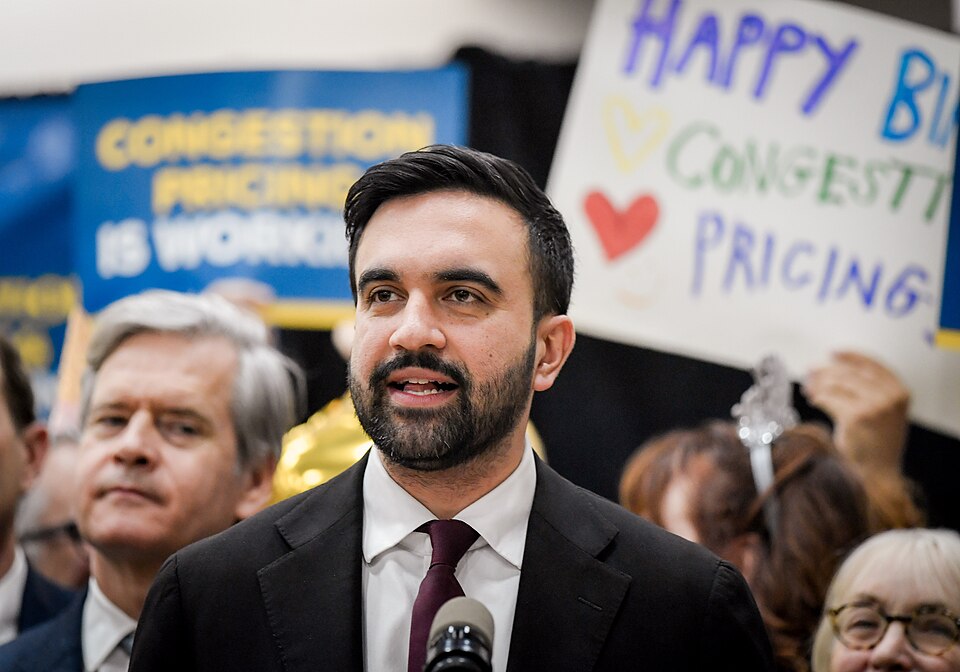
Metropolitan Transportation Authority, CC BY 4.0, via Wikimedia Commons
Mamdani accused Netanyahu of responsibility for more than 73,000 Palestinian deaths and described him as the architect of what the mayor called a “horrific genocide.”
That language represents Mamdani’s position. Israel strongly denies committing genocide or war crimes and maintains that its military operations have targeted Hamas following the Hamas-led attack of October 7, 2023.
The casualty figure Mamdani cited broadly matches United Nations humanitarian reporting. A July 15 snapshot from the U.N. Office for the Coordination of Humanitarian Affairs listed 73,246 reported Palestinian fatalities and 173,727 injuries in Gaza.
OCHA attributed those figures to Gaza’s Ministry of Health and noted that numbers not independently verified by the United Nations remain attributed to their sources.
The same report described a humanitarian system operating under extraordinary pressure. More than 43,000 injured people were estimated to have potentially life-changing injuries, while most surveyed households consumed an average of two meals each day.
The report also said more than 58,000 children had lost one or both parents.
Those realities gave Mamdani’s speech emotional force. The video did not sound like a routine diplomatic statement filled with careful qualifiers. It sounded like an accusation, a challenge, and a refusal to treat Gaza’s suffering as background noise.
Still, viral reach should not automatically be confused with universal support. Millions watched, liked, shared, or commented, but social-media engagement can include agreement, outrage, curiosity, and organized opposition.
What can be said with confidence is that Mamdani forced the issue into an enormous global conversation.
The ICC Warrant Is Real, but the Legal Path Is Complicated

The International Criminal Court issued an arrest warrant for Netanyahu on November 21, 2024.
The court said judges found reasonable grounds to believe Netanyahu and former Israeli Defense Minister Yoav Gallant bore responsibility for alleged war crimes and crimes against humanity. The allegations included starvation as a method of warfare, murder, persecution, and other inhumane acts.
The ICC also alleged responsibility for intentionally directing an attack against civilians.
Those remain allegations, not criminal convictions. The ICC has not tried Netanyahu, and Israel rejects the court’s jurisdiction.
Mamdani had previously suggested New York authorities might arrest Netanyahu if he entered the city, particularly during the United Nations General Assembly. After reviewing the matter, however, the mayor acknowledged that City Hall lacked the independent legal power to execute the ICC warrant.
“It is clear that we do not have the independent legal authority to enforce this warrant,” he said.
Mamdani then called on the federal government to join the ICC and carry out the arrest.
That demand faces major legal barriers. The United States is not an ICC member, and American law currently provides no ordinary mechanism for enforcing the court’s warrants.
Legal experts have said Washington would likely need to join the ICC and repeal the American Service-Members Protection Act. Diplomatic immunity for sitting heads of government and protections for representatives traveling to United Nations meetings would create additional obstacles.
In other words, Mamdani’s demand may carry political weight, but a New York mayor cannot independently turn an international warrant into an arrest on American soil.
Praise, Backlash, and a Message Washington Cannot Ignore
Israeli Ambassador to the United Nations Danny Danon responded sharply, telling Mamdani that he had been elected to serve New Yorkers, “not Hamas’ propaganda,” and urging him to “do your job.”
President Donald Trump also rejected the possibility of an arrest, saying Netanyahu would not be detained “in any way, shape, or form” while in the United States.
Supporters, meanwhile, praised Mamdani for using language they believe national leaders have avoided.
The video’s extraordinary reach suggests that public discussion of Gaza is no longer confined to foreign-policy hearings, activist circles, or diplomatic statements. It now moves through phones, short videos, and social networks at a speed political institutions struggle to match.
For many viewers, Mamdani’s appeal was not simply that he criticized Netanyahu. It was that he connected Gaza’s death toll to the broader principle that political leaders should not stand beyond international scrutiny.
For his critics, however, the speech crossed a line. They viewed it as inflammatory, legally unrealistic, or dismissive of Israel’s stated security concerns and the events that triggered the war.
That divide helps explain why the video traveled so widely. It touched one of the most emotionally charged political disputes in the world and did so using language that left little room for ambiguity.
Mamdani cannot personally enforce an international arrest warrant, and his speech does not change federal law. What it changed was the size of the audience hearing the demand for accountability.
More than 200 million reported views do not settle the legal case against Netanyahu. They do, however, reveal how intensely people around the world are watching Gaza and how strongly many reject the idea that civilian suffering should pass without investigation, judgment, or consequence.