Biden’s Maryland Gala Exit Moment Sparks New Debate on Political Optics, Age, and the “Clip Economy” of Modern U.S. Politics
A Carefully Staged Political Speech Collides With an Unscripted Exit Moment
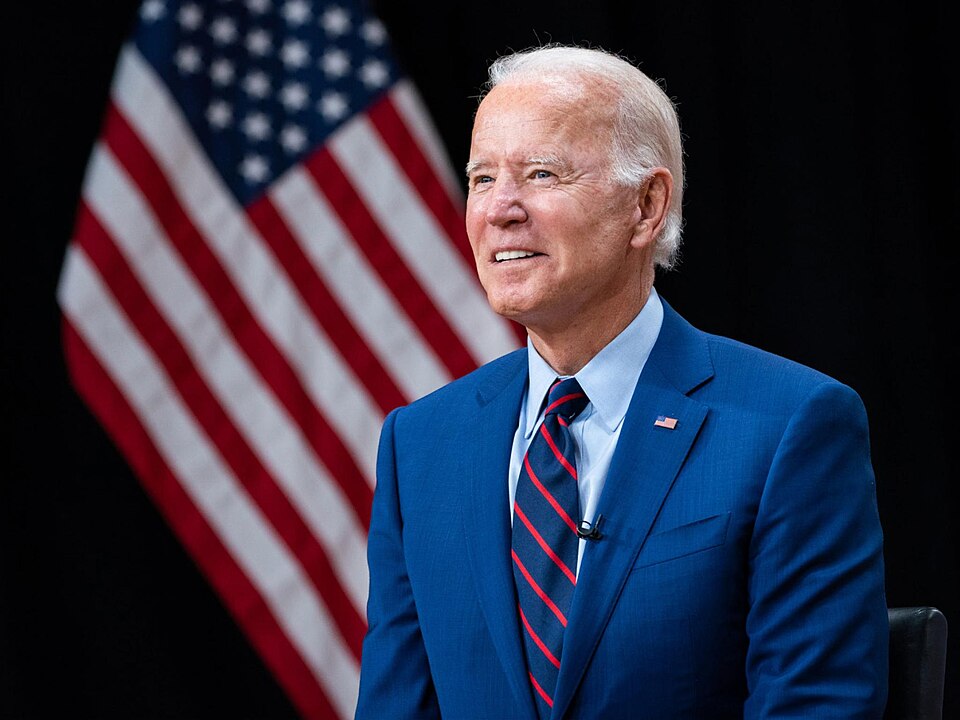
We are witnessing a new phase of American political storytelling in which the most important part of a speech is often not the speech itself but what happens in the seconds after it ends. At a Maryland Democratic Party gala held at Maryland Live! in Hanover, former President Joe Biden delivered a focused address criticizing Donald Trump and urging Democrats to stay mobilized ahead of the next election cycle.
Yet the dominant image that emerged was not a policy line or a rallying message. It was Biden pausing after his remarks, appearing to look toward stage staff for direction before exiting.
The moment was brief, almost procedural in isolation. But in the modern political environment, isolated moments rarely stay isolated. They become symbols. They become narratives. They become the raw material of a political ecosystem built on repetition, amplification, and visual interpretation.
What happened in Maryland is not simply a question of stage direction. It is a case study in how political optics now behave like independent forces, often overpowering the substance of the message they surround.
The Hidden Architecture of Political Events and Why It Matters More Than Ever
To understand why a simple exit can dominate headlines, we must first understand how modern political events are constructed.
High-level political appearances are not spontaneous gatherings. They are tightly engineered environments:
- Speaker positioning is pre-planned down to floor markings.
- Teleprompters are aligned with camera sightlines.
- Lighting is calibrated to control facial emphasis.
- Staff movement patterns are rehearsed for transitions.
- Exit routes are pre-determined to manage crowd flow and security.
In that sense, a political speech is closer to a controlled performance environment than a traditional public address.
When Biden paused after his remarks in Maryland, the disruption was not just personal. It was a break in the choreography. A moment where the “scripted flow” of the event briefly became visible.
That visibility is what makes such moments powerful in today’s media cycle. The audience is no longer just watching the speaker. It is watching the system behind the speaker.
And when that system appears even slightly uncertain, the interpretation becomes larger than the action itself.
The “Clip Economy” Effect: How Seven Seconds Replaced a Ten-Minute Speech
The Maryland gala speech lasted roughly ten minutes. It included direct criticism of Donald Trump, calls for Democratic unity, and a clear attempt to reframe the political stakes heading into the next cycle.
But in the current media environment, duration is no longer the currency of impact. Compression is.
We now operate in what can be described as a clip economy, where:
- Entire speeches are reduced to 10 to 15-second fragments.
- Context is stripped away in favor of visual clarity.
- Emotional or ambiguous moments outperform policy explanations.
- Algorithms reward replayable uncertainty over structured messaging.
In this system, Biden’s exit moment outperformed his speech because it required no explanation. It had immediate visual readability.
A pause. A glance. A directional hesitation.
No subtitles required.
That is the core shift in political communication. Meaning is no longer primarily transmitted through argument. It is transmitted through interpretable fragments.
And once that fragment circulates, the speech that produced it becomes secondary.
Biden’s Role in a Party Still Negotiating Its Post-Presidency Identity
Beyond the viral moment itself lies a deeper structural question: what role does Joe Biden occupy in Democratic politics after leaving the presidency?
He is no longer a governing figure, but he is not fully a symbolic retiree either. Instead, he occupies an unstable middle space that carries both influence and risk.
In Maryland, Biden was used as a familiar political anchor. His message centered on resisting Trump, defending democratic norms, and energizing party supporters. These themes remain consistent with his long-standing political identity.
However, his presence also reactivates unresolved tensions within the Democratic coalition:
- The unresolved aftermath of the 2024 election cycle
- Ongoing debates about leadership transition timing
- Concerns about public perception fatigue
- The challenge of balancing experience with renewal
This creates a paradox. Biden remains a unifying figure for some Democrats and a complicating figure for others. That duality means every appearance carries layered interpretations before he even speaks.
By the time he leaves the stage, the narrative space is already crowded.
The Optics Gap: When Perception Moves Faster Than Explanation
One of the most defining features of modern political media is the widening gap between what happens and what people believe happened.
In Maryland, the factual sequence is straightforward:
- Biden delivered a prepared speech.
- He concluded his remarks.
- He paused briefly
- He appeared to be looking for the exit direction.
- He exited the stage with staff guidance.
Yet perception does not move linearly. It compresses events into meaning.
For critics, the interpretation becomes a cognitive decline.
For supporters, it becomes a trivial staging issue.
For neutral observers, it becomes ambiguous, which reinforces existing doubts about political age and stamina.
The important point is not which interpretation is correct, but how quickly interpretation replaces observation.
In earlier media eras, explanation followed the moment. In the current environment, interpretation arrives simultaneously with the clip itself.
That reversal is what makes modern political optics so unforgiving.
The Opposition Amplification Loop and the Speed of Narrative Lock-In
Political opponents no longer need to respond to policy arguments in real time. They respond to visual moments.
The lifecycle now unfolds rapidly:
A moment occurs in a public setting.
A short clip is extracted.
The clip circulates on social platforms.
Interpretation solidifies within hours.
Competing explanations struggle to catch up.
In this environment, Biden’s exit moment does not need to be “major” to become politically significant. It only needs to be visually interpretable.
Once that happens, the narrative locks in faster than corrections can circulate.
This is not unique to Biden. It is structural to modern politics. But Biden’s long-standing association with age-related scrutiny makes him particularly vulnerable to this acceleration effect.
The Contrast Collapse: When Message Discipline Is Overwritten by Visual Drift
Biden’s intended message in Maryland was straightforward: draw a contrast with Donald Trump, mobilize Democrats, and reinforce a narrative of political urgency.
But the optics introduced a competing narrative that operated on a completely different axis.
Instead of:
- Biden vs Trump policy contrast
The public conversation drifted toward:
- Biden vs Biden visual interpretation
This phenomenon can be described as contrast collapse, in which the intended political comparison is replaced by an internal symbolic reading of the speaker.
When that happens, messaging discipline breaks down not because the speech is weak, but because attention is redirected.
The speech becomes background noise to the image.
The Generational Pressure Point Inside Democratic Politics
Biden’s Maryland appearance also reopens a broader generational tension within the Democratic Party.
The party is currently balancing three competing pressures:
- Reliance on established figures for credibility and fundraising
- Demand for younger leadership and visible succession planning
- The need to maintain continuity in messaging against Trump
These pressures often conflict rather than align.
Biden sits at the center of that tension because he is both a stabilizing figure and a reminder of the party’s recent political struggles.
His presence can energize loyal voters, but it can also trigger renewed debate about transition timing and leadership visibility.
Maryland did not create this tension. It simply exposed it again under high visibility conditions.
Why Small Moments Now Carry Outsized Political Weight
The Maryland exit moment matters not because it was unusual in isolation, but because it occurred in a political environment where interpretation is instant, automated, and highly competitive.
Three forces amplify its impact:
- Visual-first media consumption
- Algorithmic prioritization of replayable moments
- Pre-existing narratives about political aging and leadership endurance
Together, these forces transform minor pauses into national conversations.
This is not a story about confusion at an exit. It is a story about how quickly meaning attaches itself to movement in modern politics.
When Optics Become the Message

Biden’s Maryland gala appearance reinforces a central truth of contemporary political communication: the most powerful message is often the one no one planned to send.
The speech was about Trump and Democratic mobilization.
The narrative became about perception, timing, and control.
In that gap lies the defining challenge of modern politics. Leaders no longer compete only on ideas or policies. They compete on interpretability in a media system that rewards immediacy over context.
And in that system, even a simple pause before leaving the stage is no longer just an exit.
It is a headline, a symbol, and a signal, whether intended or not.