Carney Calls U.S. Trade Talks ‘Nasty’ as Tariff Deadline Nears

The latest Canada-U.S. trade dispute has produced another sharp exchange between the leaders of two countries whose economies remain deeply connected.
Canadian Prime Minister Mark Carney described negotiations with Washington as “nasty” after President Donald Trump criticized Canada’s leadership and threatened to place 50% tariffs on additional Canadian goods beginning August 19.
The rhetoric may dominate the headlines, but the dispute carries consequences far beyond the relationship between Carney and Trump. Canada sends most of its exports to the United States, while American manufacturers depend on Canadian energy, metals, vehicles and agricultural products.
Each new tariff can move through that shared system, raising costs for businesses and consumers on both sides of the border.
Trump’s criticism meets a measured response
Trump renewed his criticism of Canada during an August 5 speech in Las Vegas.
“Canada’s nasty. They are. They’re nasty,” Trump said, according to The Associated Press. He added that he loved Canadians but objected to their leadership.
Carney laughed when reporters asked about the comments, but he did not dismiss the seriousness of the disagreement.
“This is a tough negotiation. You can say ‘nasty,’” Carney said while speaking in French.
He framed the dispute around Canadian workers and companies rather than his personal relationship with Trump. That response reflected the political challenge facing Canada’s government: showing that it will defend the country’s interests without closing the door on an agreement with its largest trading partner.
Carney said Canadian officials remained engaged in Washington and expected negotiations to continue. He had spoken with Trump the previous week and anticipated further conversations.
A 50% tariff deadline changes the pressure
The United States already applies tariffs to Canadian steel, aluminum and automobiles. Trump has now threatened a 50% duty on a broader group of Canadian imports beginning August 19.
The proposed measure does not apply to every product Canada sends south. However, it would widen a trade conflict that has already disrupted manufacturers and exporters.
Canada responded to previous U.S. tariffs with countermeasures of its own. Some Canadian provinces also removed American alcoholic beverages from government-operated stores, a move criticized by U.S. Trade Representative Jamieson Greer.
American officials have portrayed Canada’s response as an escalation. Canadian leaders argue that their measures came only after Washington imposed tariffs that Ottawa considers inconsistent with the United States-Mexico-Canada Agreement.
Carney’s government has called the proposed 50% duties another unilateral American action. In a July 20 statement, the prime minister said Canada had submitted detailed proposals to resolve the dispute and modernize the continental trade agreement.
The approaching deadline gives both governments less time to convert those proposals into a workable compromise.
Tough language has not stopped the negotiations
Despite the public criticism, discussions between officials continued in Washington.
Dominic LeBlanc, the minister responsible for Canada-U.S. trade, said he and Canada’s chief trade negotiator, Janice Charette, held “constructive and detailed” talks with U.S. Trade Representative Jamieson Greer on August 6.
That description does not guarantee an agreement. It does show that the diplomatic machinery remains active even as the countries’ leaders exchange increasingly pointed remarks.
Canada is seeking a comprehensive deal that addresses tariffs affecting individual industries. Carney has resisted the idea of accepting a limited agreement that leaves major sectors exposed.
The distinction matters because steel, aluminum and automobile production operate through integrated North American supply chains. Materials and components can cross the border several times before a finished product reaches a customer.
A tariff imposed at one stage can increase expenses at later stages, including for American companies using Canadian inputs.
Carney said U.S. aluminum prices had increased by 58% since the existing tariffs were introduced. He argued that those higher costs create problems for American companies, although the precise effect on any business depends on its suppliers and contracts.
The economic relationship leaves little room for a clean break
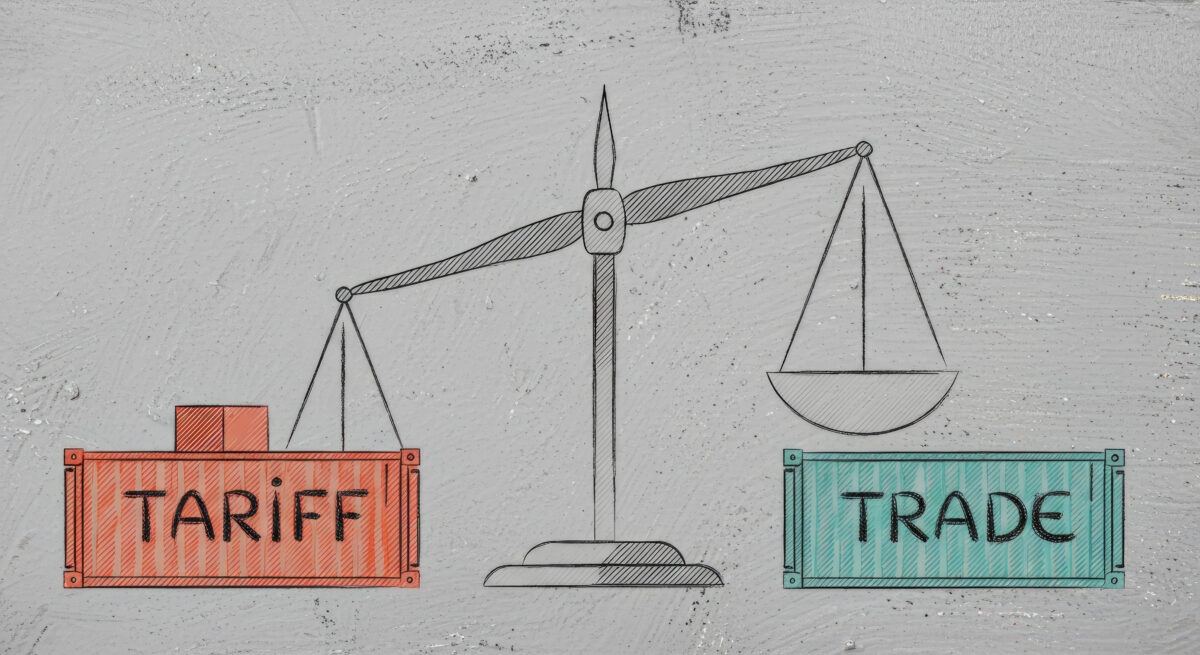
Canada and the United States exchanged an estimated $719.5 billion in goods during 2025, according to the Office of the U.S. Trade Representative. American exports to Canada reached $336.5 billion, while imports from Canada totaled $383 billion.
Canada was the leading destination for U.S. exports in 2024. That year, more than three-quarters of Canadian goods exports went to the American market.
The relationship reaches deeply into both economies. Canada supplies the United States with energy, vehicles, metals and food products. American companies sell Canadians machinery, vehicles, energy products and billions of dollars in agricultural goods.
This level of integration makes tariffs difficult to contain within one country. Importers generally pay the duties and may pass part of the expense to customers through higher prices.
The effects are especially important as U.S. voters remain concerned about living costs ahead of the November 3 midterm elections. Trump argues that tariffs will encourage companies to relocate manufacturing to the United States, but such changes require time, investment and reliable domestic supply chains.
Canada also has more at risk because of its greater dependence on the American market. Statistics Canada found that 75.9% of Canadian domestic goods exports went to the United States in 2024.
That dependence explains why Carney continues negotiating while also working to expand Canada’s commercial relationships elsewhere.
Canada is already feeling the strain
The trade disruption has moved beyond political speeches.
The Bank of Canada said U.S. trade restrictions had weakened demand for Canadian products and weighed on employment, productivity and living standards. It projected that Canada’s economy would grow only modestly as companies searched for new markets and adjusted their supply chains.
The central bank also estimated that Canada’s gross domestic product could be about 1.5% lower by the end of 2026 than it had projected in January 2025.
Trade uncertainty can create damage even before new tariffs take effect. Companies may delay hiring, expansion or equipment purchases when they cannot predict how much cross-border business will cost in a few months.
Canadian exporters are also trying to reduce their reliance on a single market, but redirecting established supply chains cannot happen overnight. Geography, existing infrastructure and decades of trade policy have made the United States Canada’s natural commercial partner.
The two countries may disagree over tariffs, retaliation and the terms of a future agreement. They cannot easily separate their factories, farms, energy systems and consumers.
Carney and Trump can trade insults while negotiators search for common ground. The real measure of success, however, will not be which leader sounds tougher.
It will be whether they can prevent a political confrontation from becoming a lasting economic cost for the people and businesses on both sides of the border.