Christ Hospital’s Uncertain Future Leaves Jersey City Waiting
For generations, Christ Hospital in Jersey City represented something more important than a building on Palisade Avenue. It offered nearby families a place to seek emergency treatment, deliver children, undergo surgery and receive care without traveling across one of New Jersey’s most densely populated cities.
Now, the future of Christ Hospital remains trapped between health regulations, courtroom disputes, redevelopment pressure and public demands for accountability.
Months after inpatient operations ended and the final emergency services disappeared, we still do not have a definitive plan to restore medical care at the site or replace the capacity Jersey City lost.
The uncertainty has created a larger question for Hudson County: What happens when a community hospital closes before government agencies, residents and health planners agree on what should replace it?
Christ Hospital closed in two painful stages
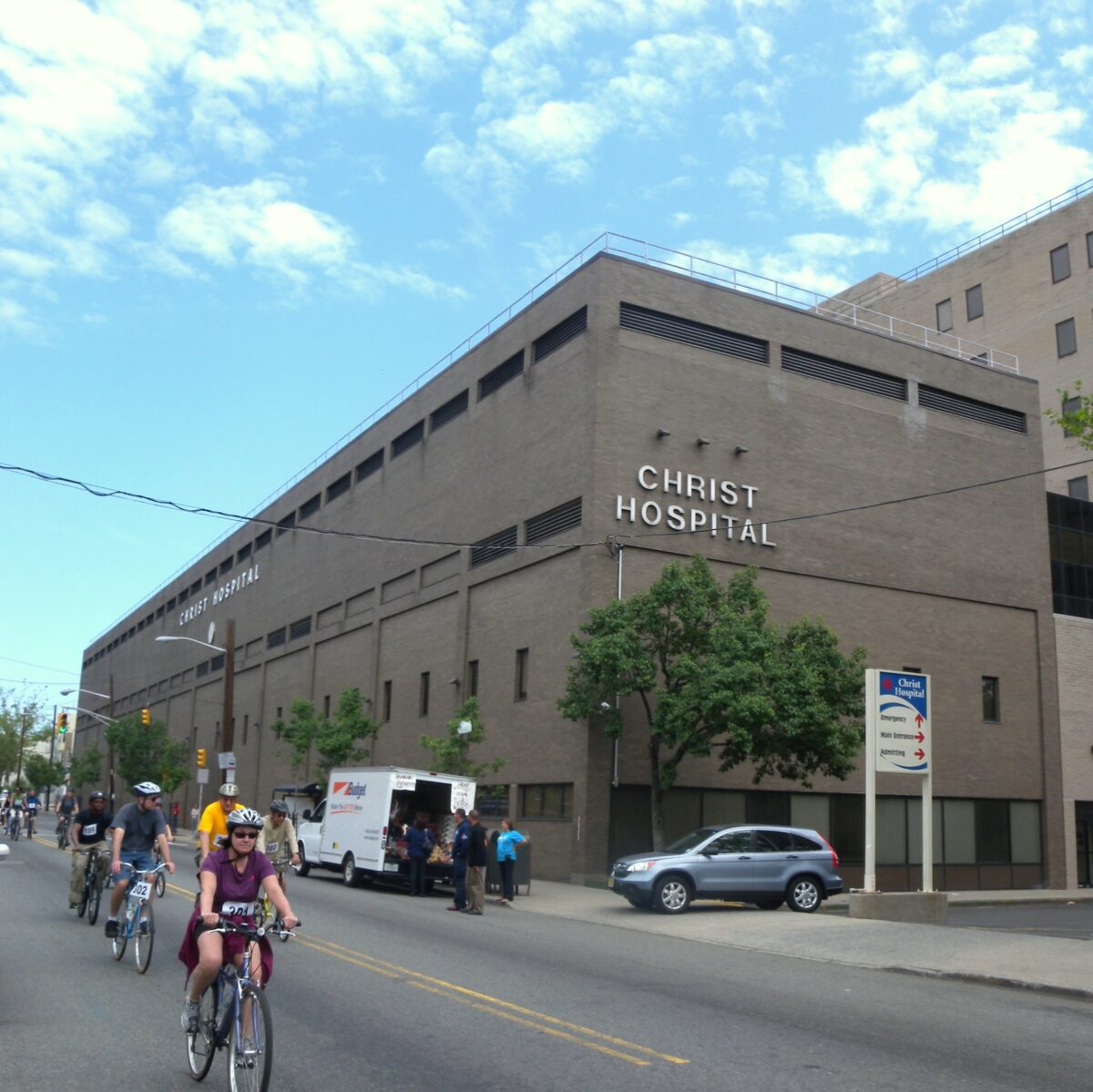
The hospital, later renamed Heights University Hospital, served Jersey City for more than 150 years. Its decline accelerated during the financial collapse of CarePoint Health, the former operator of Christ Hospital, Bayonne Medical Center and Hoboken University Medical Center.
CarePoint entered Chapter 11 bankruptcy protection in November 2024 after years of financial pressure.
Hudson Regional Health subsequently acquired the hospital system through the restructuring process, inheriting facilities that required substantial investment and served large numbers of uninsured and underinsured patients.
Christ Hospital’s inpatient operations effectively ended on November 14, 2025. The New Jersey Department of Health later said the hospital closed without completing the full Certificate of Need review required for shutting down a general hospital.
State officials had previously warned that any approved closure could still require emergency, transportation and outpatient services at or near the Palisade Avenue property.
The emergency department temporarily remained open after inpatient services stopped. Hudson Regional Health then moved to close that final unit in early 2026, initially giving the state only a few days’ notice.
After a brief delay, emergency services ended on March 14, completing the shutdown of the hospital campus.
That timeline matters. Jersey City did not lose every hospital service on one single day. Instead, the community watched its hospital disappear piece by piece, while the regulatory process continued behind the closure rather than ahead of it.
The required public process became tangled in court
New Jersey’s Certificate of Need system exists to evaluate how major health facility changes could affect surrounding communities. A hospital closure normally requires state review, public notice and an opportunity for residents, employees and local leaders to testify.
The Department of Health scheduled a public hearing for April 15, 2026, concerning Hudson Regional Health’s application to close Heights University Hospital. However, the state canceled the hearing after the hospital obtained a temporary restraining order in Hudson County Superior Court.
Hudson Regional Health also attempted to withdraw its closure application after the hospital had already stopped functioning as a general hospital. That unusual sequence deepened the dispute because the closure had become a physical reality even though the public review remained unfinished.
Community advocates now argue that residents have been denied the formal hearing that should have taken place before services vanished.
The Save Our Hospital Coalition has urged the Department of Health to arrange a new meeting, warning that continued delay allows the closure’s consequences to deepen without a complete public accounting.
We are therefore confronting more than a disagreement over paperwork. The case tests whether a hospital operator can shut down essential services first and resolve the state’s review requirements later.
Jersey City’s remaining hospital carries a heavier burden
Christ Hospital’s closure left Jersey City Medical Center as the city’s only full-service acute-care hospital. City officials have argued that one hospital cannot comfortably meet the needs of a population approaching 300,000 residents, especially during major emergencies or seasonal surges.
Patients from the Heights, Journal Square and neighboring communities must now travel farther for emergency treatment. Ambulance routes can become more complicated when traffic slows movement toward Jersey City Medical Center, Hoboken, Bayonne or hospitals outside Hudson County.
The greatest concern is not simply inconvenience. During strokes, heart attacks, severe injuries and respiratory emergencies, additional travel and overcrowded emergency rooms can influence how quickly patients receive evaluation and treatment.
Health care workers and residents have reported heavier pressure at Jersey City Medical Center since Christ Hospital’s services disappeared. The nurses’ union Health Professionals and Allied Employees has also warned that the remaining hospital has faced increased demand following the closure.
Hospital capacity is not measured only by the number of beds inside a building. It also includes available nurses, physicians, laboratories, operating rooms, imaging equipment, ambulances and space to move patients through emergency care. Removing one hospital places pressure across that entire network.
The Palisade Avenue property has become part of the battle
The dispute has also shifted from health care into land use. The Christ Hospital site occupies valuable property in the Jersey City Heights, where demand for housing and redevelopment remains intense.
City leaders previously pursued zoning restrictions intended to preserve the property for medical use and prevent a large residential conversion. Hudson Regional Health challenged those restrictions, creating a separate legal fight over how much authority Jersey City has to control the site’s future.
Mayor James Solomon has accused the hospital owner of connecting continued hospital operations with faster approval for residential development. Hudson Regional Health has cited steep operating losses, declining use, and inadequate funding as reasons the hospital could not remain financially sustainable.
Both issues require serious examination. A hospital cannot operate indefinitely without reliable financing, but valuable medical property should not quietly become a real-estate opportunity before the community’s health needs have been independently assessed.
The strongest solution may not involve reopening every former department exactly as it operated before. However, any redevelopment plan should begin with a transparent determination of the medical services Jersey City still requires.
New Jersey lawmakers are considering tougher protections
The Christ Hospital controversy has reached Trenton, where lawmakers have proposed stronger safeguards for hospitals facing closure or financial instability.
One proposal would allow a Superior Court to appoint a receiver when a hospital has closed or faces an imminent threat of closure. A receiver could temporarily administer the facility while officials search for a qualified operator or develop an orderly transition plan.
Other legislation would increase oversight of hospital real-estate transactions, including certain sales or leases involving real-estate investment trusts. State health officials would examine whether an agreement could weaken a hospital’s finances or threaten public health.
Lawmakers have also advanced measures requiring some hospitals to return public subsidy money when they close before the end of the period covered by that funding. These proposals reflect a growing belief that New Jersey’s existing penalties and enforcement tools may not be strong enough to prevent abrupt closures.
What must happen next at Christ Hospital
Jersey City needs a public hearing that produces clear answers rather than another round of procedural delay. Residents deserve verified information about emergency response times, hospital capacity, displaced patients, available maternity care and the financial requirements of restoring services.
The state should also commission a comprehensive community health needs assessment. That review should examine whether the Heights requires a full hospital, a satellite emergency department, an urgent-care center, outpatient clinics or a combination of services.
Any redevelopment proposal should follow that assessment, not replace it. Housing may eventually form part of the property’s future, but medical access must remain central to decisions involving a site that served public health for more than a century.
Christ Hospital’s empty corridors now represent a decision that Jersey City has not finished making. We can allow the property’s value to determine its destiny, or we can first establish what a growing city needs to keep its residents safe. Until that choice is made openly, the community will remain in limbo.