7 Common Kitchen Mistakes That Can Ruin Your Food Without You Realizing It
You follow the recipe, gather your ingredients, and expect a delicious meal. But somehow, the vegetables turn soggy, the pasta sticks together, or your homemade muffins come out heavier than expected.
The frustrating part? You might be making small mistakes without even noticing. Everyday habits, from how you fill a skillet to when you turn off the heat, can affect your food’s flavor, appearance, and texture.
Fortunately, improving your results doesn’t require fancy equipment or professional training. Here are seven common kitchen mistakes worth watching for and simple ways to avoid them.
Crowding Too Many Ingredients Into One Pan
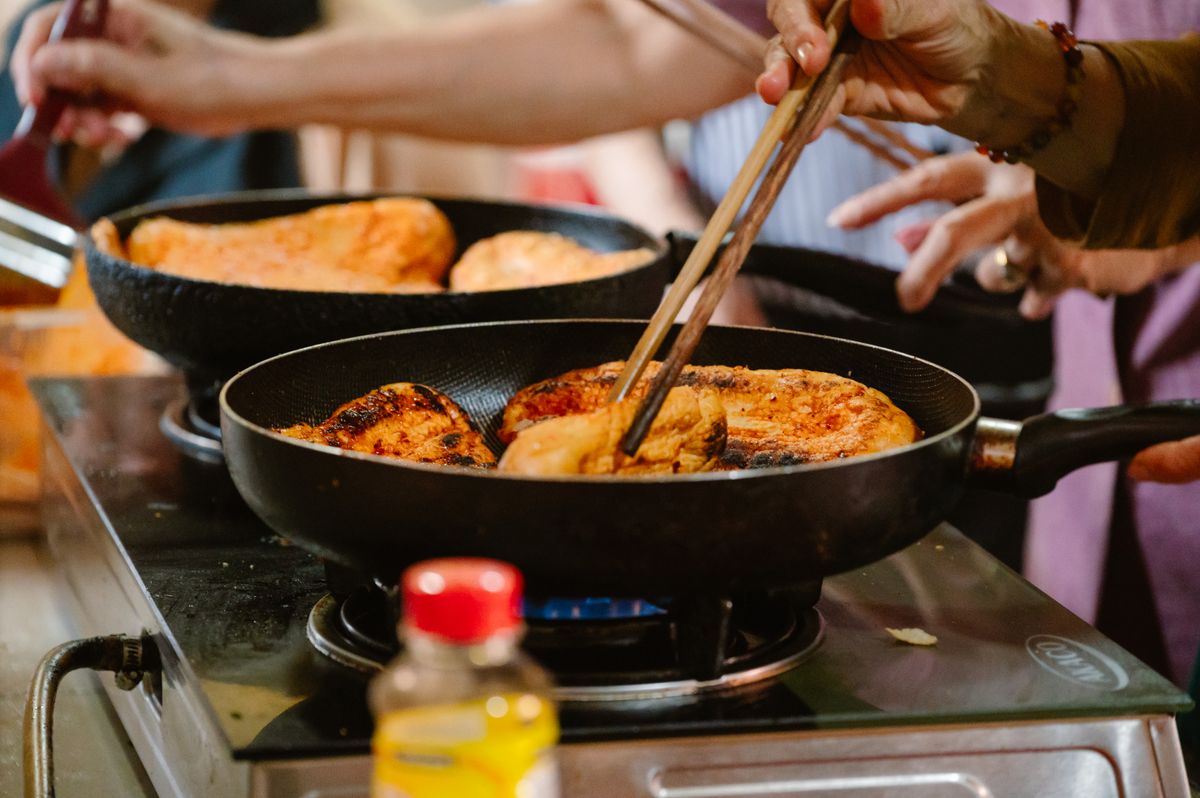
It’s tempting to toss everything into the skillet at once, especially when you’re hungry and want dinner ready quickly. But when ingredients pile up and overlap, they can release moisture and steam instead of developing the browned surfaces you’re hoping for.
As Bon Appétit’s guide to common stir-fry mistakes explains, overcrowding can work against the crisp, golden-brown results you want.
The solution is surprisingly simple: give your ingredients room. When browning is important, cook in smaller batches rather than forcing everything into the skillet simultaneously. Remove each batch when ready, then combine the ingredients according to your recipe.
Cooking everything together isn’t always wrong. However, when your recipe calls for beautifully browned ingredients, a little extra space can make a noticeable difference.
Forgetting to Stir Pasta Right After Adding It to Water
You’ve dropped your spaghetti into the pot, and now you’re busy preparing the sauce. A few minutes later, you discover several strands have formed one stubborn clump.
The problem may have started almost immediately after the pasta entered the water. During the early cooking stage, starch on the pasta’s surface absorbs water, making individual pieces more likely to stick together.
According to Serious Eats’ pasta-cooking tests, stirring during this initial period helps prevent clumping, even when using relatively little cooking water.
Give your pasta a good stir immediately after adding it, then stir a few more times during the first minute or two. If you’re using a low-water cooking method, continue checking and stirring as needed.
Assuming Higher Heat Always Means Better Cooking
Turning the burner up might seem like the easiest way to speed up dinner. Unfortunately, more heat doesn’t always produce the texture you’re trying to achieve.
Consider an egg-based custard. When overheated, the egg proteins can tighten too much, forcing out liquid and leaving the custard with an undesirable texture.
That’s quite different from the smooth consistency you’re aiming for. Instead of treating high heat as your default setting, consider what your recipe actually requires.
For custards and other preparations that call for gentle cooking, use gradual heating and follow the recommended stirring and temperature instructions.
Of course, high heat has its place. Some cooking techniques depend on it. The important thing is matching the heat to the food rather than assuming hotter is automatically better.
Related: 20 Kitchen Mistakes That Are Making Us Cringe (Yes, You’re Guilty Too.)
Scooping Flour Straight From the Bag With Your Measuring Cup
Baking can be surprisingly sensitive to how you measure ingredients. One easy-to-overlook mistake is pushing a measuring cup directly into a container of flour.
This can pack the flour into the cup, changing how much actually goes into your batter or dough. That extra flour may affect the consistency of your mixture and the texture of your finished bake.
King Arthur Baking recommends weighing flour when possible because weight measurements provide greater consistency. Don’t have a kitchen scale? You can still improve your measuring technique.
First, fluff the flour in its container. Gently spoon it into a dry measuring cup, then use a straight edge to level the surface. When your recipe provides a specific weight, follow that measurement rather than relying on a universal conversion.
Mixing Muffin Batter Until It’s Completely Smooth
If you’ve ever stared at lumpy muffin batter and felt compelled to keep stirring, you’re certainly not alone.
After all, smooth batter looks more finished. But for muffins made using the traditional method of combining wet and dry ingredients separately, those little lumps aren’t necessarily a problem.
Excessive mixing can work against the light, tender texture you’re trying to create. King Arthur Baking recommends combining the wet ingredients thoroughly before adding them to the dry mixture.
Once everything comes together, stir gently or fold with a spatula instead of continuing to beat the batter until perfectly smooth.
A few lumps are acceptable for this style of muffin. Just remember that baking methods differ. Some cakes, breads, and other batters require completely different mixing techniques.
Constantly Moving Food Around the Skillet
There’s something satisfying about standing over a pan, enthusiastically stirring and flipping everything.
It feels productive. But sometimes, doing less produces better results. When you’re trying to brown sliced meat, for example, moving it constantly can interfere with the uninterrupted contact needed to develop color.
Bon Appétit’s stir-fry guidance describes allowing sliced meat to cook undisturbed initially, while vegetables are stirred more frequently.
The practical lesson is to pay attention to what you’re cooking. If your recipe calls for searing or browning, allow the ingredients to remain in place for the recommended interval before turning or stirring.
That doesn’t mean you should stop stirring everything. Soft scrambled eggs, for instance, can benefit from frequent movement. The trick is knowing when to leave the spatula alone.
Related: 12 Affordable Renovations That Make Your Kitchen Look Expensive
Forgetting That Food Keeps Cooking After You Turn Off the Heat
Here’s a kitchen habit that’s particularly easy to overlook: assuming cooking stops the instant you switch off the burner.
Unfortunately, residual heat doesn’t disappear immediately. Think about soft scrambled eggs. You might remove the pan from the heat when the eggs look perfectly finished, only to discover they’ve become firmer than you intended.
That’s because the hot pan and the eggs themselves can continue contributing to the cooking process. For the soft-scramble method described by Serious Eats, the solution is to take the pan off the heat shortly before the eggs reach your desired consistency.
Keep stirring and allow the remaining warmth to finish setting them. If necessary, briefly return the pan to the heat. Residual cooking varies depending on the food and cooking method, so follow the specific approach recommended for your dish.