Don Lemon Says He Is “Totally Serious” About 2028, But a White House Run Would Be His Toughest Broadcast Yet
Don Lemon has spent decades asking politicians why they believe they deserve power. Now, the former CNN anchor is entertaining a far more personal question: Why not him?
During an appearance on the Can’t Be Censored podcast, Lemon said he was seriously considering a run for president in 2028. The remark was not delivered as a throwaway joke. When co-host Travis Dhanraj pressed him on whether he meant it, Lemon answered, “I’m being totally serious.” He said people repeatedly ask whether he will run and argued that he could be a “really good president.”
That is still a long distance from launching a campaign. Lemon did not unveil a party affiliation, policy platform, campaign staff, or fundraising operation. But the comments mark his clearest signal yet that the idea has moved beyond casual banter. For a media personality who built a career interpreting political ambition from the anchor desk, the possibility of becoming the candidate is suddenly part of the story.
Lemon Says Political Experience Is No Longer the Gatekeeper
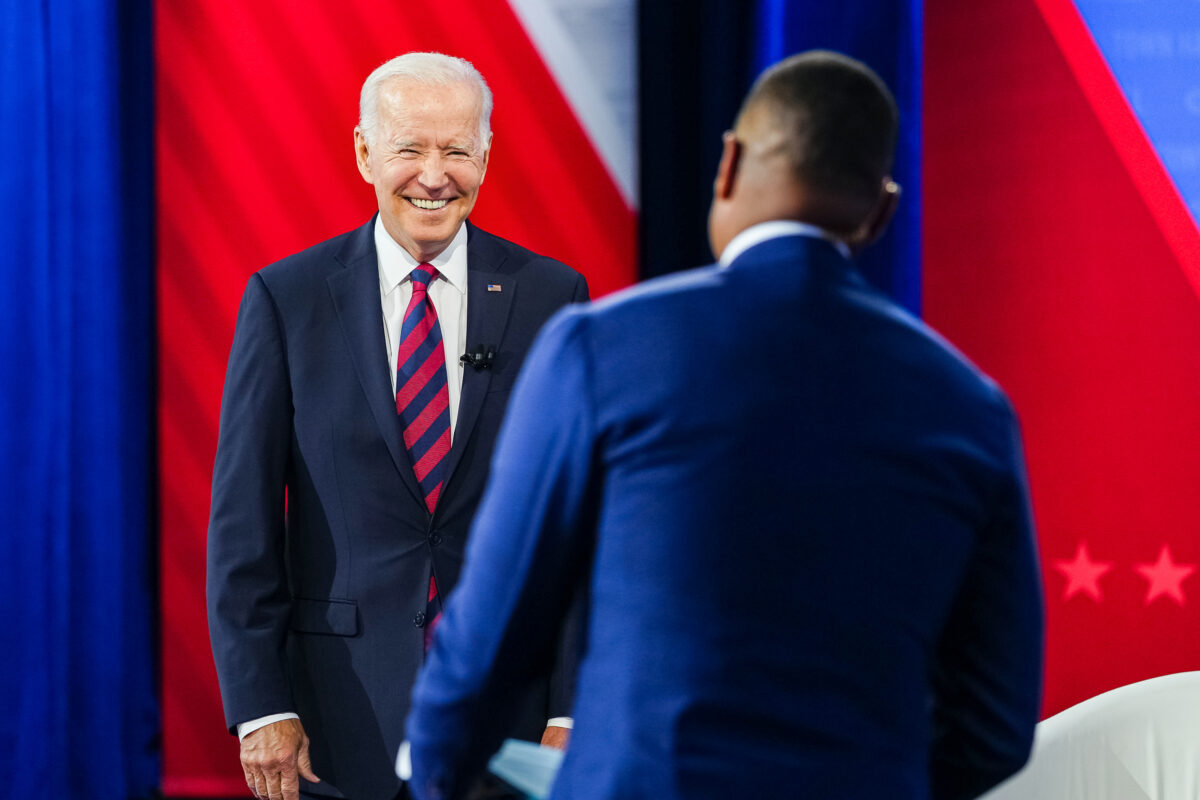
Lemon’s central argument is simple: Modern presidential politics has already demolished the old rulebook. He pointed to President Donald Trump, who entered the White House without having previously held elected office or served in government. Lemon argued that political experience is no longer an automatic requirement for voters, though he sharply criticized Trump’s leadership and suggested the president would perform better if he listened more closely to that politlonger an automatic requirement for voters, though he sharply criticized Trump’s leadership and suggested the president would perform better if he listened more closely to advisers.
The Constitution supports one narrow part of Lemon’s argument. It does not require a president to have served as a governor, senator, or general; the candidate must be a natural-born citizen, at least 35 years old, and a U.S. resident for at least 14 years. Beyond those qualifications, the electorate decides what experience matters.
Still, legal eligibility and political viability are very different things. Lemon has name recognition, television experience, and an instinct for commanding attention. He also understands how a sentence can dominate a news cycle, how social media drives political conversation, and how candidates use conflict to keep audiences engaged. In an era when campaigns function partly as nonstop media companies, those are real advantages.
But broadcasting is not governing. A president must build coalitions, negotiate with lawmakers, manage federal agencies, respond to international crises, and make decisions whose consequences cannot be fixed in the next segment. Lemon would have to persuade voters that interviewing powerful people prepared him to become one.
He has at least one of the obstacles. On the podcast, Lemon said he would prefer to campaign “without having to beg for money,” while acknowledging that such a model might not be realistic.
That may be the most revealing part of his answer. Presidential campaigns require enormous fundraising networks, ballot access, experienced organizers, and operations across dozens of states. Fame can open the door, but it cannot replace machinery.
Lemon’s years in front of the camera would also create unusual expectations. Supporters might see him as a polished communicator who understands national issues. Critics would argue that commenting on government from a television studio is not the same as being responsible for it. The real campaign would begin when Lemon was forced to replace broad confidence with specific answers.
This Is Not the First Time Lemon Has Floated the Idea
The podcast remarks did not appear from nowhere. In May, Lemon discussed a potential candidacy at the “Truth Tellers” journalism summit in London. He highlighted his journey from Louisiana to the top tier of national television and later told Vanity Fair that he believed. He argued that a strong president must listen to experts and ordinary Americans, while describing digital-media fluency as a major qualification for the next Democratic candidate.
Those comments followed an earlier appearance on Pod Save America, where the possibility of a presidential run had already surfaced. By July, however, Lemon’s language had hardened. He was no longer merely saying, “Why not?” He was insisting that the interest was genuine and that others were encouraging him. The progression matters because presidential speculation often begins exactly this way: a joke, an interview, a few flattering supporters, and repeated public tests of the idea. Each appearance measures the reaction without requiring the person to file paperwork, hire staff, or endure the discipline of an actual campaign.
Lemon also has a media platform ready to amplify every step of the way. After end of his 17-year run in April 2023, he moved into independent broadcasting and launched The Don Lemon Show on You with Lemon, followed by controversy over his remark that Republican presidential candidate Nikki Haley was not “in her prime,” a comment for which he later apologized.
Independence has given him greater control over his voice, guests, and audience. It has also placed him in the same digital ecosystem that increasingly rewards strong personalities over traditional institutions. A presidential tease brings attention to that platform, whether or not a campaign ever materializes.
That does not prove the idea is merely promotional. It does mean Lemon benefits from keeping the possibility alive. The challenge will be convincing voters that his interest is rooted in public service rather than personal branding. Campaigns quickly expose the difference. A serious candidate must withstand endless travel, donor calls, hostile interviews, opposition research, and months of scrutiny with no guarantee of reaching the first primary.
The Real Test Is Whether Lemon Can Become More Than a Personality

Carry historic possibilities. As an openly gay Black man, he would represent communities that have never seen someone with his background win a major-party presidential nomination. Yet biography alone would not answer the questions voters ask of any contender: What would he do about the economy, immigration, health care, crime, foreign policy, and growing distrust in American institutions?
He would also enter the race carrying years of polarizing television exchanges, conservative criticism, and controversies opponents could replay endlessly. His current federal case would also receive intense attention. Lemon connected to his coverage of an anti-ICE protest that disrupted a Minnesota church service. He maintains that he attended as a journalist, not as a participant. The legal case is unresolved, and it would be irresponsible to treat the allegations as established facts. Politically, however, unresolved issues do not remain in a courtroom. They become advertisements, debate questions, and fundraising emails.
Lemon’s greatest strength may also be his greatest vulnerability. He is comfortable speaking directly, confidently, and sometimes provocatively. That can generate loyal supporters, but a national campaign exposes every old clip, inconsistency, and careless phrase. A candidate cannot simply end the segment and move on.
He would need to assemble experienced advisers, demonstrate detailed policy knowledge, and develop an argument that reaches beyond opposition to Trump. Democratic primary voters would expect him to explain not only why he believes he could lead, but why he would be a better choice than governors, senators, and other candidates with established political organizations.
For now, Lemon is testing whether public curiosity can become political demand. His remarks deserve to be taken seriously because he says they are serious but not more seriously than the evidence allows. He has expressed interest but has not declared a candidacy. The leap from cable-news survivor to commander in chief is enormous. Lemon already knows how to hold a microphone and char.