Donald Trump’s “Mullet Moment” and the Visual Politics of Presidential Hair
Donald Trump’s hair has always functioned as more than a personal style choice. It operates as a visual signature, an instantly recognizable structure that sits at the intersection of branding, media memory, and political identity. Now, newly circulated Oval Office photographs have sparked a wave of online commentary suggesting that his signature look has subtly shifted into what social media users call a “mullet,” reviving long-standing debates about image control, aging, and political spectacle.
What appears at first glance to be a light entertainment story is, in reality, part of a larger pattern: modern political figures are no longer evaluated solely on policy or performance, but on highly magnified visual fragments that circulate at viral speed.
The Oval Office Angle That Sparked a Viral Interpretation Shift
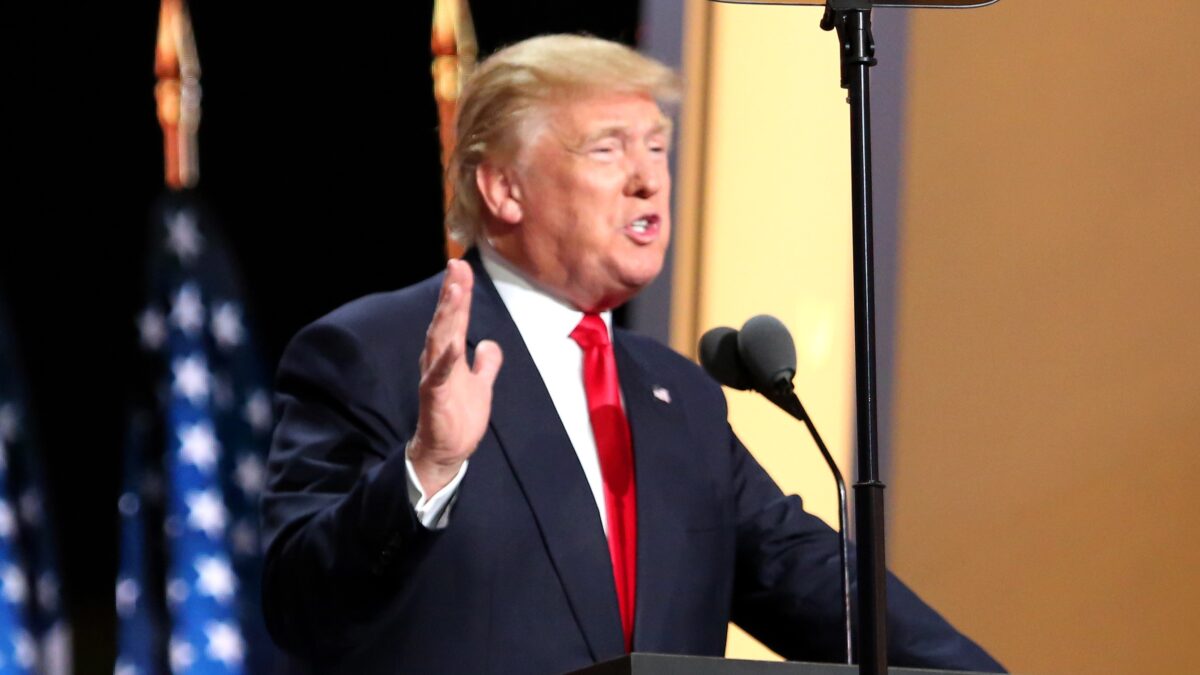
The latest discussion began after official-looking photographs showed Trump seated in the Oval Office under bright, directional lighting. At certain angles, the back portion of his hair appeared longer and more pronounced than usual, while the front maintained its familiar swept structure.
That contrast created a perceptual split. Online viewers began interpreting the silhouette as shorter in front and extended in the back, leading to repeated references to a “mullet.”
This reaction was not driven by a confirmed stylistic change, but by a visual interpretation effect common in digital media environments. Camera position, posture, and lighting depth all contribute to how hair volume is perceived, particularly in high-resolution political photography where every detail is magnified.
In this case, perception itself became the headline.
The “MAGA Mullet” and the Speed of Naming Culture Online
The phrase “MAGA mullet” emerged almost immediately after the images circulated. This naming pattern is not accidental; it follows a predictable structure in viral media culture:
- Identify a recognizable figure.
- Detect a visual anomaly.
- Assign a culturally loaded label.
- Amplify through repetition
The mullet reference works because it carries cultural baggage. It is not just a hairstyle; it is a symbol associated with retro Americana, rebellion, and exaggerated identity expression. Attaching it to a political figure transforms a visual observation into a cultural joke with instant shareability.
Once named, the idea becomes self-sustaining. Each repost reinforces the interpretation, even without new evidence.
Donald Trump’s Hair as a Long-Term Branding Instrument
From a media analysis perspective, Trump’s hairstyle is not incidental. It functions as part of a consistent identity system that has remained visually stable across decades.
Donald Trump has maintained a silhouette-based brand identity that includes:
- A high-volume front sweep
- A controlled directional shape
- A consistent color tone blending blond and silver hues
- A rigid styling pattern resistant to seasonal change
This consistency is important. In branding theory, repeated visual patterns increase recognition speed and emotional recall. Trump’s hair is arguably one of the most instantly identifiable personal features in modern politics.
That is why even minor perceived deviations generate disproportionate attention. The audience is not reacting to a haircut; they are reacting to a break in visual expectation.
Optical Distortion and the Illusion of Structural Change
A key overlooked factor in the viral interpretation is the role of visual distortion.
Three technical elements likely contributed to the “mullet” perception:
- Rear lighting falloff: Oval Office lighting often creates shadow gradients behind the subject’s head, exaggerating depth
- Camera elevation angle: Slight downward capture angles elongate rear silhouettes
- Hair fiber separation under light heat: Fine strands can appear extended when exposed to strong directional lighting
In digital environments, these micro-effects are amplified. What would normally be a neutral photograph becomes a data-rich visual artifact that audiences overanalyze frame by frame.
In this sense, the “mullet” is not necessarily a haircut; it is a computational interpretation of light, angle, and attention.
The Psychology of Political Appearance Amplification
Political figures are uniquely vulnerable to appearance-based reinterpretation because they are constantly under visual scrutiny.
The psychology behind the reaction follows a recognizable cycle:
A familiar image pattern is established.
A minor variation appears.
The brain flags it as “change detection”
Social media accelerates interpretation.
Humor and critique merge into a single narrative.
This explains why hairstyle discussions about Trump repeatedly resurface over the years, even without formal changes in grooming style.
Hair becomes a proxy for stability, control, and continuity, qualities closely associated with perceptions of leadership.
The Meme Economy: How a Hairstyle Becomes a News Cycle
Modern media ecosystems convert visual anomalies into structured content economies.
This cycle illustrates how quickly a single image transitions from documentation to narrative.
Once the narrative stabilizes, even neutral observers begin encountering it as “fact-shaped humor,” regardless of whether any actual style change occurred.
The Back-of-the-Head Effect: Why This Image Went Viral Specifically
Most political photography is structured to control perception:
- Frontal angles emphasize authority.
- Profile shots emphasize expression.
- Controlled lighting reduces unpredictability.
However, the “mullet moment” originated from a less curated visual perspective: partial side and rear visibility.
The back of the head is rarely part of political storytelling. When it becomes visible, it removes the subject’s control over presentation. That disruption is what makes the image feel novel and shareable.
In visual-culture terms, this is a “de-controlled frame,” a moment when image management fails to fully shape interpretation.
Aging, Continuity, and the Evolution of Signature Looks
Long-term public figures face a unique challenge: maintaining a stable visual identity while their physical features naturally evolve.
Over time:
- Hair density changes
- Styling adaptations become more pronounced.
- Cosmetic maintenance increases in importance
- Visual consistency becomes harder to preserve
The result is subtle evolution inside a fixed brand structure.
In Trump’s case, the goal has always been continuity. But continuity itself creates vulnerability because audiences expect exact replication; any deviation becomes amplified.
Why Hair Remains One of the Most Powerful Political Symbols

Hair is one of the most readily recognized visual markers in human cognition. It communicates:
- Age
- Energy
- Control
- Cultural alignment
- Personal discipline
In politics, it becomes a silent messaging system.
That is why Trump’s hair continues to attract attention far beyond aesthetic commentary. It functions as a compressed symbol of identity, one that can be reinterpreted instantly depending on angle, context, and audience bias.
When Image Becomes the Story
The “mullet” reaction is less about hairstyle and more about how modern attention works. A single image, circulated at scale, becomes a flexible narrative surface where humor, critique, identity, and politics merge.
In this environment, even the back of a head can become headline material.
What emerges is not a confirmed style shift, but a demonstration of how public perception is built in real time through fragments, interpretations, and rapid cultural labeling.
The haircut may or may not have changed. The way it is seen, however, has already transformed into a fully formed cultural moment.