Federal judge bars Trump from implementing proof of citizenship requirement to vote
A federal judge has delivered a major legal setback to President Donald Trump’s effort to reshape federal election rules through executive order, permanently blocking key parts of his plan to require documentary proof of citizenship for voter registration.
The ruling, issued by U.S. District Judge Denise Casper in Boston, turns an earlier temporary block into a lasting legal barrier against most of Trump’s first major election order. At the center of the case is a basic but powerful question: who has the authority to set the rules for American elections?
The court’s answer was direct. We are not looking at a ruling that weakens the citizenship requirement for voting. U.S. citizenship is still required to vote in federal elections, and noncitizen voting is illegal. What the judge rejected was the president’s attempt to impose new nationwide registration rules by executive order, without congressional approval and without leaving the matter to the states.
That distinction matters because the case sits at the intersection of election security, voting access, presidential power, state authority, and the fast-moving legal fight over how Americans will register and vote before the next major federal elections.
What Trump’s Executive Order Tried to Change
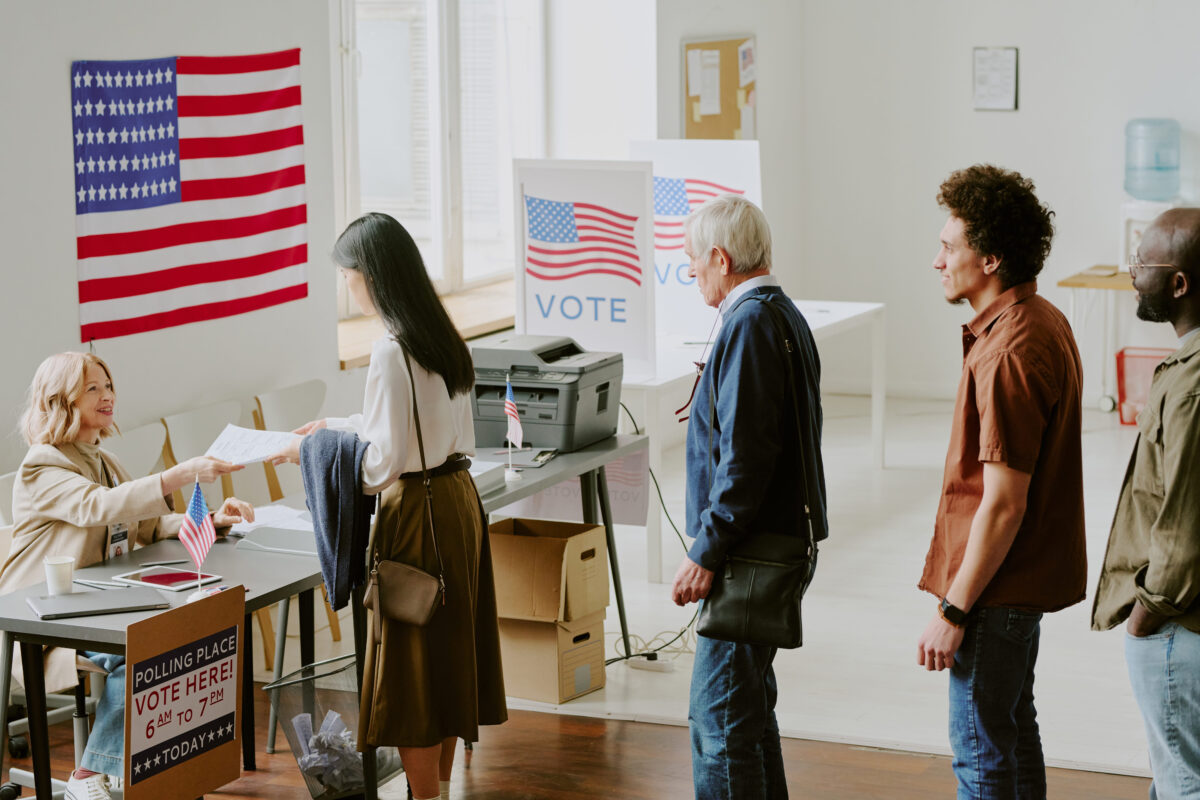
Trump’s executive order, titled “Preserving and Protecting the Integrity of American Elections,” was signed on March 25, 2025. It directed federal agencies to move toward stricter voting and registration rules, including a requirement that people using the national mail voter registration form provide documentary proof of U.S. citizenship.
That requirement could have meant documents such as a U.S. passport, certain citizenship-marked identification, military identification showing citizenship, or other government-issued photo identification backed by proof of citizenship. The order also instructed officials to record details about the document presented by the applicant.
The order went beyond ordinary voter registration. It also sought changes affecting military and overseas voters who use the Federal Post Card Application. That form is important for service members, military families, and U.S. citizens abroad who need to register and request ballots while living far from their home voting jurisdictions.
Trump’s order also targeted mail ballots that arrive after Election Day, even in states where ballots are accepted if they are postmarked by Election Day. It attempted to pressure states through federal funding and enforcement actions, placing the administration on a collision course with state election officials.
In plain terms, the order tried to move a large part of election administration from the state and congressional arena into the White House’s hands. Judge Casper said that went too far.
Why the Judge Said the President Went Beyond His Power
The ruling focused heavily on the separation of powers and the structure of American election law. Under the Constitution, states have broad authority to run elections, while Congress has the power to regulate federal election rules. The judge found that the Constitution does not give the president a free-standing power to rewrite voter registration rules by executive order.
That is the heart of the decision. The case was not about whether citizenship matters. It was about whether a president can force new document requirements onto the federal voter registration system without Congress passing a law.
The court sided with the states that challenged the order. Those states argued that the executive branch was trying to commandeer election systems that largely belong to the states and Congress. Judge Casper agreed that several provisions exceeded executive authority.
The result is a permanent injunction against core parts of the order. That means federal officials cannot implement those blocked provisions unless a higher court changes the outcome.
What This Means for Voters
For ordinary voters, the ruling means the federal voter registration system will not immediately shift to a new national documentary proof-of-citizenship requirement based on Trump’s executive order.
Eligible citizens still must follow their state’s voter registration rules. They must still be U.S. citizens. They must still meet age, residency, and other state requirements. They must still sign voter registration forms truthfully, and false claims of citizenship can carry serious legal consequences.
But the ruling prevents the Trump administration from forcing a new federal document rule onto the national registration form through executive action alone.
That matters for voters who may not have easy access to certain documents. A passport, for example, is not something every eligible voter possesses. Some voters may have documents that reflect name changes due to marriage, divorce, adoption, clerical errors, or other life changes. Others may have birth records that are difficult to obtain quickly.
Supporters of proof-of-citizenship rules argue that such measures strengthen election integrity and public confidence. Opponents argue that documentary proof requirements can block eligible citizens from registering, especially those with limited access to records or limited time to correct document problems.
Judge Casper’s ruling does not end that policy debate. It simply says the president cannot settle it alone by executive order.
Why States Fought the Order
The lawsuit was brought by Democratic led states, including California, Massachusetts, New York, Michigan, Arizona, Colorado, Illinois, New Jersey, New Mexico, Rhode Island, Vermont, and others. They argued that Trump’s order would force states to overhaul election procedures, spend money, retrain officials, change voter education materials, and possibly confuse eligible voters.
State election systems are already complex. Deadlines, forms, identification rules, mail ballot procedures, and eligibility checks vary across the country. A sudden federal mandate could have forced state officials to rewrite procedures in the run-up to election cycles.
The states also argued that they would face administrative costs and voter confusion if the executive order created a single set of federal rules layered awkwardly onto existing state systems. The judge accepted that the order threatened state sovereignty and election administration.
That is why this case became more than a fight over one document requirement. It became a fight over whether the White House can command how states manage the mechanics of voting.
The Mail Ballot Fight Is Still Politically Explosive
One of the most politically charged parts of Trump’s order involved mail ballots. The order tried to prevent states from counting absentee or mail ballots that arrive after Election Day, even if those ballots were postmarked on time.
Several states allow late-arriving mail ballots under specific rules, especially when voters send them before or by Election Day. Supporters say those rules protect voters from postal delays beyond their control. Critics say all ballots should be received by Election Day to create a cleaner, faster, and more uniform count.
Trump has repeatedly attacked mail voting, making it a central theme in his broader election agenda. The court’s ruling blocks key efforts to impose that preference through executive order, at least for the states and provisions covered by the injunction.
This does not mean every state must count late-arriving mail ballots. It means the president cannot unilaterally force states to reject them through the blocked sections of this executive order.
The SAVE America Act Still Looms Over the Debate
The court ruling also lands as Trump and his allies continue to push the SAVE America Act, a voting bill that would create proof-of-citizenship and identification requirements through legislation rather than by executive order.
That difference is important. A law passed by Congress stands on different legal ground than an executive order issued by the president alone. The judge’s decision does not say that Congress can never create proof-of-citizenship rules. It says the president cannot impose these changes without the legal authority to do so.
The SAVE America Act remains politically divisive. Supporters frame it as a necessary election integrity measure. Critics frame it as a broad voting restriction that could make registration harder for eligible citizens.
The ruling may increase pressure on Congress because it makes clear that the administration’s executive route has serious constitutional limits. If Trump wants a national proof of citizenship rule, the court’s message is simple: take it to lawmakers, not just to federal agencies.
Why This Ruling Is Bigger Than One Election Rule
This decision matters because it draws a line around presidential power. Election law is not just a technical area of government. It determines how citizens participate in the exercise of power, how states administer democracy, and how national leaders are chosen.
When a president tries to change election rules by executive order, courts look closely at whether that power actually exists. Judge Casper’s ruling says the president cannot use broad claims of election integrity to take over powers assigned to other parts of government.
That is why the ruling could have an impact beyond this one case. Future presidents, regardless of party, may face the same constitutional boundary if they try to impose sweeping election rules without Congress.
In that sense, the ruling protects more than one form of voting. It protects the structure of the election authority itself.
What Happens Next
The Trump administration could appeal the ruling, and the legal battle may continue in higher courts. Election law disputes often move quickly as major elections approach, especially when voter registration forms, ballot deadlines, military voting rules, and state funding are at stake.
For now, however, the blocked provisions cannot move forward as ordered. States that challenged the measure have secured a major victory, and voting rights groups are likely to view the decision as a major defense of voter access.
At the same time, Trump and his supporters are unlikely to abandon the issue. Proof of citizenship requirements remain a central part of the president’s election agenda, and the political fight over voter registration rules is far from finished.
The clearest takeaway is this: citizenship remains required to vote, but the president cannot rewrite America’s voter registration system by executive order alone. In a country where election rules shape political power, that is not a small technical ruling. It is a major constitutional warning shot.