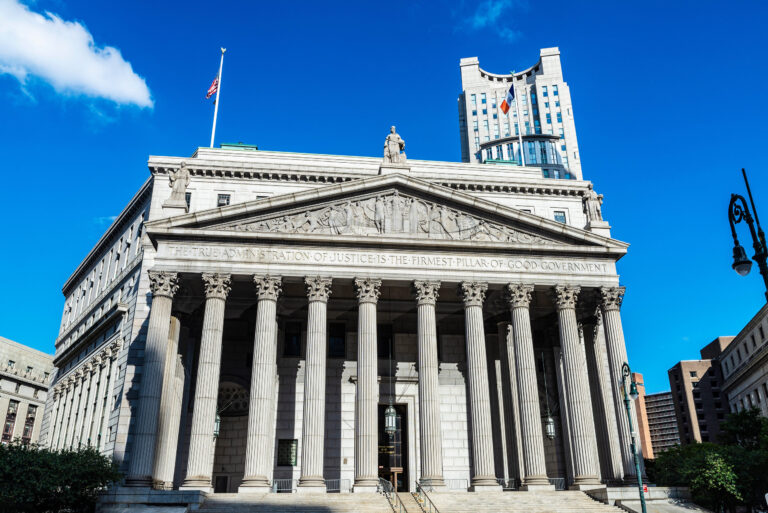
Federal judge blocks nationwide ICE courthouse arrest policy in major immigration ruling.
Nationwide injunction reshapes immigration courthouse enforcement.
A federal judge in California has blocked a Trump administration policy that allowed immigration arrests inside and around courthouses nationwide. The ruling immediately halts a practice that immigration advocates say discouraged people from attending court hearings and raised serious concerns about due process in the immigration system.
U.S. District Judge P. Casey Pitts issued the decision after finding that the policy failed to meet basic legal standards under the Administrative Procedure Act. The court determined that federal immigration authorities did not adequately justify expanding courthouse arrests and did not properly consider the consequences for court attendance and access to justice.
The ruling applies nationwide and bars Immigration and Customs Enforcement from carrying out routine civil arrests in immigration court settings while the case proceeds.
How ICE courthouse arrests were carried out
Immigration and Customs Enforcement began increasing courthouse arrests after immigration hearings became a predictable location for enforcement operations. Officers often positioned themselves in courthouse hallways or outside exits, where individuals attending hearings could be detained immediately after their cases were heard.
In some jurisdictions, arrests occurred shortly after immigration judges adjourned hearings. Attorneys reported that clients were taken into custody before they could leave the building, even when they had complied fully with court requirements.
Supporters of the policy argued that courthouses allowed ICE to efficiently locate individuals with active cases or outstanding removal orders. They also said enforcement in these settings helped prioritize public safety and immigration compliance.
Critics argued that the practice transformed immigration courts into environments of fear, where attendance itself could lead to detention.

The court finds the policy lacked a rational explanation.
Judge Pitts ruled that the policy was “arbitrary and capricious,” meaning the government failed to provide a reasonable and legally sufficient explanation for its actions.
The court found that immigration authorities removed earlier limits on courthouse arrests without properly addressing why those safeguards were no longer necessary. It also noted that the government did not adequately respond to concerns that courthouse arrests discourage people from appearing in court.
A central issue in the ruling was the “chilling effect,” a legal concept describing how fear of enforcement can deter individuals from exercising their legal rights. The court determined that ICE failed to meaningfully account for this effect when designing the policy.
Why immigration court attendance is at the center of the dispute
Immigration courts rely on consistent attendance to function. When individuals fail to appear, judges may issue removal orders in their absence, which can have a permanent effect on a person’s immigration status.
Attorneys and advocacy groups argued that courthouse arrests created a direct conflict. Individuals were legally required to attend hearings, but feared detention upon arrival or departure.
The court agreed that this tension was not properly addressed in the agency’s policy changes. Judge Pitts emphasized that access to the courthouse is essential to the fairness of the immigration system, regardless of the outcome of individual cases.

The policy timeline shows shifting enforcement approaches.
The ruling fits into a longer history of changing federal immigration enforcement practices.
Earlier federal guidance generally discouraged arrests in sensitive locations, including courthouses, except in limited circumstances. Later policy changes under different administrations expanded enforcement discretion and reduced protections around sensitive locations.
The most recent policy shift expanded courthouse arrest authority, which triggered legal challenges from civil rights organizations. The 2026 ruling effectively reinstates limits by blocking the expanded enforcement approach nationwide.
Legal reasoning under the Administrative Procedure Act
The court based its decision on the Administrative Procedure Act, which requires federal agencies to explain policy changes in a rational and transparent way.
Under this standard, agencies must:
- Provide a clear explanation for policy changes.
- Consider the important consequences of the decision.
- Address reliance on prior policies when applicable.
Judge Pitts found that immigration authorities failed to meet these requirements. The ruling emphasized that simply asserting enforcement goals is not enough when a policy has significant effects on court access and participation.

Impact on immigrants and legal representation
Immigration attorneys say the ruling may immediately change how they advise clients with pending court hearings. Previously, some individuals avoided court due to fear of arrest, even though missing hearings could result in automatic removal orders.
With the policy blocked, attorneys may be more confident in encouraging clients to attend hearings without fear of immediate detention in courthouse settings.
However, legal experts stress that immigration enforcement still continues outside courthouses. The ruling does not eliminate ICE’s authority to detain individuals under other lawful circumstances.
Government response and political divide
The Department of Homeland Security criticized the ruling and defended courthouse arrests as a necessary enforcement tool. Officials argued that individuals ordered removed by immigration judges should be taken into custody promptly to ensure compliance with federal law.
Civil rights attorneys and immigrant advocacy groups praised the decision, arguing that courthouses must remain accessible spaces where individuals can exercise legal rights without fear of immediate arrest.
The dispute highlights a broader political divide over immigration enforcement strategy in the United States, particularly the balance between public safety enforcement and procedural fairness.

What happens next in the legal process
The federal government is expected to appeal the ruling, which could send the case to the Ninth Circuit Court of Appeals. Further review may determine whether the nationwide injunction remains in place during litigation.
Future proceedings are likely to focus on the scope of federal agency authority, the limits of immigration enforcement discretion, and the constitutional implications of courthouse-based arrests.
Depending on the appellate outcomes, the case could ultimately reach the Supreme Court if conflicting rulings emerge across jurisdictions.
Why this ruling matters for the immigration system
The decision represents a significant moment in ongoing debates about immigration court fairness and the boundaries of enforcement. At its core, the ruling reinforces the principle that access to court proceedings must remain protected, even in cases involving immigration violations.
Immigration courts depend on participation from all parties to function effectively. When fear prevents attendance, the system risks issuing decisions without full hearings, undermining confidence in the process.
By blocking the nationwide policy, the court has reinforced a key boundary between enforcement operations and judicial access, shaping how immigration law will be applied in courthouses nationwide.
Key takeaway
The ruling does not end immigration enforcement. Instead, it limits where and how enforcement can take place, particularly in spaces where legal participation is required by law. The decision places courthouse access at the center of due process protections in immigration proceedings.