Florida RV Crackdown Leaves Poor and Elderly Residents Facing a Shrinking Housing Escape Route
Florida RV living restrictions are tightening across cities, raising urgent questions about poverty, property rights, zoning enforcement, and elderly housing insecurity.
Florida RV zoning restrictions are reshaping survival housing in real time.
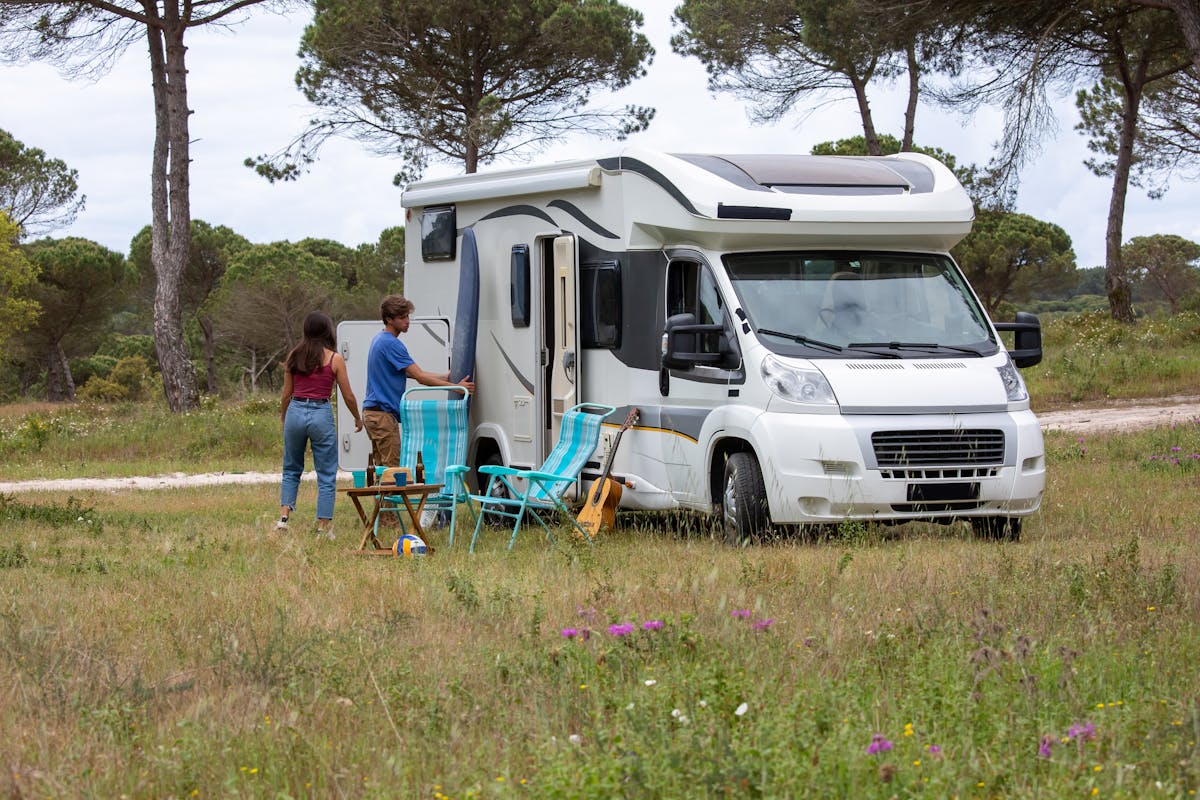
We are witnessing a shift in how Florida defines shelter, property use, and residential space. Recreational vehicles, once seen as travel companions or seasonal housing, are now at the center of a growing conflict between local governments and residents who rely on them as an affordable place to live.
Across multiple Florida cities, RVs parked on residential properties are increasingly being treated as zoning violations when used for long-term occupancy. Officials argue these rules protect neighborhoods from unsafe utility hookups, overcrowding, sanitation risks, and unregulated rental activity. Residents, especially elderly homeowners and low-income families, see something very different. For them, an RV is not a convenience. It is often the last remaining form of private shelter they can still afford.
The tension is no longer theoretical. It is playing out driveway by driveway, notice by notice, and fine by fine.
How Florida RV enforcement escalates from complaint to removal
In most Florida municipalities, RV enforcement does not begin with immediate removal. Instead, it follows a structured escalation process that gradually increases pressure on residents.
A typical case starts with a complaint from a neighbor or a routine code inspection. Officers then assess whether the RV appears to be used for living. Indicators such as bedding, cooking equipment, external utility connections, or repeated occupancy often determine whether the vehicle is classified as a dwelling rather than storage.
Once occupancy is suspected, a notice is issued. Residents are given a compliance deadline, which varies by city. During this period, they are expected to remove the RV from living conditions or relocate it entirely. If no changes are made, fines begin to accumulate.
In stricter enforcement zones, penalties may be issued per day, turning what appears to be a minor violation into a growing financial burden. In more advanced stages, unresolved violations can lead to liens placed against the property itself.
What makes this process particularly impactful is its gradual nature. It rarely removes someone instantly. Instead, it builds pressure over time until compliance becomes the only viable option.
Florida RV rules are not consistent across cities or counties.
One of the most overlooked aspects of the RV debate is the inconsistency in enforcement across Florida. There is no single statewide standard for RV occupancy on private residential property. Instead, each city or county defines its own rules under zoning and code enforcement authority.
In some areas, RV storage is permitted as long as the vehicle is screened from view, registered, and not connected to utilities. In other cases, even temporary occupancy can be treated as a zoning violation, regardless of property size or ownership status.
Some South Florida municipalities have recently increased enforcement following complaints about unpermitted RV rentals and overcrowded lots where multiple vehicles are connected to water or electricity without inspection approval. Officials cite sanitation risks, fire hazards, and strain on infrastructure systems not designed for residential RV clusters.
The result is a fragmented legal landscape where a behavior considered acceptable in one city can lead to penalties in another just a few miles away.
A real-world RV enforcement scenario shows how quickly stability can disappear.
To understand the impact, consider a typical scenario unfolding in suburban Florida neighborhoods.
A retired homeowner living on a fixed income owns a modest single-family property. Rising insurance costs and maintenance expenses make traditional housing increasingly difficult to manage. As a financial safeguard, the homeowner purchases an RV and parks it on the property as backup housing during hurricane season and occasional family visits.
For a period, the arrangement appears uneventful. The RV remains on private land, behind a fence, and causes no visible disruption. However, after a neighbor complaint, a code enforcement officer inspects the property and determines that the RV shows signs of occupancy.
A formal notice is issued. The homeowner is informed that using the RV as a dwelling violates local zoning rules. A deadline is set to cease occupancy or remove the vehicle entirely. Failure to comply will result in fines.
What was once a personal emergency housing option becomes a regulatory violation with financial consequences.
This is how many RV cases begin, not with intentional wrongdoing, but with a shift in how a space is legally defined.
The hidden RV economy is growing inside Florida’s housing gap.
Beneath official enforcement actions, an informal housing economy has developed around RV living in parts of Florida. Some property owners quietly allow RV parking in exchange for monthly payments. Others provide access to electricity or water hookups without formal permits. In certain areas, small clusters of RV residents form informal communities where resources, repairs, and space are shared.
Local governments often point to these arrangements when tightening enforcement, arguing they bypass safety inspections, zoning rules, and tax systems. Officials raise concerns about unregulated rentals, overcrowding, and the potential for unsafe electrical or sewage connections.
However, this informal system continues to grow because traditional rental housing is increasingly out of reach for many residents. In effect, the hidden RV economy exists not as a preference but as a response to limited alternatives.
Why RV living is rising under Florida’s insurance and climate pressure
Florida’s housing stress is not driven by rent alone. Insurance premiums and climate-related risks are becoming major factors pushing residents toward alternative housing solutions.
Homeowners in many parts of the state face rising insurance costs tied to hurricanes, flooding, and rebuilding risk. In some cases, premiums increase faster than income, especially for retirees and fixed-income households.
RVs often enter the picture as emergency housing during storm recovery. After major weather events, residents may live in RVs while repairing damaged homes or waiting for insurance claims to be processed. The problem arises when temporary disaster housing gradually becomes long-term living arrangements.
At that point, cities may classify continued occupancy as a zoning violation, even if the original use was tied to recovery.
The legal squeeze created by overlapping restrictions
Florida’s RV debate becomes more complex when public space laws are considered alongside private property rules.
State-level restrictions limit public camping and sleeping in many areas, except under specific designated programs. At the same time, local zoning laws often restrict long-term RV occupancy on private residential property.
This creates a narrowing set of options for individuals experiencing housing insecurity. Public spaces are restricted. Private RV living is restricted. Traditional housing is increasingly unaffordable for many low-income residents.
The outcome is not always explicitly stated in policy, but it becomes visible in practice: fewer legal places to exist for those at the bottom of the housing market.
HOA rules add confusion, but do not guarantee living rights
Florida law limits how homeowners’ associations can restrict certain property uses, including RV storage under specific conditions. However, these protections do not automatically extend to RV occupancy.
A homeowner may be legally allowed to store an RV on private property, particularly if it is not visible from the street and does not violate any general ordinance. But using that same RV as a living space often falls under separate zoning and occupancy rules enforced by cities or counties.
This distinction creates confusion among residents who assume property rights automatically extend to living arrangements. In reality, storage rights and habitation rights are regulated under different legal frameworks.
Code enforcement is becoming a poverty management system.
Fines and enforcement actions are increasingly shaping the RV debate. What begins as a warning can escalate into financial penalties, repeated citations, and, in some cases, property liens.
For residents on fixed or low incomes, these penalties can quickly become unmanageable. Unlike housing assistance or rental relief programs, fines do not address the underlying need for shelter. They only convert a housing violation into a financial obligation.
In extreme cases, unresolved penalties can threaten property ownership itself, especially when liens accumulate over time.
Florida cities are balancing safety concerns against housing reality.

Local governments are not acting without cause. Many cite legitimate concerns about overcrowding, illegal RV rentals, sanitation risks, and fire hazards from improper utility connections. In neighborhoods experiencing high density or rapid population growth, unmanaged RV occupancy can strain infrastructure and emergency access.
However, enforcement without alternatives risks displacing vulnerable residents without solving the underlying issue. Removing an RV does not create affordable housing. Issuing fines does not lower rent. Eliminating one form of shelter does not expand the housing supply.
This is where the policy tension becomes most visible: safety enforcement versus housing survival.
A more structured RV housing framework could reduce conflict.
A growing number of policy observers argue that Florida’s current system lacks a middle ground between prohibition and neglect. A more structured approach could separate three categories:
Illegal RV rental operations involving overcrowding or unsafe utility use
Approved RV storage on residential property under clear visibility and safety rules
Temporary hardship RV occupancy permits for seniors, disaster recovery, disability, or financial crisis situations
This type of framework would allow cities to enforce safety standards while acknowledging that RVs are increasingly part of emergency housing strategies.
Florida’s RV debate is ultimately about who gets to stay housed.
At its core, the RV crackdown is not only about zoning enforcement. It is about the shrinking gap between income and housing costs in one of the country’s fastest-growing states.
When residents who own land, work long careers, or enter retirement find themselves relying on RVs for shelter, the issue extends beyond vehicle regulation. It becomes a question of affordability, policy design, and social stability.
Florida is now facing a difficult reality. Enforcement alone does not resolve housing scarcity. And without alternative housing pathways, RV restrictions risk turning survival strategies into violations.
Florida’s RV conflict is no longer about vehicles alone. It is about how a state manages housing pressure when traditional affordability breaks down. The outcome will depend on whether the policy continues to treat RV living solely as a violation or begins to recognize it as a signal of deeper economic strain.