7 Foods the Rich Ate in the 1920s That Fell Out of Fashion
Imagine sitting down for dinner at a fancy New York hotel in 1925 and discovering that a turtle dish costs more than filet mignon.
That was the reality at the Roosevelt Hotel on October 21, 1925. According to a dinner menu preserved by the Culinary Institute of America, Terrapine Maryland was listed at $3, compared with $2.25 for filet mignon and just $1 for roast prime ribs of beef.
Those prices reveal something fascinating about American dining a century ago. Foods that once appeared on prestigious restaurant menus have since become unusual, old-fashioned, or largely unfamiliar to mainstream diners.
Here are seven dishes that appeared in fashionable dining rooms during the 1920s, along with how their place at the table changed.
Roast Squab
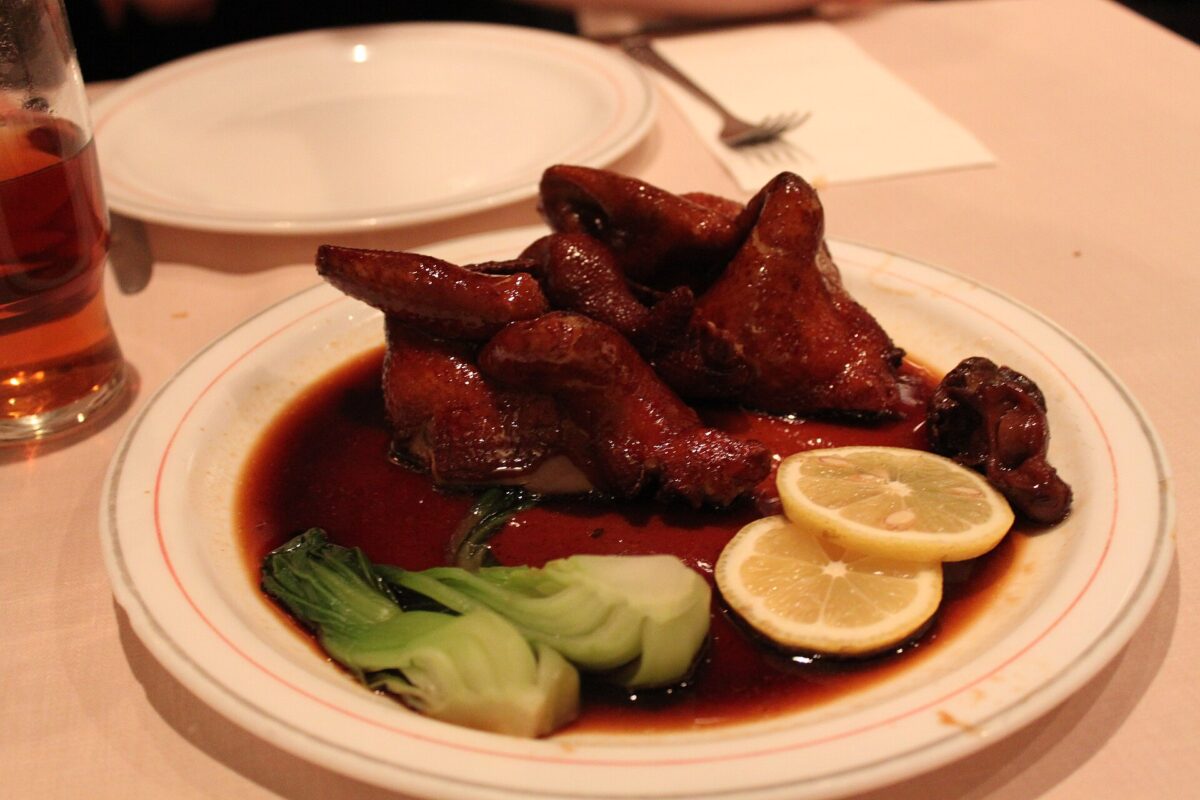
Chicken might dominate American dinner tables today, but young pigeon once had a prestigious place on restaurant menus.
Squab refers to young pigeons raised for meat, rather than birds collected from city streets. Their tender meat makes them appealing to chefs, particularly in French and Chinese culinary traditions.
The Roosevelt Hotel’s 1925 menu offered Fresh Imperial Squab for $2, placing it among the hotel’s more expensive selections. Squab never disappeared entirely, but it became increasingly uncommon as chicken production expanded.
A 2025 report by Ambrook describes America’s small squab industry and the challenges of raising these birds. Unlike chickens, young pigeons depend on their parents for feeding, making production harder to scale.
Modern diners can still encounter squab in high-end restaurants and specialty markets. It simply occupies a much smaller corner of American eating than its appearance on old hotel menus might suggest.
Terrapin Maryland
Steak was hardly the only way to signal an expensive dinner in the 1920s. Wealthy Americans also paid impressive prices for turtle.
Terrapin Maryland featured diamondback terrapin, a small coastal turtle, in a preparation that commonly involved rich ingredients such as butter, cream, and sherry. Its appearance on prestigious restaurant menus reflected a taste for ingredients that were increasingly difficult to obtain.
The Roosevelt Hotel’s 1925 menu priced the dish at $3, making it more expensive than several familiar meat selections.
According to NPR’s reporting on terrapin history, overharvesting reduced terrapin populations and sent prices climbing. Prohibition also complicated traditional preparations involving sherry, while the Great Depression further weakened demand.
Diamondback terrapin eventually lost its place as a celebrated restaurant delicacy. Other turtle dishes survived in regional traditions, but that is a different story from the rise and fall of this particular luxury ingredient.
Braised Sweetbreads
If you ordered sweetbreads expecting something from a bakery, you would have been in for quite a surprise. Despite the name, sweetbreads are the thymus or pancreas of young animals, usually calves or lambs. They have a long history in classical European cooking and appeared in sophisticated American dining rooms.
The Roosevelt Hotel’s October 1925 menu listed braised sweetbreads with asparagus tips for $1.80.
The combination fit the carefully prepared dishes associated with luxury hotel kitchens: an unfamiliar cut of meat, a delicate vegetable, and a preparation requiring more attention than an ordinary weeknight dinner.
Today, sweetbreads remain available in luxury and specialty restaurants, so they have not disappeared. Their place on everyday American tables is another matter. Encyclopedia Britannica notes that organ meats are not widely consumed in the United States and Canada.
The surprise is not that everyone stopped enjoying them. It is how unfamiliar this once-established restaurant offering can sound to modern diners.
Related: 7 Foods You Should Never Store in the Fridge Door, According to Food Safety Experts
Celery Victor
It might be difficult to imagine celery as the attraction at an expensive hotel restaurant, but Celery Victor gave the humble vegetable a more elaborate role. The dish was associated with Victor Hirtzler, the influential chef at San Francisco’s Hotel St. Francis.
Instead of serving raw celery sticks, cooks simmered tender celery hearts in seasoned stock, cooled them, and dressed them with vinaigrette. Some preparations included anchovies, herbs, or other garnishes.
The San Francisco Chronicle places Hirtzler’s tenure at the hotel from 1904 to 1926, connecting the dish with the era’s fashionable restaurant culture. Celery Victor is now more likely to appear in a discussion of vintage recipes than as a familiar restaurant order.
The vegetable itself never went away. It was this carefully cooked, chilled, and dressed presentation that lost its prominence, a reminder that even celery can have a glamorous past.
Chicken à la King
Few dishes demonstrate changing American food fashions quite like chicken à la king. Associated with upscale restaurants and hotels in its early history, the dish featured pieces of chicken in a creamy sauce with mushrooms and pimientos.
It was commonly served over toast or inside pastry shells. Its precise invention remains disputed, but its place in early twentieth-century dining is well documented.
The Grolier Club’s historical menu exhibition describes a September 22, 1927, Congress Hotel menu offering a chicken à la king meal for $10. The occasion mattered: Chicago was crowded with spectators attending the highly anticipated Jack Dempsey–Gene Tunney boxing rematch.
That price should not be treated as the everyday cost of chicken à la king. It does, however, place the dish in a memorable hotel-dining setting during the decade.
Its popularity eventually extended far beyond luxury establishments. Chicken à la king became familiar in home kitchens, catered meals, and cafeteria-style service.
Rather than vanishing, it lost much of its earlier fashionable image. A dish that once suited an elegant hotel meal became a recognizable comfort-food throwback.
Lobster Newburg
Lobster is still a special-occasion favorite, but one of its formerly fashionable preparations is much less familiar today.
Lobster Newburg features lobster meat in a rich sauce made with ingredients such as butter, cream, egg yolks, and wine or spirits. Recipes vary, but restraint is rarely the defining feature.
The dish’s history stretches back to New York’s famous Delmonico’s restaurant in the nineteenth century. By the 1920s, its name and restaurant associations were established enough to attract discussion in contemporary food writing.
It suited an era when formal dining often meant elaborate sauces and carefully finished dishes. Lobster was not simply the main attraction; it arrived surrounded by additional layers of richness.
Today, Newburg survives in select restaurants and recipes, but it is no longer a routine reference point for a luxurious seafood dinner. The lobster did not lose its appeal. This particular way of serving it lost some of its spotlight.
Related: 7 Foods You Should Never Wash Before Cooking
Jellied Consommé
Imagine ordering soup at an elegant restaurant and receiving something chilled, shimmering, and gently set into jelly. That was jellied consommé.
Unlike sweet gelatin desserts, this was a savory preparation made from clarified broth, sometimes with added gelatin. Madrilène versions could include tomato flavoring.
The Roosevelt Hotel’s October 1925 menu featured a section labeled “Cold, in Jelly,” with chicken broth and madrilène among the selections.
For modern diners accustomed to steaming bowls of soup, the presentation may sound unexpected. Yet chilled, jellied broth had a place in the dining customs of the period.
It also survived well beyond the 1920s. Mid-century household advice recommended chilling canned consommé or madrilène until it became firm, bringing the idea into home entertaining.
Today, jellied soup is more closely associated with historical menus and vintage recipes than with standard American restaurant appetizers. Its story is less about a sudden disappearance than a gradual loss of familiarity.
A Century of Changing Tastes
These dishes show that losing fashionable status does not always mean disappearing.
Terrapin became scarce after intense harvesting and declining demand. Squab remained a specialty. Sweetbreads retained a place in fine dining, while chicken à la king moved into everyday kitchens.
Others became recipes people rediscover rather than dishes they routinely order.
A century later, those old menus offer a useful reminder: the foods that make dinner feel impressive are never fixed forever.